Men's Pompadour Haircut Guide: Structure, Variations, and Styling
Men's Pompadour Haircut Guide: Structure, Variations, and Styling
The pompadour is defined by volume and direction: the hair at the front of the head is swept upward and back, creating height at the forehead. It is one of the most historically persistent men's hairstyles, continuously reinterpreted since the 1950s. Here is what defines it and how the contemporary versions work.
The Defining Structure
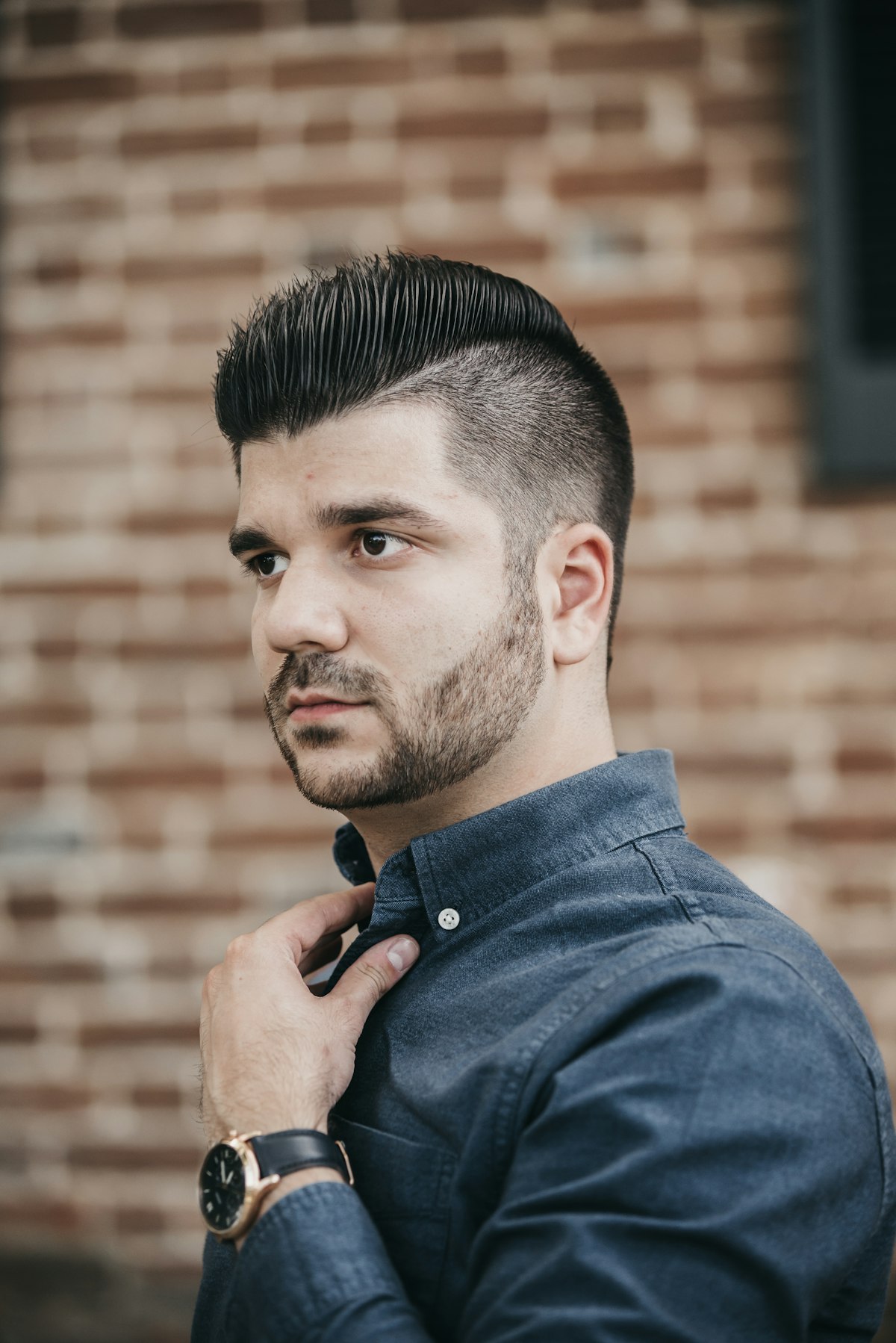
The pompadour requires significant length at the front (typically 3 to 6 inches) to create the swept-back volume. The top section is directed backward and upward from the hairline, creating a raised front section. The sides can be worn at various lengths; the modern pompadour almost always pairs the swept top with faded sides, while the classic pompadour kept the sides full. The height of the front section is what creates the distinctive pompadour silhouette: the hair is at its highest point at the forehead and falls back toward the crown.
Modern Variations
The disconnected pompadour combines the swept-front top with very short or skin-faded sides, creating a high-contrast look where the full front section sits above tightly faded sides with no blending between them. The textured pompadour uses textured cutting techniques on the top to reduce bulk while maintaining direction, creating a lighter, more movement-heavy version of the swept front. The low pompadour (sometimes called a modern quiff) is a lower-profile version where the front section is swept back with less height, creating a cleaner, less dramatic interpretation. The classic pompadour uses a full, high sweep and slicked-back styling for a retro-inspired result.
Styling the Pompadour
Start with damp hair. Apply a medium-to-strong hold product (pomade, wax, or clay, depending on whether you want a shiny or matte finish) through the front section. Use a blow dryer with a round brush or a high-heat setting, directing the airflow upward and back from the hairline. The combination of heat and direction sets the swept-back volume. Once the hair is dry and the direction is set, add a small additional amount of product to the top for hold and finish. The pompadour holds its direction best when dried in position; air drying produces less defined volume.
Frequently Asked Questions
How much length do I need for a pompadour?
Minimum 2 to 3 inches at the front to produce a basic pompadour effect. The classic, high-volume version requires 4 to 6 inches at the front. The modern low pompadour or quiff version works at 2.5 to 3 inches. At shorter lengths, the amount of volume achievable is limited by the weight of shorter sections; longer sections have more mass to stack upward. Most men aiming for a clear pompadour silhouette grow the front section to at least 3 to 4 inches.
What product is best for a pompadour?
For a high-shine classic pompadour: a petroleum-based or water-based pomade with strong hold. Water-based pomades wash out easily and are less damaging to hair long-term. For a matte modern pompadour: a clay or matte wax. Clay provides strong hold with a dry, natural finish. For a textured, lower-profile version: a medium-hold clay or putty that provides flexibility rather than rigid hold. The choice between shine and matte finish depends on the aesthetic: the classic slick pompadour uses shine; modern interpretations typically use matte for a more contemporary look.
Does the pompadour suit round faces?
Yes. The pompadour is one of the most flattering styles for round faces because the height at the front creates vertical visual proportion that elongates the face. The faded sides of the modern pompadour reduce side volume simultaneously, creating both less width and more height. Round faces generally benefit from styles that add vertical dimension; the pompadour is among the most effective at this. The higher the pompadour, the more visual length it adds to the face from the front view.
Can the pompadour be worn on curly hair?
Yes. Curly hair produces a distinctive version of the pompadour where the swept-back section holds natural curl texture rather than lying flat. The volume created by curly hair in the swept-back direction can be significant, producing a fuller, more textured pompadour than straight hair. Product application for a curly pompadour focuses on holding direction while allowing curl definition; creams and curl-enhancing products work better than waxes and heavy pomades that flatten the curl pattern.
Related Reading From CADMEN Barber Academy
- The Pompadour Haircut: How to Cut and Style the Volume-Dependent Classic
- The Pompadour Haircut: What It Is, Its Variations, and How to Ask for One
- Cutting Afro and Type 4 Hair: Techniques for Barbers Working with Coily Textures
- The Blowout Haircut: What It Is and How to Maintain It
- The Brush Up Haircut: What It Is and How to Style It
- The Caesar Haircut: What Makes It a Caesar and How to Cut It Cleanly
Want to learn to cut a pompadour yourself? CADMEN Barber Academy teaches cutting hands-on, with an educator beside you. See the barber academy in Mississauga or view in-person classes and send an enquiry.
Watch the free Barbering for Beginners playlist on YouTube.
