Men's Hair Types Explained: How to Work With What You Have
Men's Hair Types Explained: How to Work With What You Have
Most men do not know their actual hair type. They use whatever products they find and get inconsistent results, then assume the product is the problem. Usually the problem is the mismatch between the product and the hair type.
Understanding your hair type is the first step to getting consistent results.
The Basic Categories
Hair type is primarily described by curl pattern and thickness. Curl pattern runs from straight through wavy to curly to coily. Thickness describes the diameter of each individual strand, not the amount of hair on your head.
These two properties together determine how your hair behaves, how it responds to products, and which cuts will work best.
Straight Hair
Straight hair has no curl or wave pattern. It lies flat, grows quickly in a uniform direction, and tends to show oil more visibly than curly hair because the oil from the scalp travels down the straight shaft easily.
Straight hair responds well to most products. Pomades, waxes, and clays all work. Fine straight hair benefits from lighter products that do not weigh it down. Thick straight hair can handle heavier product without going flat.
The main challenge with straight hair is that it can look limp when there is no volume. Blow drying with a brush to add lift at the roots makes a significant difference for straight hair that lacks body.
Wavy Hair
Wavy hair has an S-shape pattern that ranges from loose and subtle to more defined waves. It has more volume than straight hair naturally and tends to frizz when humidity is high.
Wavy hair is versatile. It holds styles well, works with most cuts, and responds well to a range of products. The challenge is managing frizz. Products with anti-humidity properties and techniques that reduce friction during drying help.
Diffusing with a hair dryer rather than towel-drying vigorously preserves the wave pattern and reduces frizz. Scrunching a small amount of curl-enhancing cream through damp wavy hair encourages the wave and adds definition without stiffness.
Curly Hair
Curly hair forms defined spirals or rings. It is naturally drier than straight or wavy hair because the curl pattern makes it harder for scalp oil to travel down the shaft.
Curly hair requires moisture. Hydrating shampoos, conditioners used consistently, and leave-in products all help. Washing too frequently strips the oils that curly hair needs, so most men with curly hair wash every 2 to 4 days rather than daily.
For styling, define the curls rather than fight them. Curl creams and light gels applied to damp hair preserve definition. Avoid rubbing the hair dry with a towel, as friction causes frizz. Pat dry or use a microfiber cloth.
Coily Hair
Coily hair has a tight, densely packed curl pattern. It has the highest natural volume, the most shrinkage when dry, and the greatest need for moisture and conditioning of any hair type.
Coily hair benefits from deep conditioning treatments regularly. Products rich in oils and butters work well. Protective styles reduce breakage from daily manipulation.
When visiting a barbershop, make sure the barber has specific experience with coily hair types. Cutting dry coily hair requires different technique than cutting straight or wavy hair. Ask before booking.
Thick vs Fine Hair
Thick individual strands hold more weight. Thick hair supports heavier products and maintains volume. It can also look puffy or overly full without the right cut to manage bulk. Texturizing and point-cutting by the barber address this.
Fine individual strands are easily weighed down by heavy products. Fine hair benefits from volumizing products, lightweight formulas, and cuts that are not blunt or heavy at the ends. The goal for fine hair is always to make it look fuller than it is.
Frequently Asked Questions
How do I know if my hair is thick or fine?
Take a single strand and hold it up. If it is hard to see, it is fine. If it is clearly visible and feels substantial between your fingers, it is thick. This refers to one strand, not the amount of hair on your head. You can have a lot of fine hair or a small amount of thick hair.
Can hair type change over time?
Yes. Hormonal changes, medication, diet, and age all influence hair texture and thickness. Many men notice their hair becoming finer or drier in their 30s and 40s. Adjusting your products and routine accordingly usually addresses most of the change.
Do I need different shampoo for different hair types?
Generally yes. Clarifying shampoos are too stripping for curly and coily hair. Moisturizing shampoos are often better for textured hair. Volumizing shampoos help fine hair. Reading the label and matching the formula to your hair type produces better results than using whatever is available.
Should I tell my barber my hair type before the cut?
Yes. Your hair type affects how the barber should approach the cut. Thick hair needs weight removed. Fine hair needs the cut to maximize the appearance of volume. Curly and coily hair behaves differently wet versus dry. The more your barber knows before they start, the better the result.
Why does my hair look different after a barbershop cut than it does at home?
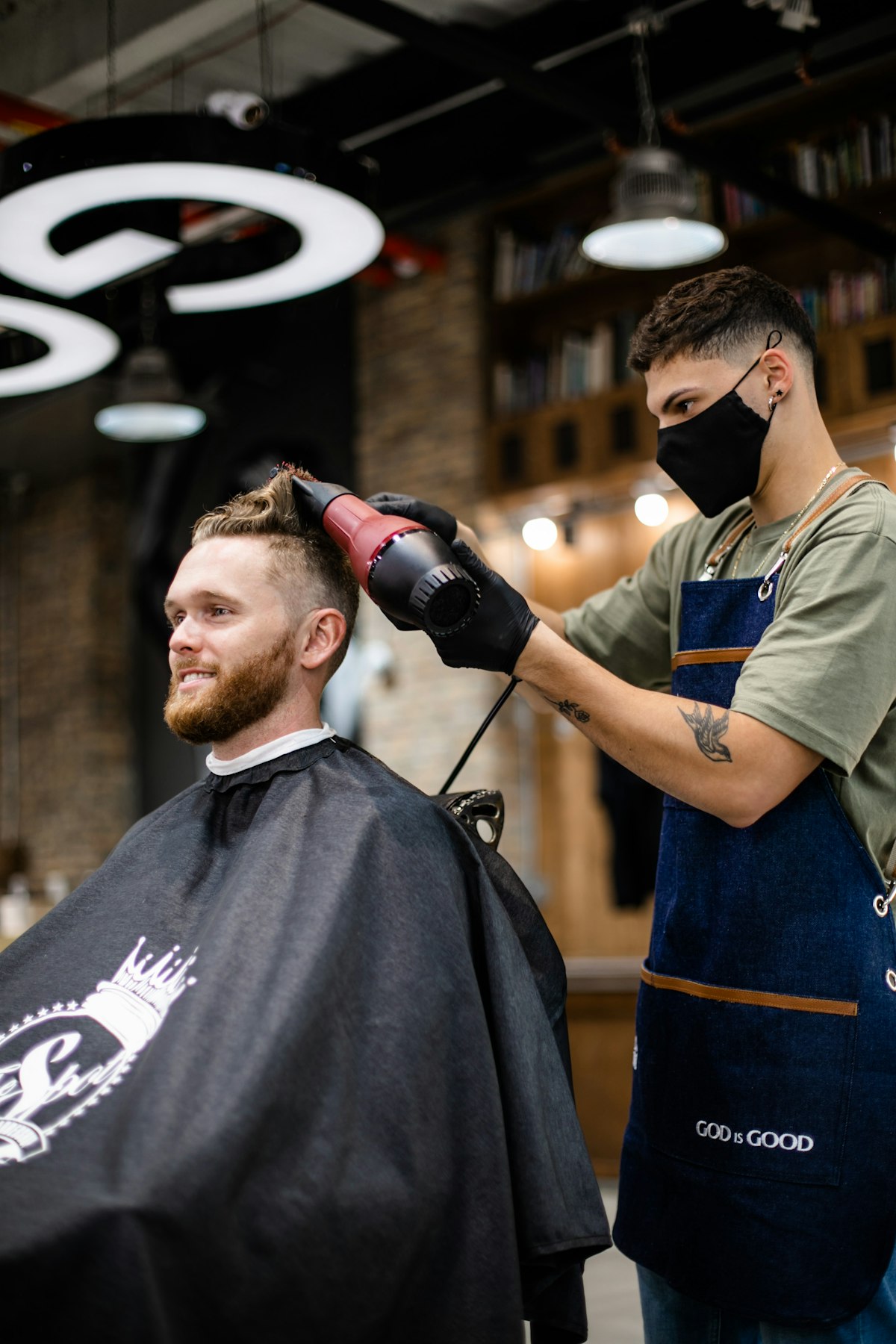
Technique and products. Barbers blow dry and style with professional tools after cutting. They also use products specifically suited to your hair type. At home, most men air-dry or use minimal products. Learning how the barber dries and styles your hair is the fastest way to replicate the result at home.
Related Reading From CADMEN Barber Academy
- Cutting Type 3 Curly Hair: What Barbers Need to Know
- Men's Hair Types: What They Are and Why They Matter for Haircuts
- Men's Hair Type Chart Explained: Types 1 Through 4
- Men's Hair Types Explained: Straight, Wavy, Curly, Coily
- How to Identify Your Hair Type and Why It Matters for Products
- Cutting Coily Hair: The Techniques That Work and the Mistakes That Damage the Pattern
