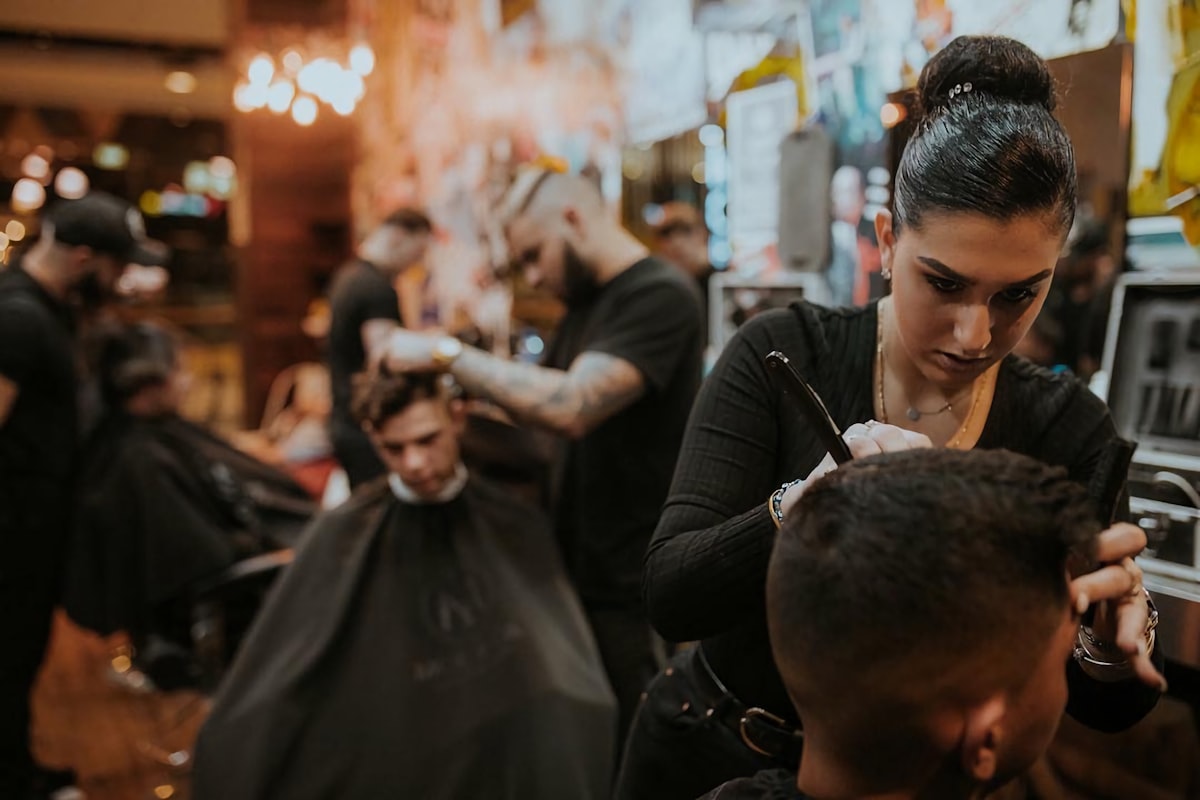
Men's Hair Growth: What Actually Affects How Fast It Grows
Men's Hair Growth: What Actually Affects How Fast It Grows
Most men who want their hair to grow faster are asking the wrong question. Hair growth rate is largely genetic. The more productive question is what prevents the growth you have from becoming length you can use. Here is what actually affects the result.
The Baseline
Human hair grows approximately half an inch per month on average, with a range of roughly 0.3 to 0.7 inches per month across individuals. The growth rate is primarily determined by genetics and is not significantly alterable through products or lifestyle changes within a normal healthy range.
Hair grows continuously from the follicle. The length you observe is the accumulated growth minus any length lost to breakage, splitting, or cutting. Accelerating the visible growth of hair is more about reducing loss than about increasing the rate of production.
What Does Affect Growth Rate Marginally
Nutritional deficiencies: severe deficiencies in iron, zinc, biotin, or protein can slow hair growth and cause increased shedding. For men eating a reasonably balanced diet, supplementation does not produce measurable additional growth. For men with documented deficiencies, addressing the deficiency normalizes growth.
Scalp health: a healthy scalp provides the environment for follicles to function normally. Chronic scalp inflammation, severe dandruff conditions, or scalp infections can impair follicle output. Treating these conditions removes the impediment and allows hair to grow at its natural rate.
Stress: prolonged high stress is associated with telogen effluvium, a condition where more hairs shift into the shedding phase simultaneously. The result is increased shedding and apparent reduction in density. Addressing chronic stress normalizes the hair cycle. This is physiological, not metaphorical.
What Does Not Affect Growth Rate
Cutting the hair does not make it grow faster. This belief is widespread and incorrect. The follicle produces hair from the root below the skin surface. What happens to the hair above the skin surface has no effect on follicle function. Regular trimming prevents breakage at the ends and thus preserves length, but it does not increase the growth rate.
Most commercial "hair growth" products do not produce documented results beyond what is achieved by basic scalp health maintenance. Minoxidil is the exception: it has documented efficacy for androgenetic alopecia (pattern baldness) specifically, not for increasing growth rate in men without hair loss.
What Preserves Length Effectively
Reducing breakage is the most actionable approach to accumulating visible length. Breakage occurs at split ends and areas of mechanical or chemical damage. Trimming split ends before they travel up the hair shaft prevents breakage. Minimizing heat styling, friction from rough towels, and tight styling reduces mechanical damage. These are the practical interventions that produce measurable length accumulation over time.
Frequently Asked Questions
Do hair vitamins help men grow hair faster?
For men without nutritional deficiencies, hair vitamin supplements do not produce measurable increases in growth rate. They may improve hair condition if underlying deficiencies exist. Biotin supplementation specifically shows evidence of benefit only in individuals with biotin deficiency, which is uncommon. The marketing for hair vitamins significantly overstates the evidence for their efficacy in people with normal nutritional status.
Does scalp massage help hair growth?
The outcome matters when reading scalp-massage research. In a 2016 study of nine healthy men, the massage area’s hair thickness increased compared with its starting measurement, but thickness did not differ significantly between massage and control areas, and growth rate did not change significantly. The protocol used a device for four minutes daily over 24 weeks. Ask a qualified healthcare professional how this limited evidence applies to your concern; do not turn it into a promise of faster growth or universal safety. Read the source.
Why does my hair seem to grow faster in summer?
There is evidence that hair grows slightly faster in warmer months. The leading hypothesis is that warmer temperatures increase circulation to the scalp and that longer daylight hours affect hormonal patterns that influence hair growth. The difference is modest. If you notice significantly faster growth in summer, seasonal variation is a plausible explanation.
What is the fastest I can grow my hair to a specific length?
At an average of half an inch per month, an inch of hair takes roughly 2 months, 6 inches takes about 12 months, and a full foot of hair takes approximately 24 months. Individual variation means some men grow faster and some slower. There is no intervention that reliably doubles the growth rate. Planning hair growth goals should account for realistic timelines rather than hoping for acceleration.
Can I grow my hair if I have a receding hairline?
Yes, the existing hair grows normally. The receding hairline is a result of follicle miniaturization in the affected area. The unaffected follicles continue to produce hair at normal rates. Growing hair in areas affected by androgenetic alopecia is not possible without follicle-level intervention (finasteride, minoxidil, or hair transplant). Growing longer in the areas with active follicles is straightforward.
Related Reading From CADMEN Barber Academy
- How to Grow Hair Faster: What Actually Works
- How Fast Does Men's Hair Grow and What Affects the Rate
- How to Grow Your Hair Out as a Man: What Actually Works
- How to Grow Hair Faster: What Actually Works and What Does Not
- What Actually Affects Men's Hair Growth
- Beard Growth: What Actually Affects It and What You Can Do
