Hair for a Job Interview: What to Know Before You Go In
Hair for a Job Interview: What to Know Before You Go In
The job interview is one situation where your appearance is read before you speak. Hair is part of that reading. This does not mean defaulting to the most boring possible style. It means understanding what reads as professional versus what introduces visual noise you do not want in the room.
What Professional Hair Means in an Interview
Professional hair for an interview means groomed and intentional. Hair that clearly has been cut and maintained recently signals that you take care of yourself and attended to details before the meeting. Hair that looks like it has not been cut in months, is unkempt, or has visible grow-out creates a different impression regardless of the style itself.
The specific style matters less than the condition. A well-maintained skin fade looks more professional than a grow-out of any longer style. A trimmed, shaped natural hairstyle reads better than a neglected conventional haircut. The baseline is: does this hair look like you came prepared?
The Most Broadly Safe Choices
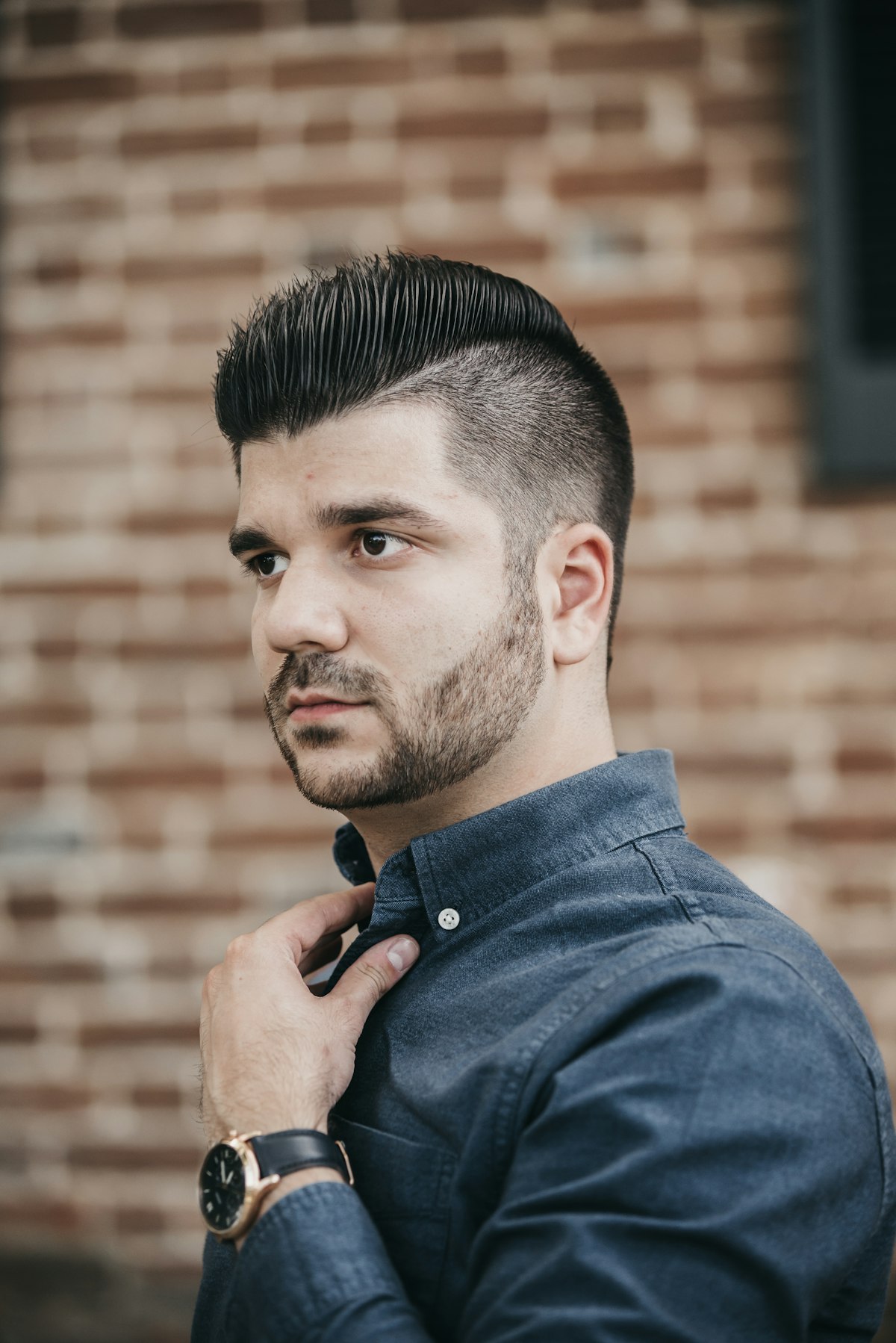
For corporate, finance, legal, and similarly conservative environments: tapered or faded sides with a clean, controlled top section. Short-to-medium length on top with defined edges. This covers a taper, a low-to-mid fade, a side part, or a textured crop. What these have in common is that they are short, maintained, and do not draw attention away from what you are saying.
For creative, startup, tech, and less formal environments: the range is much wider. A well-maintained medium-length cut, a clean undercut, a fade with a textured top, or a well-groomed longer style are all appropriate. The cultural norms of these industries are more accepting of style expression. Grooming quality still matters; style variety does not disadvantage you the same way.
Timing the Haircut
Get the haircut 3 to 5 days before the interview, not the day before. A fresh haircut the night before an interview can look slightly too sharp or unfinished, especially if there is any skin irritation or redness at the neckline. Three to five days gives the haircut time to settle into a natural, comfortable appearance while still looking recent. The neckline sharpness will still be present but will read as groomed rather than just-done.
What to Avoid
Visibly overgrown sides or neckline. A neckline with significant grow-out is one of the most noticeable indicators of an unattended haircut. A standalone neckline cleanup is inexpensive and quick if the rest of the cut is still in reasonable shape.
Extremely high-contrast or graphic styles in conservative industries. A disconnected undercut, a very high skin fade, or an elaborate shape-up may be entirely appropriate for you and your style, but in investment banking, law, or traditional corporate environments they carry more risk of creating an impression you do not want to manage during an interview.
Unwashed or product-heavy hair. Hair that appears greasy, flaky, or over-styled creates an impression of poor hygiene or poor judgment. Clean, lightly styled hair is the target.
Frequently Asked Questions
Can I wear a longer hairstyle to a job interview?
Yes, with two conditions: it should be clean and groomed (not unkempt), and it should be worn in a way that looks intentional. Long hair in a neat style (tied back or structured with product) reads as a deliberate choice. Long hair that looks unmanaged reads as neglect. The style itself is secondary to whether it looks like you made a decision about it.
Do natural hairstyles affect interview outcomes?
They should not, and legally in an increasing number of jurisdictions they cannot be the basis for employment decisions. Natural hairstyles (afros, locs, twists, braids) are professional hairstyles. The CROWN Act and similar legislation in many US states and other countries addresses this explicitly. Grooming and maintenance standards apply equally to all hair types: a well-maintained natural hairstyle is professional by any reasonable standard.
What about facial hair in an interview?
The same rule applies: groomed and intentional. A clean, shaped beard or stubble reads as professional. An unkempt beard or irregular stubble growth (patches, asymmetry, undefined neckline) looks unattended. A clean shave is safe in all environments. A well-maintained beard is safe in most. The standard is upkeep, not the presence or absence of facial hair.
Should I change my hairstyle for an interview if my usual style is expressive?
That depends on the environment you are applying to. If you are applying to a conservative industry where your usual style would be significantly outside the norm, moderating it for the interview is a practical choice. You are not permanently changing your style; you are choosing how to be read in one specific high-stakes meeting. If you are applying to an environment where your style fits or is unremarkable, there is no need to change it. The goal is to remove unnecessary variables from the interview, not to perform a false version of yourself.
Is it worth getting a haircut specifically for an interview if I already had one recently?
If your last haircut was within 3 weeks, a standalone edge up or neckline cleanup is more useful than a full haircut. This costs significantly less and takes 10 to 15 minutes. It sharpens the hairline and neckline without the full commitment and expense of a complete haircut. For a high-stakes interview, the marginal improvement in appearance is worth the modest time and cost.
Related Reading From CADMEN Barber Academy
- Getting a Haircut Before a Job Interview: Timing and Style
- Cutting Coily Hair: The Techniques That Work and the Mistakes That Damage the Pattern
- Cutting Curly Hair: What Barbers Do Differently
- How to Cut Curly Hair: Barber Techniques and Approach
- Curly Hair at the Barbershop: What Barbers Do Differently
- Curly Hair at the Barbershop: Cuts and Products That Actually Work
