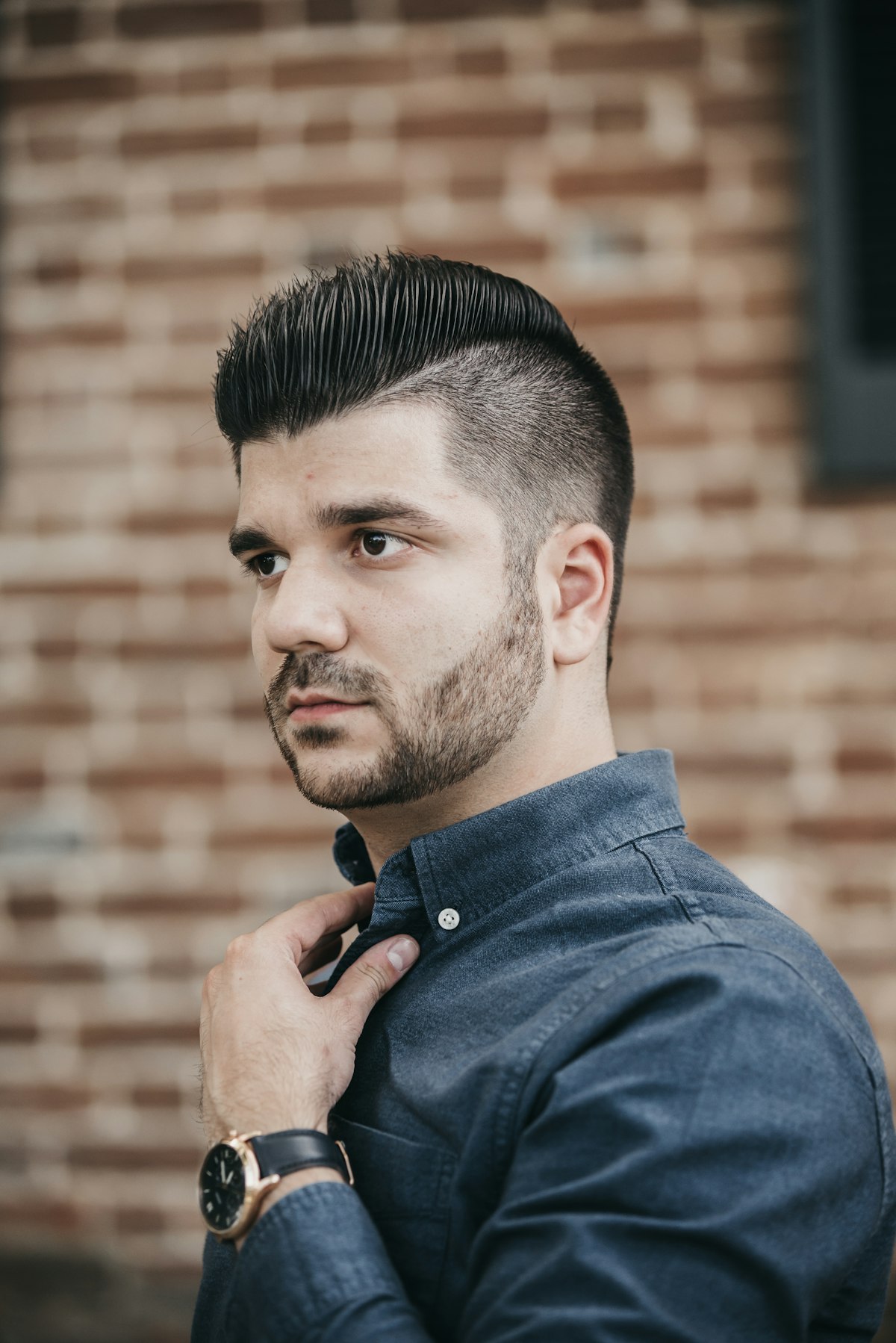
Fade with Beard: Making the Two Work Together
Fade with Beard: Making the Two Work Together
A fade haircut and a beard look like two separate style choices. They are not. The way the fade connects to the beard at the sides and jawline is what determines whether the combination looks intentional or disjointed. Here is how barbers handle that connection and what to know going in.
The Connection Point
The fade rises from short at the neck and sides to the natural length at the top of the head. A beard grows from the jawline and cheeks. These two elements meet at the side of the face, at roughly the level of the sideburns. The connection between them is where the visual success of the combination is made or lost.
There are two primary approaches. The first is a clean break: the fade ends at the sideburn line and the beard begins cleanly below it. The two are distinct. The second is a blended connection: the barber graduates the fade into the beard so the transition is smooth rather than defined by a hard line. The blended connection requires more skill and more time but produces a more cohesive result.
How the Blend Works
In a blended fade-to-beard, the barber uses the clipper to graduate the sideburn area so the hair length increases gradually downward into the beard. The very short fade meets the dense beard through a middle zone where the hair is medium length. The result is a continuous graduation from the shortest part of the fade at the temples to the full density of the beard at the chin.
The difficulty is that facial hair texture and head hair texture are different. The hairline on the side of the head transitions into coarser, denser beard hair at the cheek and jawline. The barber has to work across this texture change while maintaining the visual continuity of the blend.
Beard Length and Its Effect on the Blend
A short beard (1 to 3 millimeters, essentially stubble) blends more easily into a fade than a longer beard. The short length allows a smooth visual transition. A medium beard (roughly 1 centimeter) requires the graduation zone to be wider to avoid a jarring jump from the short fade to the full beard density. A long beard (several centimeters or more) is harder to blend seamlessly. Many barbers with clients who have long beards take the fade up higher on the sides to give more room for the graduation.
Beard Shaping Within the Service
Most barbers who specialize in fade-and-beard combinations address the beard shape as part of the service. This includes defining the neckline, the cheek line, and the mustache boundary. A shaped beard that is defined clearly at its edges looks more intentional when paired with a fade than an unshaped beard, even when the connection is well-executed.
Frequently Asked Questions
Does every barber know how to blend a fade into a beard?
Most experienced barbers know the technique, but execution varies. Barbers who specialize in skin fades and high-detail work tend to execute the blend more precisely than general barbers. If this combination is important to you, look for a barber whose portfolio shows fade-with-beard work specifically. Looking at their work before booking is more reliable than asking.
Can I get a fade if my beard is patchy?
Yes. A patchy beard changes how the connection zone is handled but does not prevent a fade haircut. The barber either creates a defined boundary above the patchy area or trims the patchy sections short and blends them into the fade more aggressively. Many men with patchy beards find that a well-shaped short beard with a clean fade looks better than a longer patchy beard precisely because the structure of both elements compensates for the density gap.
How do I maintain the blend between haircuts?
The fade grows out from below while the beard grows from below as well. The transition zone blurs within 1 to 2 weeks for most men. Maintaining the blend at home with a trimmer is possible if you know where the graduation zone was. Most men with this combination return to the barber every 2 to 3 weeks rather than trying to maintain the blend themselves.
What fade height works best with a beard?
A mid-fade is the most commonly used with a beard because it provides room for the graduation zone without taking the fade up high enough to visually compete with the beard. A high fade with a beard creates a strong high-contrast look that works well for certain face shapes but can look top-heavy if the beard is also long. A low fade with a beard produces a more subtle combination. The right choice depends on face shape and how much contrast is wanted.
Should the beard be trimmed before or after the haircut?
Most barbers handle the beard after the haircut because the haircut establishes the lines and proportions that the beard shaping follows. Cutting the fade first and then blending into the beard allows the barber to see the full picture before finalizing the beard edges. Some barbers have a different sequence preference, but cutting the haircut first is the most common approach.
Related Reading From CADMEN Barber Academy
- Beard Fading: What It Is and How Barbers Do It
- Blending the Beard into the Fade: How Barbers Connect Hair and Beard
- Beard Fade: What It Is and How to Ask for One
- Beard Fade: What It Is and How Barbers Blend the Beard into the Skin
- How to Fade a Beard to Match Your Haircut
- Bald Fade vs Skin Fade: Are They the Same Thing?
Want to learn to cut a beard fade yourself? CADMEN Barber Academy teaches cutting hands-on, with an educator beside you. See the barber academy in Mississauga or view in-person classes and send an enquiry.
Learn this fade step by step in our free Fade Tutorials playlist on YouTube.
