Cowlicks in Men's Hair: What They Are and How to Work With Them
Cowlicks in Men's Hair: What They Are and How to Work With Them
A cowlick is a section of hair that grows in a different direction from the surrounding hair. When it grows outward, it creates a tuft that sticks up or out regardless of how the surrounding hair is styled. It is caused by the angle of the follicle and cannot be changed. Managing it effectively is about working with the growth direction rather than fighting it.
Where Cowlicks Appear
The crown is the most common location. A crown cowlick causes hair at the back of the top section to grow outward from a central point, often creating a swirl pattern. This is the cowlick that creates visible lift at the back of the head and resists lying flat.
The front hairline is the second most common location. A hairline cowlick causes a section of the front hair to grow backward, forward, or to one side, creating a break in the direction of the rest of the front hair. This is the cowlick that makes certain side parts or forward-swept styles impossible without heavy product.
Temple cowlicks affect the direction of hair growth near the temples and can push hair outward or in an awkward direction at the side of the head.
Why Certain Styles Work and Others Do Not
Styles that require hair to lie against its natural growth direction will always struggle at a cowlick. A smooth side part on the side where a hairline cowlick grows the wrong direction requires significant product and effort to maintain, and may not stay down during the day regardless.
Styles that go with the natural growth direction have no conflict. If the cowlick pushes hair forward, a forward-swept style requires no effort to achieve the direction the cowlick naturally creates.
Cuts That Minimize Cowlick Impact
Shorter hair at the cowlick location reduces the visual impact significantly. A crown cowlick that is almost invisible on hair kept at half an inch becomes very visible at 3 inches. Keeping the crown section shorter limits how much the cowlick can lift.
Textured cuts are more forgiving than smooth, flat cuts. A textured style with deliberate movement in multiple directions incorporates the cowlick's direction as part of the overall texture. A smooth, flat style makes the cowlick stick out as an anomaly.
Tell your barber where the cowlick is and how it grows. An experienced barber will cut in the direction of the cowlick growth rather than against it, which produces a cut that lies naturally rather than one that requires constant product maintenance.
Styling Techniques
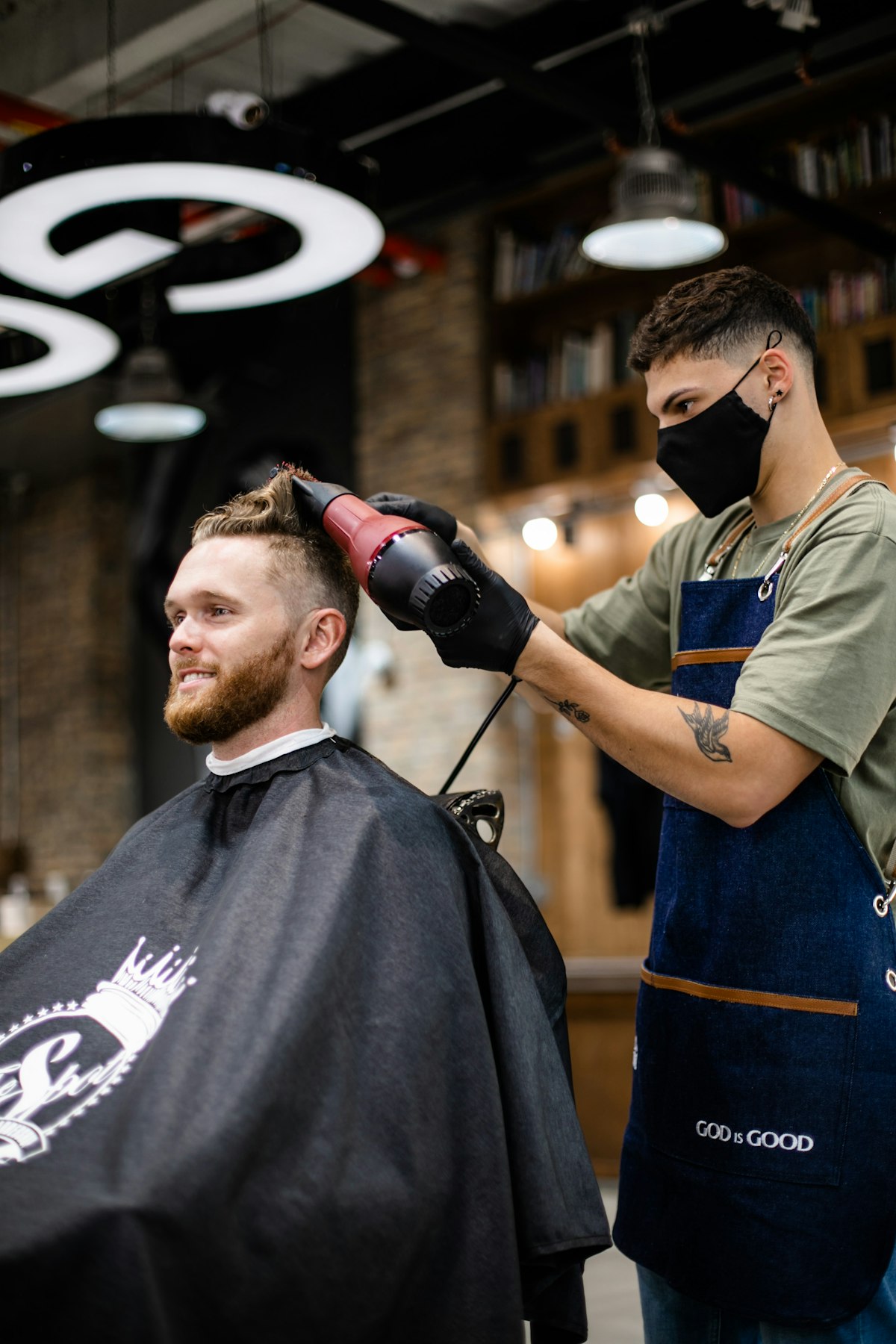
Blowdrying against the cowlick direction while the hair is wet is the most effective technique. Apply a small amount of holding cream or light clay. Use a blowdryer and a brush or fingers to push the hair against its natural growth direction while drying. The heat sets the hair in the opposite direction temporarily. This does not last all day but significantly reduces the lift for several hours.
Hair clay or pomade applied at the specific cowlick section adds weight that suppresses the lift. Distribute a small amount directly at the problem area and press down firmly. The hold of the product fights the growth direction.
Buzzing the cowlick area very short effectively eliminates the problem. At a quarter inch or less, there is not enough hair to form a visible tuft.
What Does Not Work
Pressing down on a cowlick without heat or product has no lasting effect. The hair returns to its growth direction as soon as pressure is released. Water alone temporarily flattens it and then springs back as it dries.
Hats worn regularly do not permanently train hair to grow flat. Hair growth direction is determined by the follicle, not by how the hair is pushed while growing.
Frequently Asked Questions
Can a cowlick be permanently removed or changed?
The follicle angle determines growth direction and cannot be changed non-surgically. Permanent straightening treatments like keratin treatment or Japanese straightening soften the body of the hair shaft, making it more willing to lie in a given direction. This reduces cowlick effect but does not eliminate it. The follicle still points the same direction; the hair is just more cooperative.
Do cowlicks get worse with age?
Cowlicks can become more visible with age due to thinning. A cowlick in dense thick hair may be barely noticeable because surrounding density suppresses the lift. The same cowlick in thinner hair has less surrounding coverage and appears more pronounced. The follicle direction itself does not change, but visibility increases as density decreases.
How do I tell my barber about my cowlick?
Point directly to the location and show which direction it grows. Tell the barber that previous cuts have struggled at that point and that you want the cut to go with the growth direction there. Most barbers see cowlicks regularly and adjust automatically once they see the growth pattern. The barber who knows it is there will handle it better than one who discovers it mid-cut.
Is a cowlick causing my part to move?
A hairline cowlick can make certain part positions impossible to hold because the hair naturally returns to its growth direction. If your part consistently shifts back to the same location regardless of where you place it, a cowlick is likely directing it. The natural position where the cowlick wants to divide is often the most practical place to put the part rather than fighting it.
What is the difference between a cowlick and a double crown?
A cowlick is a growth direction anomaly that can occur anywhere on the scalp. A double crown specifically refers to having two crown swirl points instead of one, creating two growth centers at the back of the top section. A double crown creates two competing growth directions at the crown and can make the crown section difficult to style flat regardless of length. Both are managed with the same approach: shorter crown length and textured styles.
Related Reading From CADMEN Barber Academy
- Cutting Afro and Type 4 Hair: Techniques for Barbers Working with Coily Textures
- The Blowout Haircut: What It Is and How to Maintain It
- The Brush Up Haircut: What It Is and How to Style It
- The Caesar Haircut: What Makes It a Caesar and How to Cut It Cleanly
- The Comb Over Haircut: How Barbers Cut and Style the Most Versatile Men's Haircut
- How to Cut Around a Cowlick
