How to Start a Barbershop in Ontario: What It Actually Takes
How to Start a Barbershop in Ontario: What It Actually Takes
Most guides on opening a barbershop give you the obvious list: write a business plan, find a location, buy equipment. That list is not wrong. It is just incomplete in the places that actually cause shops to close.
CADMEN built multiple award-winning barbershop locations in the GTA, completed a full franchise development process including a Franchise Disclosure Document, and sold locations. Here is what the real picture looks like.
Step 1: Understand the Regulatory Environment in Ontario
Ontario regulates barbering under the Hairstylist trade administered by Skilled Trades Ontario. Hairstylist is a compulsory trade. Every barber cutting hair on your premises must hold one of the following:
- A Certificate of Qualification (C of Q)
- A Provisional Certificate of Qualification
- A Registered Training Agreement (active apprenticeship)
Hairstylist is a compulsory trade in Ontario. The usual authorization is a valid Registered Training Agreement, Provisional Certificate of Qualification or Certificate of Qualification, unless an applicable exemption permits otherwise. A private course certificate does not replace that authorization. Check Skilled Trades Ontario’s requirements and exemptions before professional work.
On top of the trade certification requirement, your space must pass a public health inspection before opening. Requirements are administered by your local public health unit and cover sanitation standards, equipment, and facility layout. Contact your local public health unit early, before you sign a lease, to understand what the inspection requires. Some spaces fail because their plumbing configuration does not meet the standards and the retrofit costs are significant.
Step 2: Know the Real Startup Costs
Barbershop startup costs in Ontario range from $40,000 for a small, simple build in an already-suitable space to $120,000+ for a full-fit build with multiple stations in a downtown location. The variables that matter most:
Leasehold improvements
Most commercial spaces are not ready for a barbershop. You typically need flooring, plumbing for a shampoo bowl, electrical upgrades, lighting, paint, and build-out work. Budget $15,000 to $50,000 depending on the state of the space. Some landlords offer tenant improvement (TI) allowances, which offset this cost. Always negotiate TI into the lease before signing.
Equipment
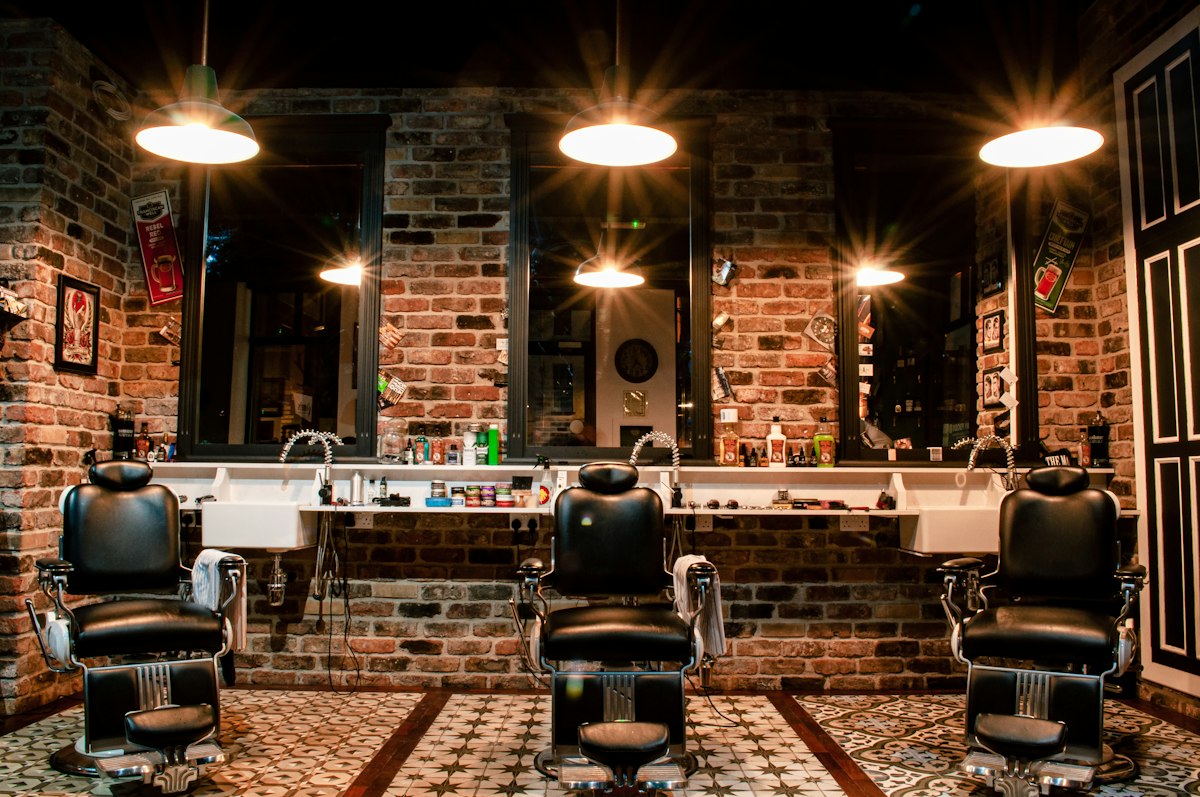
A 3-station barbershop requires 3 barber chairs (hydraulic or reclining, $800 to $3,000 each plus the base), 3 mirrors and workstations, a waiting area, a reception area, a shampoo station if you offer shaves or color, and a back bar for product and tools. Budget $10,000 to $30,000 for equipment depending on whether you buy new or used. Used barber chairs can be found in good condition and significantly reduce this number. New chairs from quality suppliers like Takara Belmont or Collins will be at the higher end.
Operating reserves
This is where undercapitalized shops fail. Month one and month two of a new barbershop rarely cover fixed costs. Build a 3 to 6 month reserve for rent, utilities, insurance, and payroll before opening. If you open and need to be profitable in month two to survive, the pressure on hiring and pricing decisions becomes distorting.
Step 3: Choose the Right Compensation Model Before You Hire
Most barbershops in Ontario operate on one of two models:
Commission arrangements: Check whether the barber is an employee and which employment standards apply before setting a percentage split. For an employee covered by Ontario’s minimum-wage rules, commission pay must meet the applicable minimum wage for hours worked. Record hours and earnings, and have payroll confirm any required top-up, overtime and other entitlements. Put responsibility for supplies and other costs in the written agreement. Read the source.
Booth rental: The barber pays you a fixed weekly or monthly fee for their chair space and keeps 100% of their service revenue. Your income is fixed. The barber's income is entirely dependent on their book. At low-volume periods, a booth renter paying $250 to $400 per week is generating that revenue for you regardless of their chair count. At high volume, the same barber keeps a larger share than a commission arrangement would deliver.
There is also a hybrid: daily rental, where the barber pays a flat per-day rate and keeps everything above it. Common in high-traffic shops where chair time is at a premium.
The model you choose affects who you can recruit, what your cash flow looks like, and what you are responsible for operationally. A booth rental shop has a predictable revenue floor. A commission shop's revenue scales with performance but so does the cost of management and supply chain.
Step 4: Solve the Barber Retention Problem Before It Costs You
The most expensive mistake barbershop owners make in year two is losing a barber who took their client list with them.
Barbers who build their book under your roof and then leave do so because they either found a better financial arrangement elsewhere or because they built enough clientele to open their own shop. Both are predictable. Both are manageable.
What keeps barbers in a shop longer than money alone: environment, culture, equipment quality, and whether the owner is invested in their growth. Shops that retain barbers for 3 to 5 years are almost always shops where the owner has created a culture worth staying in and a compensation structure that rewards tenure.
The practical side: a signed booth rental or commission agreement with a non-solicitation clause (carefully drafted by a lawyer) gives you some protection if a barber leaves and tries to take your client list. Consult an employment lawyer before finalizing any barber agreements. What is enforceable varies by province and circumstance.
Step 5: Build a System Before You Scale
Most barbershops that stay small stay small because they run on the owner. The owner does the bookings, manages the schedule, handles supplies, resolves complaints, and cuts hair 6 days a week. That is a job, not a business.
Shops that scale past one location build systems early: a booking platform (not a paper book), a standardized client intake, a supply ordering protocol, a service menu with consistent pricing, and an onboarding process for new barbers. The system is what a second barber or a second location runs on. Without it, expansion means the owner's time gets divided, not leveraged.
How CADMEN Can Help If You Are Planning to Open
CADMEN's barbershop owner business coaching program was built from operating multiple award-winning GTA locations. It covers pricing strategy, staffing models, compensation structures, client systems, and the operational framework that determines whether a shop breaks even in year one or runs out of cash.
The program is $4,000 USD. It is appropriate for people who are actively planning a shop opening or in their first year of operation. It is not a generic business course. It is specific to how barbershops in Canada work and what the real failure points are.
Information at academy.cadmen.ca.
CADMEN Barber Academy is a private training institution in Mississauga, Ontario. It does not provide Skilled Trades Ontario apprenticeship hours or Certificate of Qualification pathways.
Frequently Asked Questions
What do you need to open a barbershop in Ontario?
You need a registered business entity, a commercial lease or space, a public health inspection and approval from your local public health unit, compliance with Skilled Trades Ontario's compulsory trade requirements for all barbers cutting hair on premises, business insurance, and applicable municipal business licenses. Public health inspection requirements vary by municipality. Contact your local public health unit before signing a lease.
How much does it cost to open a barbershop in Ontario?
A typical startup costs $40,000 to $120,000+. Leasehold improvements run $15,000 to $50,000 depending on the space. Equipment for a 3-station shop runs $10,000 to $30,000. Add first/last month rent, insurance, signage, software, and 3 to 6 months of operating reserves. Shops that open undercapitalized rarely survive year two.
Do you need to be a licensed barber to own a barbershop in Ontario?
Hairstylist is a compulsory trade in Ontario. The usual authorization is a valid Registered Training Agreement, Provisional Certificate of Qualification or Certificate of Qualification, unless an applicable exemption permits otherwise. A private course certificate does not replace that authorization. Check Skilled Trades Ontario’s requirements and exemptions before professional work.
