How to Start a Barbershop in Canada: What You Actually Need to Know
How to Start a Barbershop in Canada: What You Actually Need to Know
Most barbers who open shops spend 6 to 12 months learning things that could have been learned in advance. The licensing requirements, the location math, the staffing traps, the pricing structure that actually covers costs. This is what that knowledge looks like before the mistakes.
The Regulatory Foundation
Provincial trade requirements
In Ontario, barbering falls under the Hairstylist trade regulated by Skilled Trades Ontario. Hairstylist is a compulsory trade: anyone cutting hair for the public must hold a Registered Training Agreement, Provisional Certificate of Qualification, or full Certificate of Qualification. This applies to the owner if they cut hair themselves, and to every barber they employ.
Requirements vary by province. In British Columbia, Quebec, and several other provinces, hairstyling is a voluntary trade, meaning certification is not legally required to operate. Verify the current requirements in your province before opening.
Business registration and licensing
The standard requirements to operate a barbershop in Canada:
- Business registration: provincially (sole proprietorship, partnership, or corporation) or federally if operating across provinces. A corporation provides liability separation and may offer tax advantages worth discussing with an accountant.
- Municipal business license: required in virtually every Canadian city and municipality.
- Public health compliance: provincial and municipal health units regulate barbershops for sanitation standards, including sterilization equipment for tools, sanitary surfaces, ventilation, and lighting. An inspection is typically required before opening. Requirements vary by province.
- Commercial lease: negotiated with a commercial landlord or sublease from a building owner.
Insurance
At minimum: general commercial liability insurance. If you employ barbers, employer's liability coverage. Verify with an insurance broker who understands service businesses, because standard business policies may not cover all barbershop-specific risks.
Location
Location determines whether the shop survives the first 18 months. The two variables that matter most:
- Foot traffic and accessibility. A shop that requires destination intent to find is a harder business than a shop on a high-pedestrian street or in a high-traffic plaza. Walk-in clients supplement booked clients and accelerate the client-building phase for new barbers.
- Rent-to-revenue ratio. The rent the space requires versus the realistic service revenue the location can generate. A $6,000/month space in a premium location needs a volume or price point that justifies it. Many shops fail because they secured premium space before building the volume to afford it.
Before signing a lease: model out the minimum number of haircuts per month needed to cover all fixed costs and the owner's minimum income. Then verify whether the location and demographic can support that volume.
Equipment
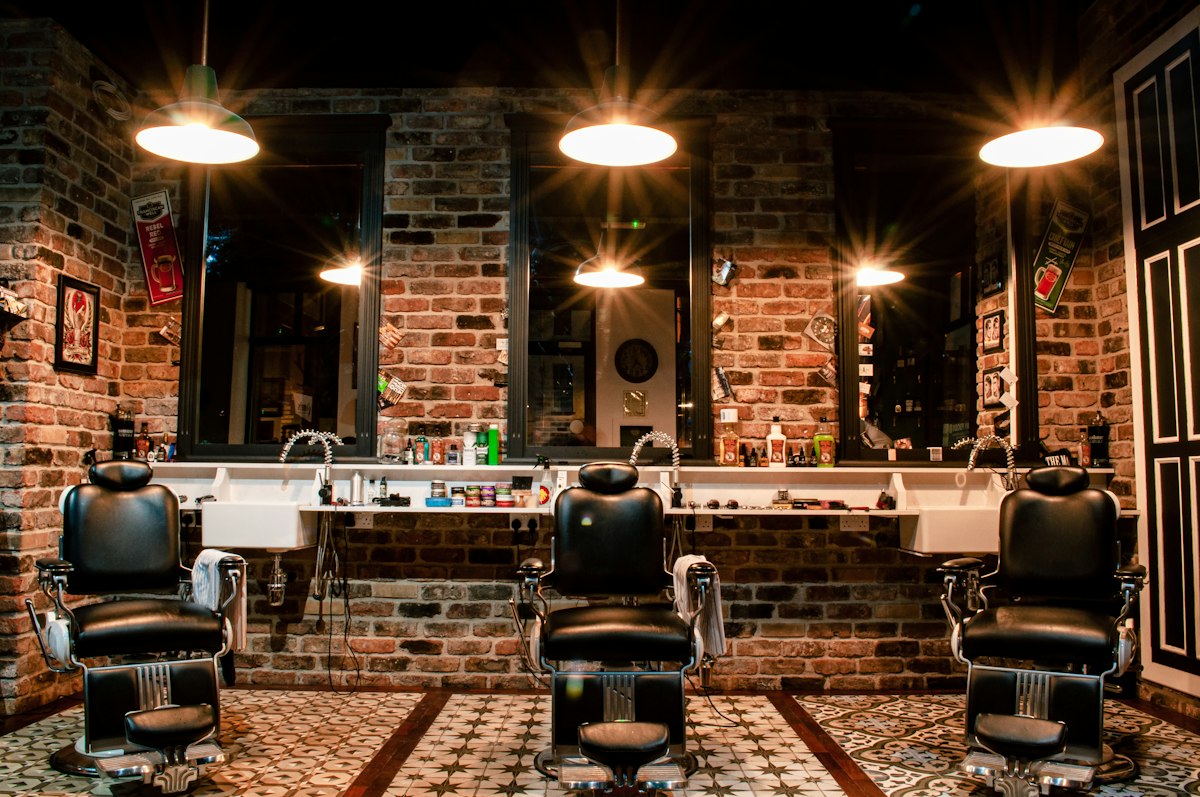
The minimum for a functional barbershop chair setup per station:
- Barber chair (hydraulic, plumbing optional)
- Wall-mounted or standing mirror
- Station cabinet or counter with drawer storage
- Sanitation jar and sterilization equipment (autoclave or UV sterilizer for clippers and combs)
- Shampoo bowl and chair if offering wash services
Equipment can be purchased new (higher upfront, no maintenance surprises) or used (lower upfront, verify condition carefully). Hydraulic barber chairs are the highest-wear item. Used chairs with hydraulic problems are expensive to repair and a constant source of operational friction.
Staffing
The most expensive mistake in barbershop staffing is building the business around one barber's client book, whether the owner's or a star employee's. When that barber leaves, the client book goes with them.
Build systems that make CADMEN the brand clients are loyal to, not a specific barber. This means:
- Client data in a CRM the shop owns, not a barber's personal Instagram or phone contacts
- Rebooking systems that keep clients in the shop's scheduling system, not barber-to-client text threads
- Consistent service standards across all chairs, enforced through training and hiring criteria
For staffing structure, understand the difference between commission employees and booth renters before hiring. Each has different implications for control, overhead, and administrative requirements. See the post on booth rental vs commission for a full breakdown.
The Client Acquisition Phase
New barbershops typically need 12 to 24 months to build a stable client base that covers operating costs. Most owners underestimate this timeline and underestimate the operating reserve needed to survive it.
The fastest client acquisition channels for a new shop:
- Google Business Profile with an active review generation process from the first week open
- Instagram showing real work, real clients, real shop environment. Not generic content. Local content.
- Retention from the first visit: no client should leave without a rebooking or follow-up system capturing them
- Referral from satisfied early clients. Every new client who has a great first experience is a referral network if they are asked at the right time
Paid advertising at a new, unproven shop rarely produces positive ROI. The trust signals (reviews, content history, word of mouth) are not in place yet. Build organic trust first, then amplify it with ads once the conversion infrastructure is proven.
What CADMEN Built and What It Teaches
CADMEN operated multiple award-winning barbershop locations across the GTA, built the systems that produced over 20,000 clients served and more than 1,000 five-star Google reviews, and then sold those locations and documented everything. The business coaching program exists to transfer those operational systems to other barbershop owners.
CADMEN's coaching page lists business operations, marketing, branding, leadership, attracting and retaining employees, and building a client base. Ask our team to confirm the support included in the current program.
CADMEN Barber Academy is a private training institution in Mississauga, Ontario. It does not provide Skilled Trades Ontario apprenticeship hours or Certificate of Qualification pathways.
Frequently Asked Questions
What do you need to open a barbershop in Canada?
Business registration (provincial or federal), municipal business license, provincial health compliance approval, qualified staff with appropriate trade certification (required in Ontario and several other provinces), commercial lease, equipment, and operating capital. Requirements vary by province. Verify current regulatory requirements with your provincial health unit and trades authority before opening.
How much does it cost to open a barbershop in Canada?
A small 2 to 3 chair shop in a mid-size Canadian city typically requires $30,000 to $80,000+ in startup capital, covering first and last month's rent, leasehold improvements, equipment, supplies, and operating reserves. Costs are significantly higher in major markets like Toronto or Vancouver. Buying an existing shop with equipment in place is often less capital-intensive than building from scratch.
What are the most common reasons barbershops fail in Canada?
Undercapitalization (opening without enough operating reserve to survive the client-building period), over-reliance on a single barber whose departure takes the client book, poor location selection limiting walk-in traffic, pricing too low to cover actual costs, and no systems for client retention and rebooking. Most failures stem from operational knowledge gaps, not service quality problems.
