How to Open a Barbershop in Canada: The Business Side Most Barbers Miss
How to Open a Barbershop in Canada: The Business Side Most Barbers Miss
Most barbers who open a shop are technically excellent. The majority close within two years. The failure rarely comes from the quality of the haircuts. It comes from the gap between craft skill and business operations — a gap the industry almost never prepares people for.
This guide covers what it actually takes to open a barbershop in Canada: the legal and licensing requirements, the operational decisions that determine whether the business survives, and the areas where most new shop owners make avoidable mistakes.
Step 1: Register Your Business
Choose a business structure. The three common options in Canada are sole proprietorship, partnership, and corporation. Sole proprietorships are the simplest to set up but offer no separation between personal and business liability. Incorporation creates a legal entity separate from you and is generally recommended once the business has revenue worth protecting.
In Ontario, business name registration is handled through ServiceOntario. Federal incorporation is available through Corporations Canada. Your accountant can advise on the structure that makes sense given your revenue stage and province.
Register for a GST/HST number once your revenue exceeds the federal threshold ($30,000 in annual revenue). You may want to register earlier depending on your province and the nature of your expenses.
Step 2: Get Your Licenses and Permits
Requirements vary by municipality. You will need at minimum:
- A municipal business license from your city
- A health and safety inspection before opening (administered by your local public health unit)
- Compliance with Ontario's Skilled Trades Act if you are in Ontario, where barbering falls under the regulated Hairstylist trade (332A) managed by Skilled Trades Ontario
Verify current requirements with ServiceOntario and your local municipality. Rules change, and penalties for operating without required permits can be significant.
Step 3: Find and Negotiate Your Location
Location affects client volume, rent cost, and the type of clientele you attract. Urban core locations in the GTA carry higher rent and higher foot traffic. Suburban locations carry lower cost and require more active marketing to build initial volume.
When negotiating a commercial lease, the terms that matter most are: base rent vs. additional costs (TMI: taxes, maintenance, insurance), lease length, renewal options, and what buildout costs the landlord will cover. A shorter initial term with renewal options gives you a way out if the location underperforms.
Ensure the space is properly zoned for personal service businesses. Not all commercial units permit this use.
Step 4: Set Up Your Equipment and Systems
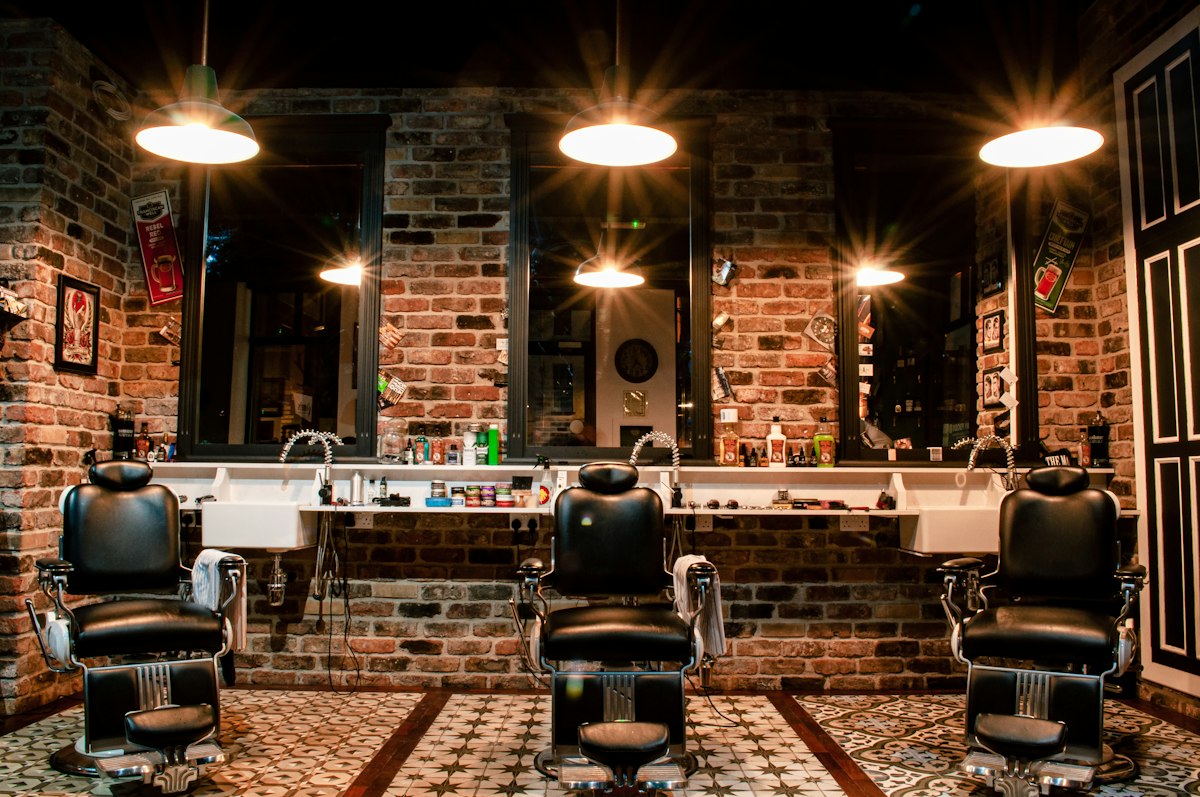
Core equipment includes barber chairs, mirrors, stations, tool storage, a shampoo bowl, lighting, and product display. Quality chairs and stations last for years; cutting corners here adds replacement costs later.
Set up your systems before opening, not after. A digital booking system eliminates manual scheduling and captures client contact information from day one. A point-of-sale system tracks revenue, manages service pricing, and simplifies bookkeeping. Manual cash handling creates tracking problems that compound quickly.
Step 5: Build a Pricing Structure That Actually Works
Most new shop owners underprice. They price based on what competitors charge, what clients expect, or what feels "not too high," rather than what the business actually needs to survive.
Your pricing must cover: rent, utilities, equipment maintenance, supplies, wages (including your own), booking software, insurance, and a margin for reinvestment and profit. If any of those items are uncovered at your current prices, the business is subsidized by your personal capacity to absorb losses.
Work backwards from your monthly fixed costs to determine the minimum revenue required to break even. Then price your service menu to hit that number at realistic volume before adding profit margin.
Step 6: Choose a Staffing Model
The two primary staffing models in Canadian barbershops are booth rental and commission.
Booth rental: Each barber pays you a flat fee (weekly or monthly) for their chair and functions as an independent contractor. Their revenue above that fee is their own. The owner gets predictable income but limited control over pricing, service standards, and team culture.
Commission: Barbers work as employees or contractors and keep a percentage of each service. The owner controls pricing and standards but takes on more management responsibility.
Each model has different implications under provincial employment law. Misclassifying an employee as a contractor is a significant legal and financial risk. Get this structure right from the start.
The Gap Most Shop Owners Don't See Until Year Two
The craft side of running a barbershop is teachable and learnable. Barbers improve through practice and feedback. The business side is different because no one teaches it. There is no standard training for how to read a profit-and-loss statement, how to structure a service menu for margin, how to manage a team of contractors, or how to build client retention systems that compound over time.
Most barbers who open shops learn these lessons through trial and error, usually expensive error. The ones who succeed fastest are the ones who close this gap deliberately instead of learning it in real time at the cost of their business.
Business Coaching for Canadian Barbershop Owners
CADMEN Barber Academy offers one-on-one business coaching for barbershop owners. The program is led by Francis Paua, who has 25 years of experience in the Canadian barber industry and built multiple successful shop locations in the GTA.
The coaching covers the areas that actually determine whether a shop survives and grows: pricing structure, service menu design, staffing and retention, marketing that builds recurring revenue, and the operational decisions that most owners make wrong in year one.
The program is available online for barbershop owners across Canada and the United States. It is priced at $4,000 USD. Learn more at academy.cadmen.ca.
Frequently Asked Questions
Do you need a license to open a barbershop in Canada?
Requirements vary by province and municipality. In Ontario, you need a municipal business license, a health and safety inspection clearance, and compliance with Skilled Trades Ontario requirements for the barbers working in your shop. Verify current requirements with your local municipality and ServiceOntario.
How much does it cost to open a barbershop in Canada?
Startup costs vary significantly based on location, size, and buildout scope. Key categories include commercial lease deposit and buildout, equipment and furniture, signage, inventory, software, and working capital for the first 3-6 months. GTA locations typically involve higher rent than smaller markets. Total costs commonly range from $30,000 to over $100,000 depending on scope and decisions made at each stage.
What is booth rental vs. commission in a barbershop?
Booth rental means each barber pays you a flat weekly or monthly fee and keeps all revenue above that amount. Commission means barbers earn a percentage of each service. Booth rental provides predictable owner income. Commission gives more operational control. Both have different implications under Canadian employment law.
Why do most barbershops fail in the first two years?
The most common causes: underpricing services, no client retention system, cash flow gaps in the first year before clientele is established, and attempting to manage everything personally instead of building systems. The problem is almost never technical skill. It is the absence of business operations training.
Is there business coaching for barbershop owners in Canada?
CADMEN Barber Academy offers one-on-one business coaching led by master barber Francis Paua. It covers pricing, staffing, marketing, and operations. Available online across Canada and the US. $4,000 USD. Details at academy.cadmen.ca.
