The Blowout Haircut: What It Is and How Barbers Style It
The Blowout Haircut: What It Is and How Barbers Style It
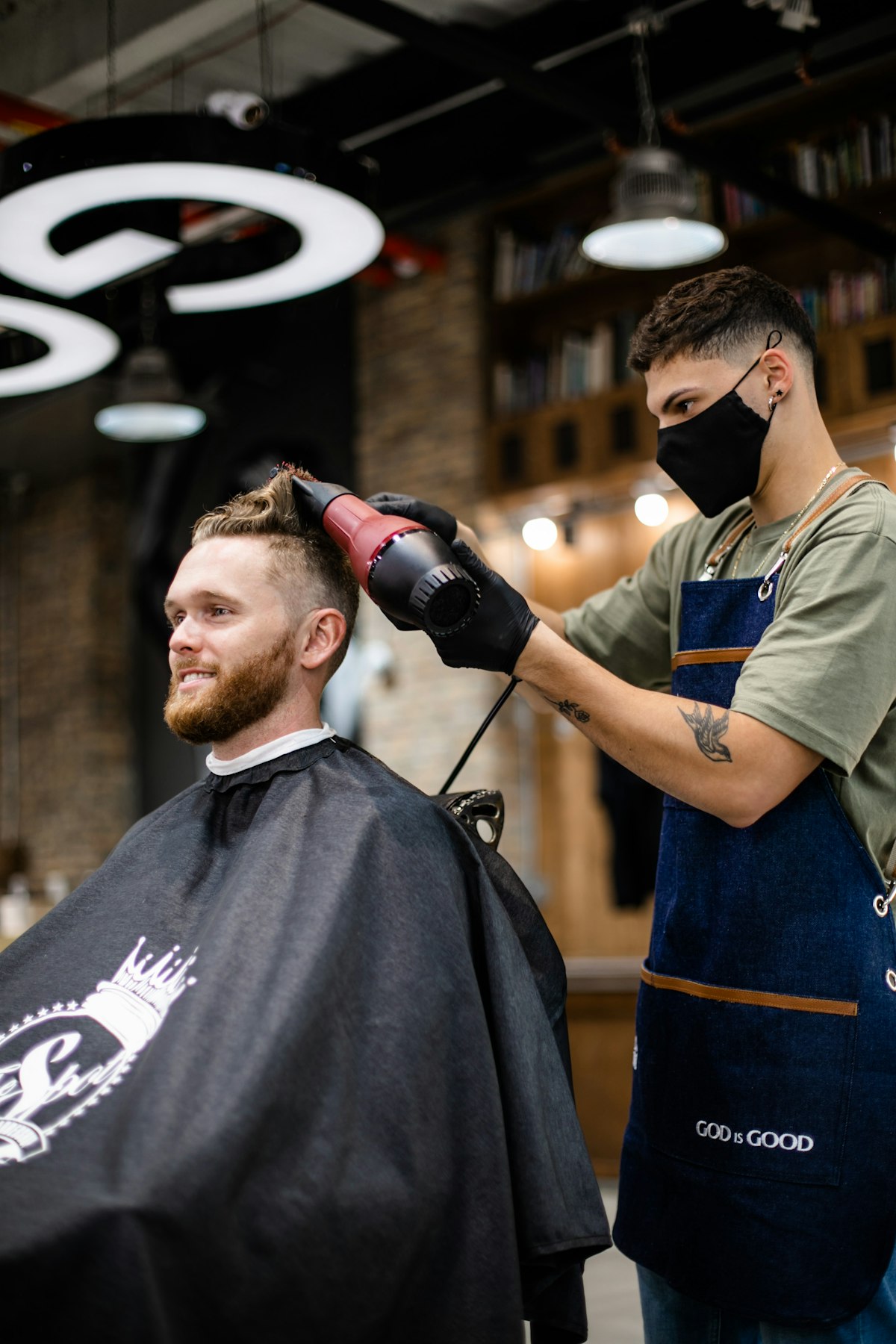
A blowout haircut is defined by high volume created through blow drying technique rather than by the haircut structure alone. The hair is cut to enable the volume, then blow dried and styled away from the face into a full, lifted shape. Here is how it works.
The Cut Behind the Blowout
The haircut that creates a blowout is typically a medium-length cut (one and a half to three inches on top) with a low to mid taper or fade on the sides. The top length provides enough hair to build volume through blow drying; shorter cuts do not have enough length for the hair to be lifted and shaped effectively. The sides are kept shorter than the top, which creates the contrast that makes the blown-out top read as high volume. The specific cut is not unusual; it is the styling that creates the blowout appearance.
The Blow Dry Technique
The barber applies a volumizing product (a lightweight mousse, thickening cream, or pre-styler) to damp hair after the cut. A medium-heat blow dryer with a concentrator nozzle is used to dry the hair in the direction opposite to how it naturally falls. For a full blowout, this means lifting the hair away from the head with a round brush or fingers while drying, directing the airflow at the roots to build lift. The hair is dried into a position of high volume and then set with a small amount of finishing product (pomade, clay, or a light paste) to hold the shape. The final result is hair that has significantly more volume and lift than the same hair in its natural dry state.
Hair Types That Benefit Most
Fine and medium-weight hair benefit most from blowout styling because the blow dry technique adds volume that these hair types lack naturally. Thick hair already has natural volume; a blowout on thick hair produces high-volume results but requires more effort and hold product to manage. Very curly hair does not typically produce the blowout's smooth, lifted shape through this technique; the blow dry would be working against the curl direction, and the result would be frizz rather than a smooth blowout shape. The classic blowout aesthetic is associated with straight to wavy medium-length hair.
Frequently Asked Questions
How do I recreate a blowout at home?
Apply a volumizing mousse or thickening cream to towel-dried hair. Use a blow dryer on medium heat with a concentrator nozzle and a round brush (or just fingers for a looser result). Dry the hair at the roots first, lifting the hair upward and away from the scalp with the brush while directing airflow at the roots. Move from the front back. Once most of the moisture is out, run the dryer over the entire top again to set the shape. Finish with a small amount of light pomade or clay worked through the top section to hold volume without heaviness. The technique is learnable but takes practice to execute as cleanly as a barber does in the shop.
How long does a blowout hold?
Through the day if the correct hold product is used. A blowout with no hold product will fall as the hair's natural weight reasserts itself over 3 to 6 hours. A light pomade or clay applied to the styled hair after drying extends the hold through most of a full day. High-humidity environments accelerate deflation; hair absorbs moisture from the air and the volume built in the blow dry phase softens faster. Dry, lower-humidity environments hold the blowout longer. Some men re-lift with a blow dryer and finger-lifting midday if volume loss is significant.
Is a blowout the same as a "blowout haircut" in some salons?
The terminology varies between establishments. In some salons, a "blowout" is purely a styling service (wash, blow dry, and style without a cut). In barbershops, a "blowout haircut" typically refers to a haircut designed to enable blowout styling, completed with a blowout finish. In both cases, the end result is blow-dried volume, but one includes a haircut and one does not. When booking, confirm whether a haircut is included if the service is listed as a "blowout."
Can thin or fine hair achieve a real blowout look?
Yes, and fine hair is actually well-suited to it. Volumizing products add temporary thickness to fine hair shafts, and the blow dry technique lifts fine hair away from the scalp more easily than thick hair because the weight is lower. The result on fine hair is often more dramatic relative to the hair's natural state than the same technique on thick hair. Fine hair blowouts require the right products (lightweight volumizers, not heavy pomades that collapse the fine hair under their weight) and a finishing product that holds without heaviness. A light-hold spray or a thin pomade applied sparingly is the standard finish for fine hair blowouts.
Related Reading From CADMEN Barber Academy
- The Blowout Haircut: What It Is and How to Maintain It
- Cutting Afro and Type 4 Hair: Techniques for Barbers Working with Coily Textures
- The Blowout Haircut: What It Is, How to Cut It, and Why It Requires More Than Just Volume
- The Brush Up Haircut: What It Is and How to Style It
- The Caesar Haircut: What Makes It a Caesar and How to Cut It Cleanly
- The Comb Over Haircut: How Barbers Cut and Style the Most Versatile Men's Haircut
Want to learn to cut a blowout yourself? CADMEN Barber Academy teaches cutting hands-on, with an educator beside you. See the barber academy in Mississauga or view in-person classes and send an enquiry.
Watch the free Barbering for Beginners playlist on YouTube.
