Barbershop Upsell Services: Adding Revenue Without Adding Clients
Barbershop Upsell Services: Adding Revenue Without Adding Clients
Every client already in the chair represents a fully acquired customer. The cost of serving that client's haircut is already incurred in time and overhead. Adding a service on top of the haircut costs incremental time and supplies. The revenue is nearly pure margin. Getting the upsell strategy right is one of the highest-leverage revenue moves available to a barbershop that does not require adding clients or increasing marketing spend.
The Services That Upsell Most Effectively
Hot towel shave or neck shave
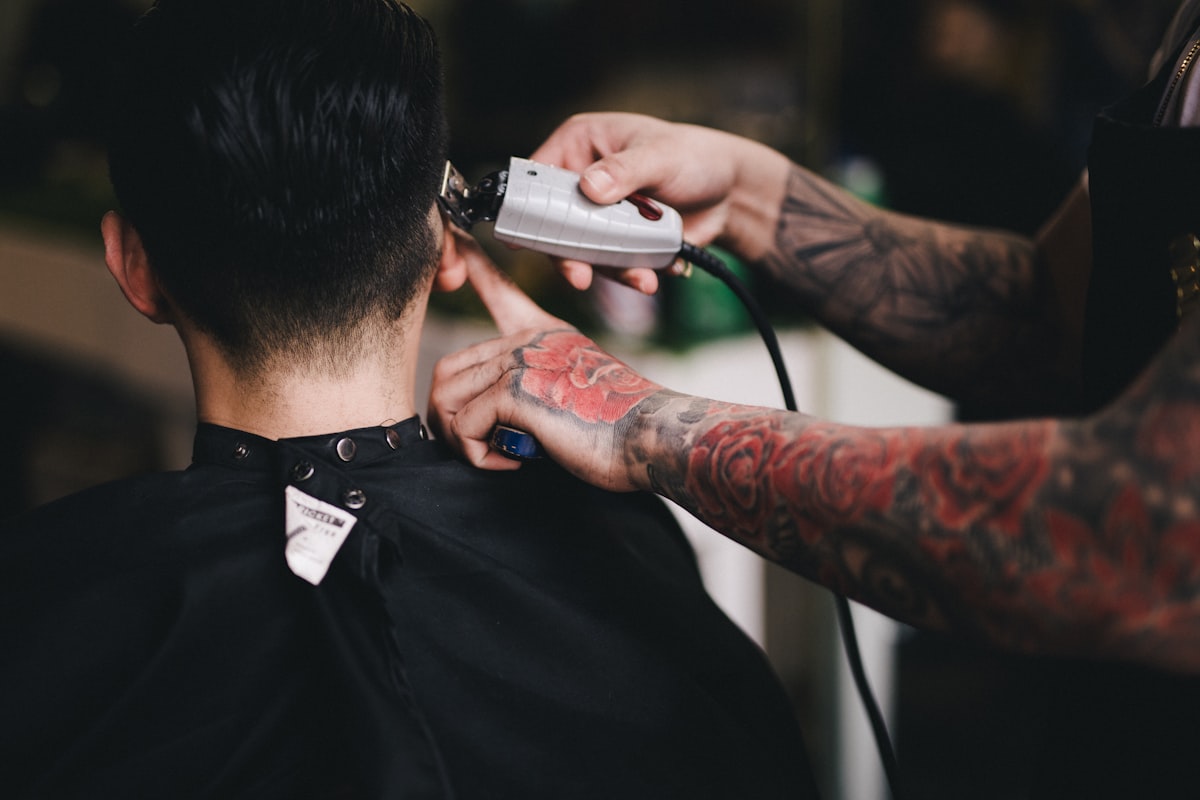
The neck shave (cleaning the hairline and neck with a hot towel and straight razor after the haircut) is the cleanest upsell in barbering. It takes 5 to 8 minutes, produces a visible quality improvement the client can see in the mirror before they leave, and commands $10 to $20 over the standard haircut price. Many clients who receive it once rebook it as part of their standard service. This is the easiest upsell to introduce and the one with the highest repeat-booking rate.
Beard services
For clients with beards of any length, a beard lineup and trim or a beard shaping service adds $15 to $40 to the ticket depending on the scope of work. The offer is straightforward: any client who comes in with a beard is a natural candidate. The upsell is introduced by asking during the consultation whether they want the beard cleaned up alongside the haircut. Clients who say yes once tend to add it to their regular booking.
Scalp massage or hot towel head treatment
A 3 to 5 minute scalp treatment (hot towel, scalp oil, or massage) adds a premium experience element to the service and commands $10 to $20 over the base price. This works particularly well in shops that position themselves in the premium segment. It is not for every client or every shop model, but for shops building a higher-ticket experience it is a consistent revenue and experience differentiator.
Eyebrow or nose/ear grooming
Quick, specific grooming services (eyebrow shaping with a razor, ear and nose hair trimming) take 2 to 5 minutes and are offered to relevant clients. These are not upsells for every client; they are specifically relevant to clients who would visibly benefit. Offering them with a direct, non-awkward mention ("Want me to clean up the eyebrows while you're here?") is a service move, not a sales move. Clients appreciate it.
Product sales
Retail product sales (pomade, beard oil, clippers, brushes) are a revenue addition that requires no service time. The effective retail setup: the barber uses a product during the service, names it while using it, shows the client how it works on their specific hair, and offers it at checkout. That demonstration is the sale. Product pushed from a shelf with no context does not convert.
How to Introduce the Upsell
The moment of introduction matters. Offering upsells at checkout (after the service is complete) is less effective than offering them during or before the service when the client is already engaged. Two effective timing points:
- During the consultation at the start of the service: "We can also clean up the beard if you want, adds about 10 minutes."
- Mid-service: "Do you want me to do a hot towel neck finish? Takes 5 minutes and it makes the line really sharp."
Both are service offers, not pitches. The language is factual and useful: what it is, how long it takes, what it does. No pressure, no repeated asking after a no.
The Revenue Math
A barbershop with 150 client visits per week and a $40 average ticket: $6,000 per week in base revenue. Adding a $15 upsell on 30% of visits adds $675 per week, or $35,100 per year in additional revenue from upselling alone. Increasing upsell acceptance from 30% to 45% doubles that gain.
Frequently Asked Questions
What is the highest-margin upsell service in a barbershop?
The neck shave has the highest margin ratio relative to time. 5 to 8 minutes at $10 to $20 produces an hourly rate well above the base haircut service. Beard services are next at $15 to $40 for 10 to 20 minutes. Retail product has the highest absolute margin (no service time) but requires the right product demonstration to convert.
Should barbershops bundle services or charge per add-on?
Both approaches work. Bundle pricing (haircut plus beard service for a combined price that is less than the two services individually) increases average ticket and simplifies the client's decision. Per-add-on pricing gives clients control over what they add. The right choice depends on the shop's price positioning: premium shops with higher base prices often do better with per-add-on pricing; value shops benefit from bundles that increase the perceived deal. Testing both and measuring average ticket change is the fastest way to know which works for a specific client base.
How do you train barbers to upsell without being pushy?
Script the language as a service offer, not a sales pitch. "Do you want me to clean up the beard?" is a service offer. "Our beard service is only $20 and a lot of clients love it" is a pitch. The former feels helpful; the latter feels transactional. Role-play the offer language in staff training until it feels natural. Barbers who feel awkward pitching services stop doing it; barbers who feel like they are offering useful options do it consistently.
When should a barber not attempt an upsell?
When the client has indicated they are in a hurry, when the service would not actually improve the client's result, or when the same upsell has already been declined by this client on the previous 2 to 3 visits. Reading the client accurately is part of the skill. A blanket policy of always attempting the upsell regardless of context produces the pushy experience that damages retention.
Does retail product placement in a barbershop actually generate revenue?
Yes, when the product is demonstrated in use rather than sitting on a shelf. Products that the barber actively uses during the service and names out loud convert at 3 to 5 times the rate of products that simply sit in a retail display. The display is the holding space; the demonstration is the sale. Every product in a barbershop retail section should have a specific place in the service workflow where it is actively used on clients.
