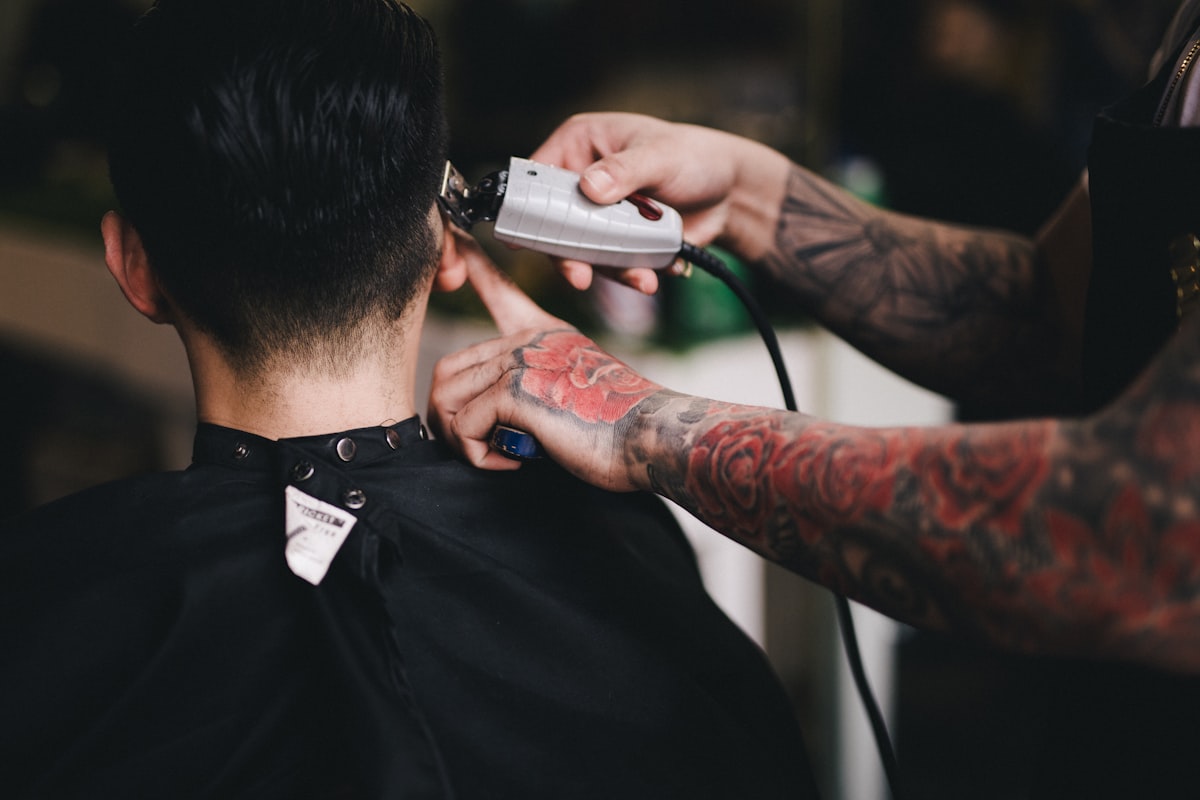
How Much Space Does a Barbershop Need? Square Footage by Shop Type
How Much Space Does a Barbershop Need? Square Footage by Shop Type
The square footage requirement for a barbershop is determined by the number of operating stations, the waiting area size, the back-of-house requirements, and the accessibility and building code requirements of the specific municipality. The minimum viable space for a functional single-station barbershop is significantly less than most prospective owners assume; the maximum useful space is constrained by the revenue capacity of the station count that fills it.
Space Per Station
Each operating barber station requires: the barber chair itself (typically 36 to 40 inches wide and 44 to 48 inches deep in standard configurations), the mirror and station cabinet (another 24 to 36 inches of depth from the chair), and the barber's working clearance behind the chair (at least 42 to 48 inches to allow full movement around the client). A fully functional single station with proper working clearance requires approximately 80 to 100 square feet of dedicated floor area.
This calculation does not include the client approach corridor (the path from the waiting area to the chair), which is typically shared across multiple stations. In a row layout (stations along one wall), a corridor of 6 to 8 feet in front of the stations serves multiple chairs. In a face-to-face layout (stations on opposite walls), the corridor runs between the two rows.
Space by Shop Configuration
Solo operator shop (1 station). Minimum functional: 400 to 500 sq ft. This includes one full station with working clearance, a small waiting area (2 to 3 seats), basic retail display, and a small utility area. It is tight; the experience is workable, not luxurious. A solo operator can operate profitably in this range in a market with sufficient demand.
2-station shop. Functional range: 600 to 800 sq ft. Two stations with full working clearance, a waiting area of 4 to 6 seats, a small back area for product storage and a utility sink. This is the minimum configuration that allows a second barber to work simultaneously without one barber's movements consistently disrupting the other's space.
3 to 4 station shop. Functional range: 900 to 1,400 sq ft. This range allows for a proper waiting area, 3 to 4 fully functioning stations with adequate clearance, a small retail display area, accessible restroom (required by Ontario building code), and back storage. This is the most common configuration for a profitable multi-chair barbershop in the Ontario market.
5 to 8 station shop. Functional range: 1,500 to 2,500+ sq ft. Larger shops in this range can support retail, a private grooming room, a more substantial waiting area, and a back-of-house with room for staff and product inventory. The revenue justification for this size requires consistent high-volume booking across all stations during peak hours.
Revenue per Square Foot Calculation
The economic test for any space size: can the station count in that space generate enough revenue to cover rent, at the haircut pricing and volume the shop can realistically sustain? A 3-station shop at $45/cut, 20 cuts per station per day, 6 days per week generates $16,200/week or approximately $842,000 annually. That revenue level can support a very different rent cost than the same space rented for a single-station operation. Working backwards from realistic revenue capacity to maximum supportable rent is the correct way to size a space budget.
Frequently Asked Questions
What is the minimum size for a barbershop in Ontario?
Ontario building code and municipal bylaws set accessibility and sanitation requirements that effectively establish a practical minimum, though there is no fixed square footage minimum prescribed for barbershops specifically. Any commercial space occupied by the public must meet accessibility standards under the Accessibility for Ontarians with Disabilities Act, which requires door widths, turning radius clearances, and accessible restroom configurations that occupy meaningful space. As a practical matter, a barbershop that cannot meet these requirements, provide adequate client waiting space, and allow full barber working clearance around the chair is not operationally viable regardless of the absence of a specific size minimum.
How many stations can fit in 1,000 square feet?
With efficient layout: 3 to 4 stations with adequate working clearance, a waiting area of 4 to 6 seats, and a small back area. This assumes a standard rectangular floor plate with no significant structural columns or awkward geometry. Non-standard floor plates reduce the station count that fits comfortably; confirm the station layout with the actual space dimensions before committing to a lease based on a target station count.
Does a barbershop need its own bathroom in Ontario?
Ontario building code requires an accessible washroom for public-facing commercial occupancies. For a small-footprint barbershop in a multi-tenant commercial building, a shared accessible washroom in the common areas of the building may satisfy this requirement, depending on the specific building code occupancy classification and the building authority's interpretation. For standalone locations or larger shops, a dedicated accessible washroom within the unit is typically required. Verify with the building department for the specific municipality before signing a lease on a space that does not have a washroom within the unit.
Related Reading From CADMEN Barber Academy
- Haircuts for Men with Square Faces
- Best Haircuts for Men With a Square Face
- Best Haircuts for Men With Square Faces
- The Barbershop in American History: How a Service Became a Cultural Institution
- Barbershop Interior Design: What Creates the Environment Clients Come Back For
- Barbershop Music and Vibe: Why the Atmosphere Is Part of the Service
- Barbering Topics Index: Every Guide by Subject
