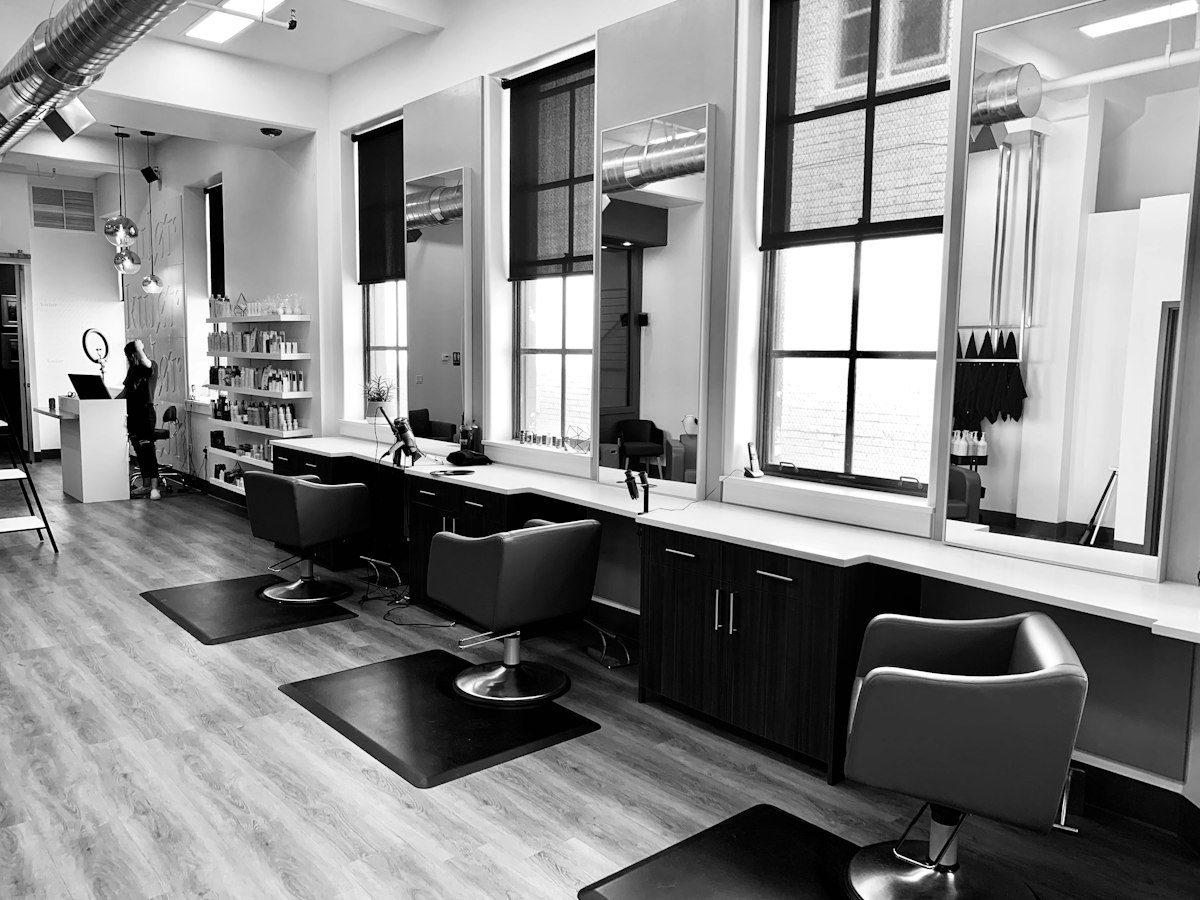
How Much Revenue Should Each Chair in Your Barbershop Generate
How Much Revenue Should Each Chair in Your Barbershop Generate
Per-chair revenue is the most actionable financial metric in barbershop operations because it tells you exactly where the money is coming from and where capacity is being wasted. An owner who tracks total shop revenue but not per-chair revenue cannot identify which barbers are underperforming, which chairs are overstaffed relative to client demand, or whether a new hire is adding revenue or adding cost without corresponding volume.
How to Calculate Per-Chair Revenue
Per-chair revenue = total revenue generated by the barber at that station over a given period (typically monthly or weekly). In a booth-rental model, this is the total services the renting barber performs. In an employee model, this is the total services performed at that station regardless of which barber was in the chair, if you rotate coverage.
The productive hours available per chair per month (for a single barber working 5 days per week, 9 to 10 hours per day) are approximately 180 to 200 hours. At a realistic utilization rate of 70% (accounting for scheduling gaps, no-shows, and breaks), productive client-facing hours are approximately 126 to 140 per month.
At an average service time of 30 minutes and an average ticket of $40 CAD, a fully productive chair at 70% utilization generates approximately $10,000 to $11,200 per month. At $50 average ticket, $12,600 to $14,000.
What Actual Barbershops Generate
Per-chair monthly revenue varies significantly by market, pricing, and utilization. General ranges across Canadian barbershop markets:
- Lower performing: $4,000 to $6,000/month per chair. Typical of new shops building clientele, shops in lower-density markets, or chairs with inconsistent coverage.
- Average: $7,000 to $10,000/month per chair. Established shops in competitive urban markets.
- High performing: $12,000 to $18,000+/month per chair. Premium pricing markets, high-repeat client bases, fully booked schedules.
These figures are estimates based on operator conversations and publicly available barbershop business data; confirm benchmarks for your specific market.
What to Do When a Chair Is Underperforming
Underperforming per-chair revenue typically traces to one of three causes: insufficient client volume (not enough bookings), a pricing problem (too low relative to costs), or a utilization problem (available hours not being filled). Each cause has a different fix. Volume problems are marketing problems. Pricing problems are positioning problems. Utilization problems are scheduling and booking system problems. Diagnosing correctly before applying a fix prevents the common error of discounting services to fill chairs when the actual problem is a weak booking system.
Frequently Asked Questions
How many clients can one barber serve per day?
A barber performing 30-minute cuts in a 9-hour working day, with a 30-minute lunch and short breaks between clients, can serve 14 to 16 clients per day at maximum throughput. At a more sustainable pace (allowing for longer services, cleaning between clients, and brief transitions), 10 to 12 clients per day is the realistic productive day for most barbers. Booking systems that allow back-to-back appointments without buffer time consistently lead to running behind schedule, which reduces client satisfaction and increases no-shows.
