Barbershop Music and Vibe: Why the Atmosphere Is Part of the Service
Barbershop Music and Vibe: Why the Atmosphere Is Part of the Service
A client who comes to a barbershop is not buying a haircut. They are buying an experience that includes the haircut. The music, the conversation, the energy of the space, and the relationship with the barber are part of what they are paying for. Two barbers of equal technical skill in two different atmospheric environments will not produce the same client retention, referral rate, or price ceiling.
Why Atmosphere Affects the Service Experience
Service businesses have decades of research showing that environment directly influences perceived quality. The same food tastes better in a clean, well-lit restaurant than in a dim, cluttered one. The same haircut is experienced differently in an environment that feels intentional versus one that feels careless. The atmosphere signals to the client at a subconscious level before the service begins: "this place knows what it is doing."
In a barbershop specifically, the atmosphere also determines the comfort level for the conversation that happens during the service. The barber-client relationship is built on those conversations. An atmosphere that feels comfortable and authentic to both the barber and the client produces the kind of talk that creates loyalty. An atmosphere that feels wrong (music too loud, too clinical, wrong vibe for the clientele) creates friction that works against the relationship.
Music as a Brand Signal
Music communicates the shop's identity before a word is spoken. It signals the demographic the shop serves, the energy level of the environment, and the cultural position of the brand. A hip-hop heavy playlist in a community barbershop in a Black neighborhood communicates one authentic thing. The same playlist in a shop in a different community communicates something different to that community.
The right music is authentic to the barbers and resonant with the client base. The wrong music is either music the barbers do not actually listen to (it reads as performative) or music that alienates the specific client demographic walking through the door.
Practical considerations:
- Volume: conversation is part of the service. Music should be present and felt but not competing with conversation. A practical test: can two people have a normal-voiced conversation across the barbershop? If no, it is too loud for the environment.
- Explicit content: some clients bring children. If the shop serves a family clientele at any point, the playlist should be filterable to clean versions.
- Music licensing: playing music in a commercial setting in Canada requires a license from SOCAN (Society of Composers, Authors and Music Publishers of Canada). Rates are based on square footage. Spotify, Apple Music, and YouTube are personal-use licenses that do not cover commercial public performance. Factor this into operational costs.
Other Atmosphere Elements
Scent: barbershops that use quality aftershave, pomade, and grooming product leave a distinctive and appealing scent profile that is itself part of the brand. The smell of fresh towels and classic barbershop product is a positive sensory anchor for many clients. Chemical smells (strong disinfectant) or stale air work against this.
Cleanliness: the visual environment signals hygiene and professionalism. A clean mirror, swept floor, organized station, and fresh cape all communicate that the service quality is worth the price. A cluttered station, a dirty mirror, and hair on the floor communicate the opposite even to clients who do not consciously notice.
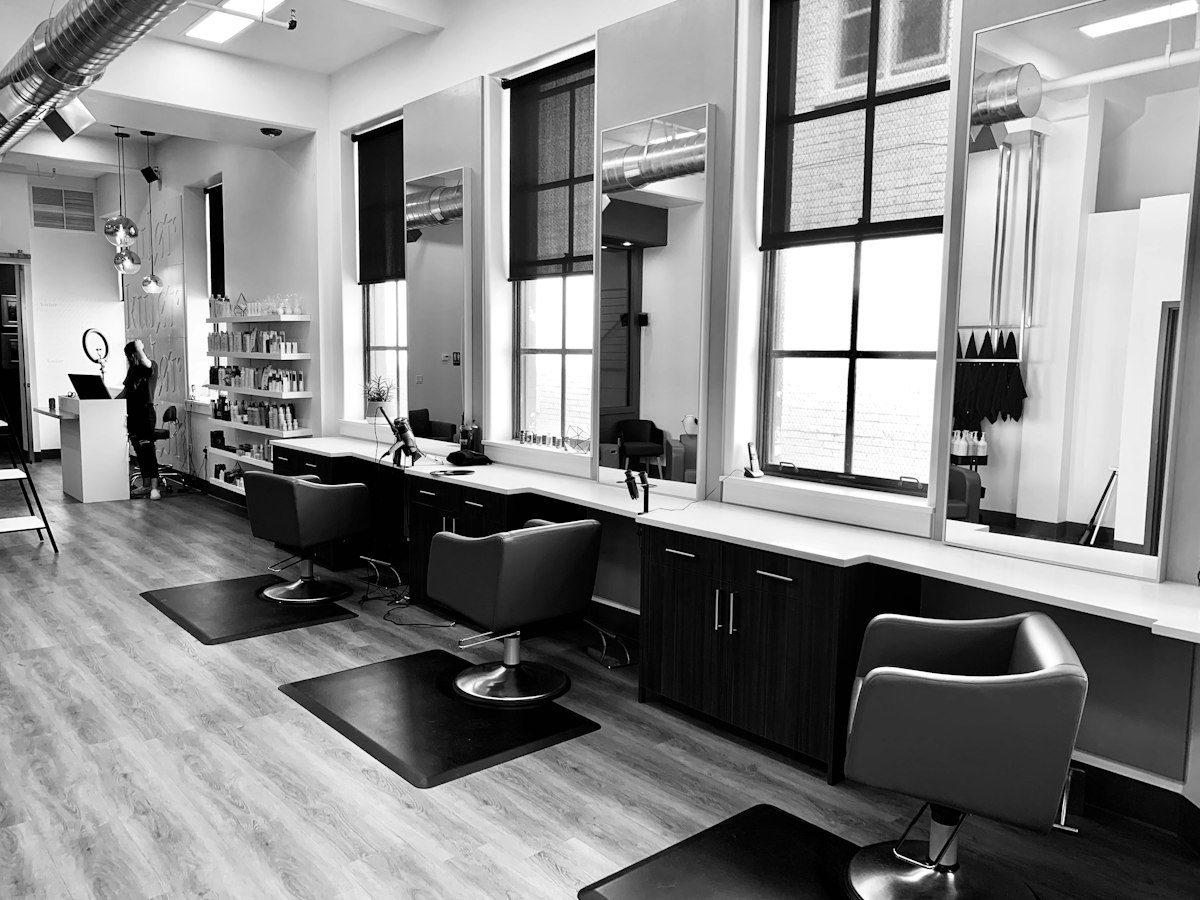
Wall treatment and lighting: the overall visual treatment of the space should reflect the brand identity. A classic heritage barbershop look (vintage barber poles, maps, wood elements) communicates one thing. A clean modern shop with minimal black-and-white treatment communicates another. Both are legitimate brand identities; inconsistency between the brand identity and the physical space is the only failure mode.
Frequently Asked Questions
What music is typically played in barbershops?
Hip-hop, R&B, and current popular music are the most common genres across North American barbershops because they are authentic to the culture and demographic of the majority of the market. Barbershops oriented toward older clientele more commonly play classic soul, jazz, or oldies. The specific genre is less important than authenticity: clients can tell when the music is chosen to fit the space versus chosen to fit a demographic stereotype. Play music the barbers actually listen to.
Does barbershop atmosphere affect how much clients will pay?
Yes, directly. A premium atmosphere allows for premium pricing because it supports the full service experience that the price premium is justified by. Clients do not pay $70 for a haircut just for the cut; they pay $70 for the haircut in a particular environment with a particular person and a particular experience. Shops that charge $70 in a $30-atmosphere environment face constant price resistance. The atmosphere and the pricing must be calibrated to each other.
How do you create a good vibe in a barbershop?
Authenticity is the prerequisite. The barbers should like being in the space, the music should reflect their actual taste, the decorations should reflect genuine interests or cultural identity rather than generic barbershop clichés, and the client interaction style should be natural rather than performed. A good vibe in a barbershop is not a curated aesthetic; it is an authentic environment where both the barbers and the clients feel comfortable. The authenticity communicates itself.
Do barbershops need a music license in Canada?
Yes. Playing music in a commercial establishment in Canada requires a SOCAN license (and potentially a Re:Sound license for recorded music). Rates are based on the size of the business and are charged annually. As of recent years, a small barbershop (under 1,000 square feet) pays a relatively modest annual fee. Using personal streaming accounts (Spotify, Apple Music) in a commercial setting violates those platforms' terms of service and does not substitute for a commercial license. Contact SOCAN directly for current rates for your specific situation.
How loud should the music be in a barbershop?
Loud enough to fill the space and create atmosphere, quiet enough that a normal conversation between two people does not require raised voices. A practical test: two people standing 10 feet apart (roughly the distance from the barber chair to the waiting area) should be able to have a normal-volume conversation without straining. Music that requires clients to speak louder to be understood creates fatigue and friction in the service interaction.
Related Reading From CADMEN Barber Academy
- Barbershop Signage Ideas: What Your Sign Communicates Before Clients Walk In
- Barbershop Waiting Area: How to Design a Space That Converts Walk-Ins and Retains Clients
- Barbershop Lobby and Waiting Area: What the Design Communicates
- Barbershop Ambiance and Design: What the Physical Environment Communicates to Clients
- How Much Space Does a Barbershop Need? Square Footage by Shop Type
- Barbershop Interior Design: What Creates the Environment Clients Come Back For
- Barbering Topics Index: Every Guide by Subject
