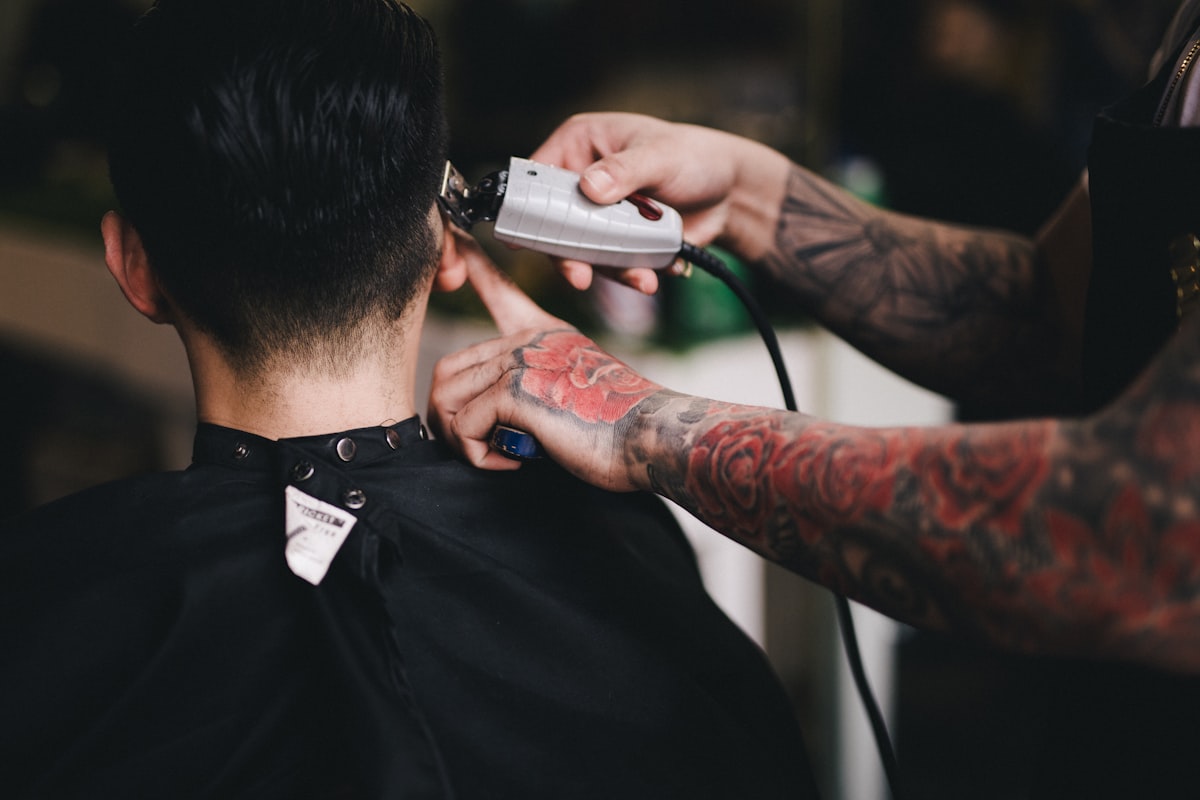
Military Haircuts Explained: The Difference Between a High and Tight and a Regulation Cut
Military Haircuts Explained: The Difference Between a High and Tight and a Regulation Cut
Military haircuts are among the most consistently requested styles at barbershops. They are clean, low-maintenance, and work in almost every professional environment. The terminology can be confusing for men who want a specific look but are not sure how to ask for it. Here is a breakdown of the most common military styles and what distinguishes each one.
The High and Tight
The high and tight is the most aggressive of the military-inspired cuts. The sides and back are shaved extremely close, typically with a number zero or skin fade, and the fade starts very high on the head, often above the temples and just below the crown. The top is left longer by contrast, typically a short length of one to two inches, creating a strong visual distinction between the shaved areas and the top.
This is the cut most associated with active duty military, particularly the Marine Corps and Army. It is the least maintenance-intensive option because the shaved areas require only weekly or twice-weekly touch-ups to stay sharp, and the top length is short enough to air dry in minutes.
Ask your barber for: "High and tight, zero on the sides up to the crown, scissored short on top."
The Regulation Cut
The regulation cut is more tapered than the high and tight. The sides and back start short at the neckline and taper gradually up to a medium length at the top. The sides are not shaved as close and the fade starts lower. The top is typically longer, from two to four inches, and is often parted to one side or combed back.
The regulation cut is the more versatile of the two. It can be worn formally or casually and works well for men who want a clean, structured style that does not read as distinctly military in civilian environments. It is also easier to transition away from if you want to grow your hair out.
Ask your barber for: "Regulation cut, tight taper on the sides and back, longer on top with a side part."
The Crew Cut
The crew cut is the civilian version of the regulation cut. It features a short, even length on top with a tapered fade on the sides and back. There is less dramatic contrast between the top and sides compared to a high and tight, and the fade is gentler. The top is typically cut to a uniform length of half an inch to one and a half inches.
The crew cut is one of the most universally flattering cuts for men because the proportions work on most face shapes. It requires a trim every three to four weeks to stay looking fresh rather than the more frequent maintenance of a high and tight.
Ask your barber for: "Crew cut, low to mid fade on the sides, even length on top around one inch."
The Flat Top
The flat top is a variation of the crew cut where the top is cut perfectly flat and level. It creates a geometric silhouette that was popular in the 1980s and early 1990s and has seen a revival in recent years. The sides are faded or tapered tightly, and the top is scissor-cut level across the entire surface.
The flat top requires more technical skill to cut well because maintaining an even, flat surface across different growth patterns is difficult. It also requires more maintenance because the distinctive shape becomes visible very quickly as the hair grows. Book with a barber who has specific experience with flat tops.
Which Style to Choose
The high and tight for maximum contrast and the most military appearance. The regulation cut or crew cut for a military-inspired look that works in any environment. The flat top for a retro take on structured short hair.
All four styles work best with tapered sides. The choice of how high and how close the taper starts is what separates them. Showing your barber a photo is the fastest way to communicate exactly what you want, particularly for the high and tight where the transition point between the shaved area and the longer top varies significantly between individuals.
Frequently Asked Questions
How often does a high and tight need to be maintained?
Every one to two weeks for the clean, shaved appearance. The contrast between the shaved sides and the longer top shows growth quickly. Men who want it to look sharp every day may need to touch up the sides at home between barbershop visits.
Can anyone pull off a high and tight?
It works best on men with oval or square face shapes. It can make a longer face look longer or a round face look top-heavy. Your barber can adjust where the fade transitions to compensate for face shape.
What is the difference between a crew cut and a buzz cut?
A buzz cut is cut to a uniform length with a clipper guard all around with no taper. A crew cut has a gradual taper on the sides and back with a longer, defined top. A buzz cut is simpler and requires less skill to maintain at home.
What length guard does a barber use for a high and tight?
The sides and back of a true high and tight use a zero or balding blade on the skin. The top is typically cut with scissors or a guard at a number two to four. The exact lengths depend on your preference and hair density.
Is a military cut appropriate for a job interview?
Yes. All military-inspired cuts are considered professional and well-groomed. A regulation cut or crew cut reads as especially polished in interview settings. A very tight high and tight is professional but may read as aggressive in some corporate environments.
Related Reading From CADMEN Barber Academy
- The Bowl Cut Is Back: The Modern Version and How to Get It
- How to Cut a Buzz Cut: Guard Selection, Blending, and Common Mistakes
- The Buzz Cut: What It Is and What Face Shapes It Actually Works For
- Buzz Cut Guard Sizes: What Each Length Looks Like and How to Choose the Right One
- Buzz Cut Guard Lengths: What Each Number Does to Your Hair
- Buzz Cut Styles: A Barber's Guide to Every Variation
