Barbershop Instagram Strategy: What Actually Builds a Following and Brings in Clients
Barbershop Instagram Strategy: What Actually Builds a Following and Brings in Clients
Instagram is the primary visual platform for the barbering industry. A strong barbershop Instagram presence generates new client inquiries, supports bookings from out-of-market visitors looking for a shop in the area, and builds the kind of trust that converts someone who found the page into someone who books an appointment. A weak Instagram presence, or no presence at all, means being invisible to the portion of the local market that uses Instagram to find and evaluate service providers.
What Content Actually Performs for Barbershops
Before and after photos
Before-and-after content is the single highest-performing content type for barbershops on Instagram. It shows the transformation, demonstrates the barber's skill level, and gives potential new clients a concrete example of what to expect. A barber who posts consistent before-and-after content with good lighting and photo quality builds a visual portfolio that communicates quality without requiring the viewer to take any leap of faith.
Technical requirements for before-and-after content that works: consistent lighting (natural light or a ring light with no harsh shadows), a neutral background (the shop wall, not a cluttered corner), and consistent framing (same camera distance and angle for the before and after). The photo quality communicates quality of service even before the haircut itself is evaluated.
Process videos
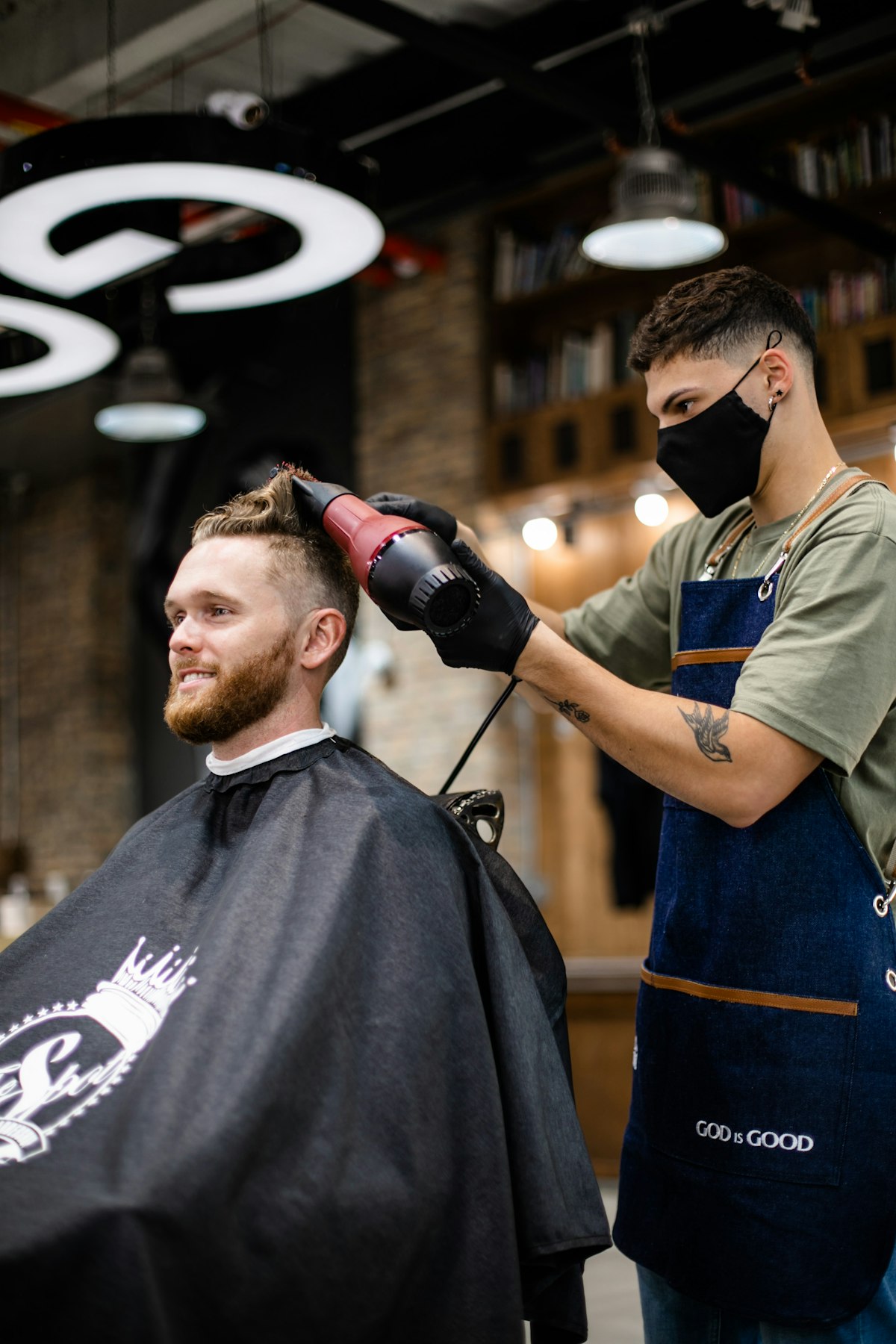
Short Reels showing the haircut in progress (30 to 60 seconds) are the highest-reach content format on Instagram right now. The algorithm favors video over static posts, and the barbering audience responds strongly to clean process videos that show technique. An over-the-shoulder angle that shows the work in progress is more engaging than a static result shot alone.
Client reactions and social proof
A client seeing their finished cut and reacting positively is a form of social proof that a static photo cannot replicate. Short video testimonials, even informal ones captured immediately after the service, communicate authenticity. The client does not need to say anything scripted; the reaction itself is the content.
Educational content (for barber-to-barber reach)
Educational content targeted at other barbers (technique tips, tool reviews, industry commentary) builds a following from within the industry, which translates into referrals from other professionals, educator credibility, and reach into a broader audience than just local clients. For a barbershop trying to attract students or coaches, educational content directly supports that funnel.
What Does Not Work
Generic inspirational quotes: they do not differentiate the shop and do not show skill. Stock images or reposts of other barbers' work: they show the client what someone else can do, not what this shop can do. Inconsistent posting: the Instagram algorithm rewards consistent regular posting; a page that posts 10 times in one week and then goes silent for a month builds no momentum.
The Link to Booking
Instagram's follow is not a booking. Converting Instagram engagement into actual appointments requires a clear path: a booking link in the bio, a consistent call to action in post captions ("link in bio to book"), and timely response to DMs. A shop that gets 100 profile visits from a strong post but has no booking link and a 2-day DM response time converts a small fraction of what a shop with a booking link and same-day DM response would.
Frequently Asked Questions
How often should a barbershop post on Instagram?
3 to 5 times per week is the standard recommendation for a shop trying to build reach. Consistency matters more than frequency: a shop posting 3 times per week every week performs better than one posting daily for two weeks and then stopping. Reels (video content) should be included in the mix at least once per week to reach the portion of the audience that the algorithm pushes video content to preferentially.
What hashtags should a barbershop use on Instagram?
A mix of high-volume general tags (#barber, #barbershop, #fade), medium-volume specific tags (#mississaugabarber, #ontariobarber, #torontobarber), and niche tags (#skinFade, #baldFade, #beardStyling). Local tags are important because they target the actual geographic market the shop serves. Using 10 to 20 targeted hashtags per post is more effective than using 30 generic ones. Research which tags competitors and high-performing accounts in the same market use and test variations.
Should a barbershop use Instagram Reels or regular posts?
Both. Reels have higher organic reach because Instagram's algorithm pushes video content broadly; a Reel can reach users who do not already follow the account. Static posts reach the existing follower base more reliably and perform better for long-term saved content (a client saving a before-and-after they want to show their barber). A strategy that uses Reels for acquisition (reaching new audiences) and static posts for nurturing (building relationship with existing followers) covers both functions.
How do barbers get their photos to look professional?
Consistent lighting and a clean background solve 80 percent of the quality gap between amateur barbershop photos and professional ones. A ring light ($50 to $150) eliminates harsh shadows. A plain white or branded wall behind the chair provides a clean background. Shooting with the same setup for every photo builds a visual consistency that makes the page look professional even when the individual photos are shot on a phone. Post-processing in Lightroom Mobile or similar (adjusting exposure, contrast, and color balance) takes 30 seconds per photo and significantly improves quality.
Does Instagram help barbershops get new clients?
Yes, for the portion of the market that uses Instagram to find and evaluate service providers. This is a significant portion of potential clients under 40 in most urban and suburban Canadian markets. A client who finds a barbershop through Instagram before walking in has already seen the quality of the work, evaluated the shop's aesthetic, and decided they like what they see. That client comes in with a higher level of initial trust than a walk-in who found the shop by passing by. The conversion rate and retention rate for Instagram-sourced clients who actively researched the shop before booking tends to be strong.
Related Reading From CADMEN Barber Academy
- Barber Instagram Portfolio: How to Build a Feed That Converts to Bookings
- Barbershop Pricing Strategy: How to Set Prices That Reflect the Value You Deliver
- Gift Cards for Barbershops: How to Set Them Up and Use Them to Increase Revenue
- Barbershop Google Reviews Strategy: Getting 5 Stars Without Begging
- How to Hire Barbers for Your Barbershop
- How to Write a Barbershop Instagram Bio That Gets Bookings
