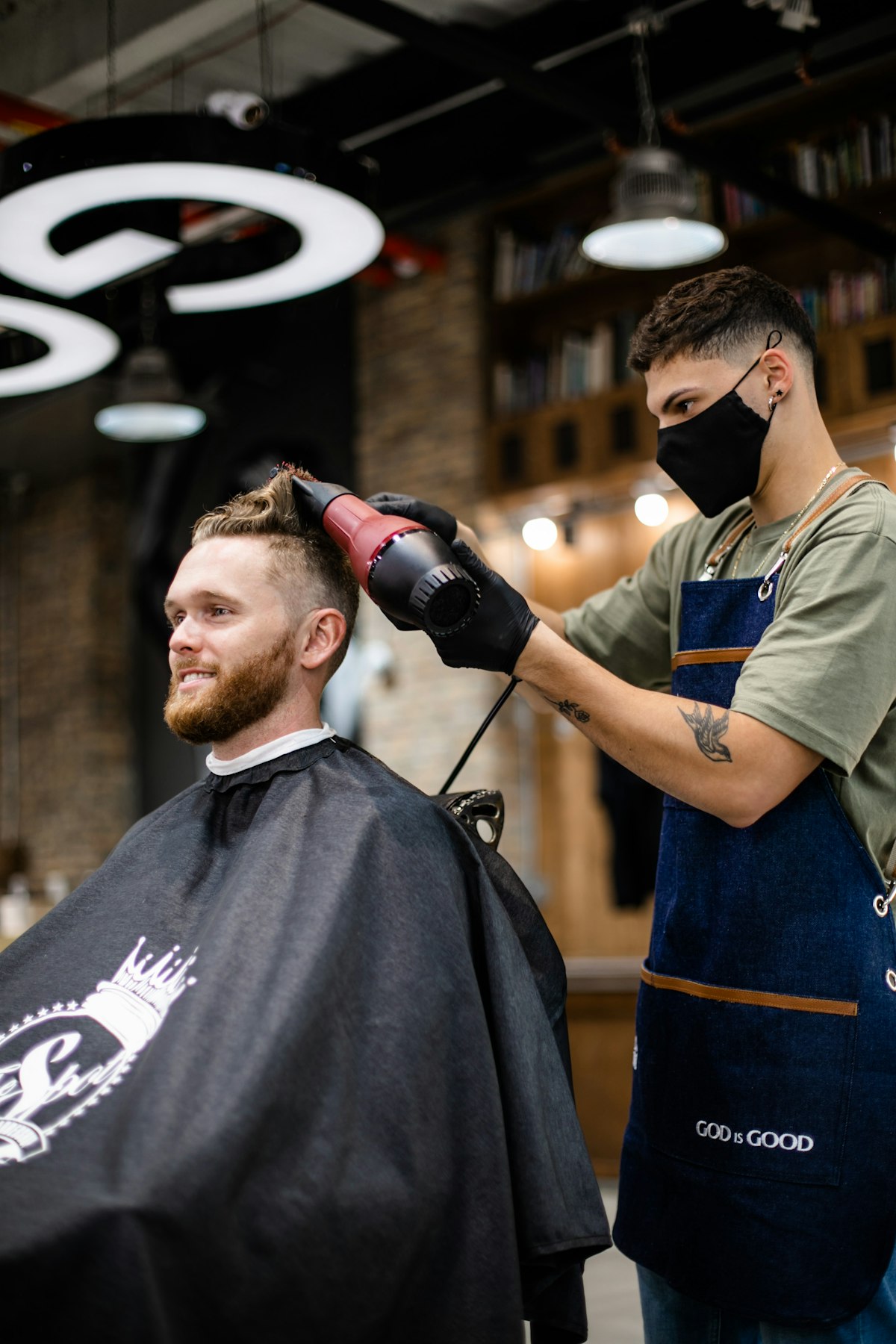
Ingrown Hairs After a Barbershop Visit: Prevention and Treatment
Ingrown Hairs After a Barbershop Visit: Prevention and Treatment
Ingrown hairs after a haircut or shave affect most men at some point. They are more common in men with coarse or curly hair, but any man who shaves regularly is susceptible. Understanding why they happen makes them preventable. Here is what causes them and how to handle them when they occur.
What Causes Ingrown Hairs
An ingrown hair occurs when a hair that has been cut or shaved does not grow straight out of the follicle. Instead, it curls back into the skin or grows sideways under the surface. The skin treats it as a foreign body and mounts an inflammatory response, which is the red bump you see and feel.
The primary cause is the hair's natural curl pattern. Men with tightly coiled or naturally curly hair have follicles that are curved rather than straight. When hair growing from a curved follicle is cut very close, the sharp angled tip at the cut end easily re-enters the skin rather than growing straight out. This is why razor bumps, the clusters of ingrown hairs, are especially common in the beard area, neck, and neckline for men with textured hair.
Secondary causes include shaving against the direction of hair growth, using a multi-blade razor that stretches the hair as it cuts and causes it to retract below the skin surface after the blade passes, and exfoliation that is insufficient to clear the follicle entrance of dead skin cells.
Prevention at the Barbershop
Tell your barber if you are prone to razor bumps before they begin shaving work. A good barber adjusts their technique. This may mean shaving with the grain rather than against it on sensitive areas, using a single-blade razor or a safety razor instead of a multi-blade cartridge, not stretching the skin too tight, and using less aggressive strokes on areas with known coil patterns.
A hot towel preparation softens the hair and skin before shaving, which reduces the resistance and the angle at which the razor cuts the hair. This simple preparation step significantly reduces the incidence of razor bumps. Most barbershops offer hot towel service as part of a shave or as an add-on to a haircut.
Prevention at Home
Exfoliate the neck and beard area two to three times per week. Dead skin accumulates at the follicle entrance and prevents the hair from growing straight out. A gentle exfoliating scrub or a soft-bristle brush clears the entrance and reduces the chance of the hair growing sideways. Do not exfoliate immediately after shaving. Wait 24 hours for the skin to heal first.
Always shave in the direction of hair growth for the neck and neckline, even if shaving against the grain gives a closer result. The extra closeness is not worth the ingrown hair consequence if your skin is sensitive. Use a single blade or safety razor. The multi-blade design lifts the hair before cutting so the tip retracts below the skin, which is the mechanical cause of many ingrown hairs.
Moisturize after shaving. Dry skin is less pliable and creates more resistance for emerging hairs. An alcohol-free aftershave balm applied immediately after shaving keeps the skin supple and reduces inflammation.
Treating Ingrown Hairs That Are Already There
Do not squeeze or pick ingrown hairs. Squeezing introduces bacteria and causes scarring. The inflammation this creates is harder to resolve than the original ingrown hair.
Apply a warm compress to the area for five minutes. The heat softens the skin and can encourage the hair to emerge naturally. Repeat twice daily. Many mild ingrown hairs resolve on their own within a week with warm compresses and continued exfoliation.
For visible hairs that are just below the surface, a barber or esthetician can use a sterile needle to release the tip of the hair without breaking the skin. Do not attempt to dig for a hair that is not visible. If the area is significantly inflamed, red, or has been present for more than two weeks, see a dermatologist. Persistent razor bumps can lead to scarring and may require topical treatment.
Frequently Asked Questions
Why do I get ingrown hairs on my neck after every haircut?
The neckline is one of the most common sites for ingrown hairs because the skin is sensitive and the hair there often has a tight growth pattern. Ask your barber to reduce the shaving angle and use a single-blade razor on the neckline. Consistent exfoliation between visits reduces recurrence.
Is there a way to permanently prevent ingrown hairs?
Laser hair removal permanently reduces or eliminates hair from an area, which eliminates the possibility of ingrown hairs in that area. This is an option some men choose for the neck or beard where razor bumps are chronic and significantly affect skin quality.
Do ingrown hairs leave permanent scars?
Yes, if they are repeatedly picked or squeezed, or if an infection develops. Post-inflammatory hyperpigmentation, dark marks that remain after the ingrown hair resolves, is common in men with darker skin tones. These marks fade over months with consistent sun protection and can be treated with topical products.
What is the difference between an ingrown hair and a barber's itch?
Barber's itch (tinea barbae) is a fungal infection of the beard area that causes red, itchy patches. It can be mistaken for razor bumps but requires antifungal treatment rather than ingrown hair care. If your symptoms spread or do not respond to typical ingrown hair treatment, see a dermatologist.
Can I shave over ingrown hairs?
Shaving over active ingrown hairs increases inflammation and makes them worse. If you have active razor bumps, take a break from close shaving in that area until the skin has cleared. Trim with a clipper on a low guard rather than shaving against the skin.
Related Reading From CADMEN Barber Academy
- Cutting Coily Hair: The Techniques That Work and the Mistakes That Damage the Pattern
- Cutting Curly Hair: What Barbers Do Differently
- How to Cut Curly Hair: Barber Techniques and Approach
- Curly Hair at the Barbershop: What Barbers Do Differently
- Curly Hair at the Barbershop: Cuts and Products That Actually Work
- Cutting Curly Hair as a Barber: How to Work With the Curl Pattern, Not Against It
