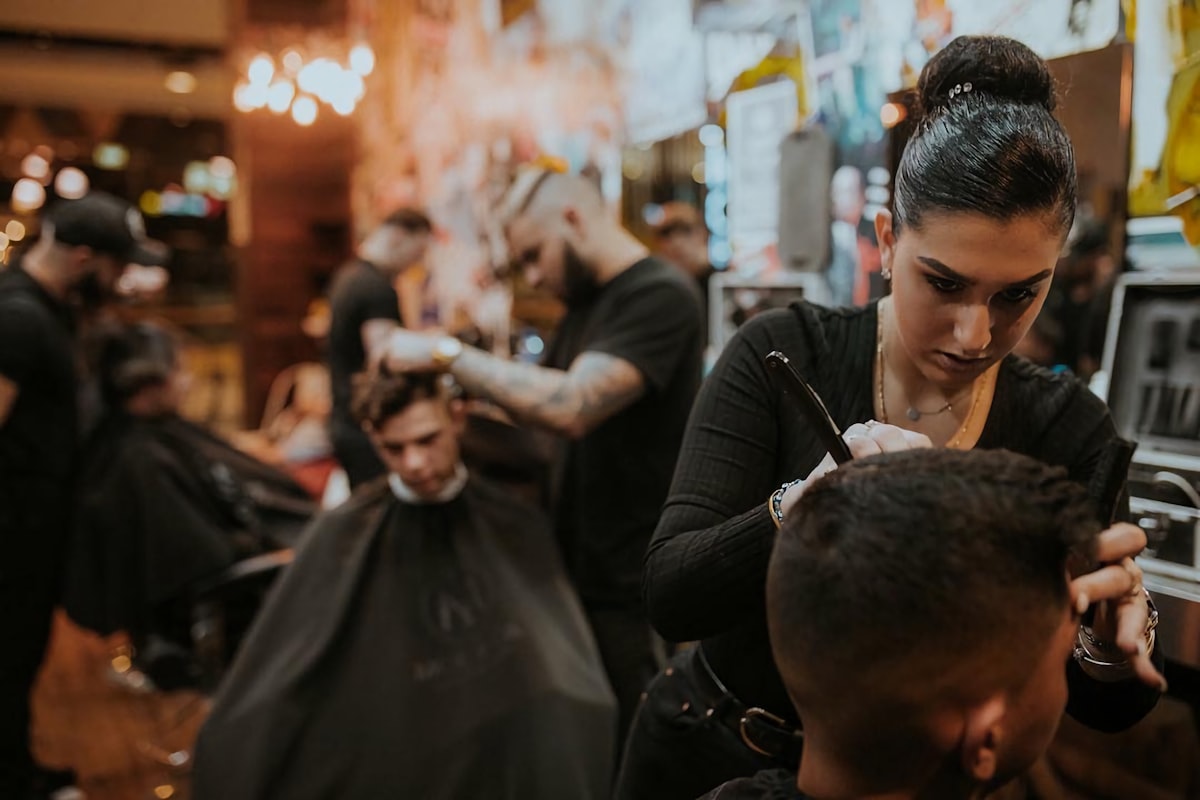
Barbershop Etiquette: What to Do, What Not to Do, and What Regulars Know
Barbershop Etiquette: What to Do, What Not to Do, and What Regulars Know
Every barbershop has unwritten rules. Most clients pick them up gradually over years of visits. Getting there faster means fewer awkward moments and, more practically, a better haircut and a stronger relationship with your barber.
Here is the straightforward version.
Arrive on Time
Barbershops operate on appointment schedules and walk-in queues that affect everyone in the shop, not just you. Arriving late for an appointment compresses the time available for your cut and may cause your barber to skip steps. Arriving significantly late may mean rescheduling.
If you are going to be late, call ahead. Most barbers can adjust if they have advance notice. Showing up late without notice is a sign that you do not value their time, which is not the foundation of a productive ongoing relationship.
For walk-in shops, arriving close to closing time expecting a full-service cut is similarly inconsiderate. A haircut done in the last twenty minutes before close is rushed. Many shops stop taking walk-ins thirty to sixty minutes before closing for this reason.
Know What You Want Before You Sit Down
The chair is not the place to figure out what you want for the first time. Have a rough idea of what you are looking for before you arrive. If you are new to the shop and genuinely unsure, say so clearly and ask for a consultation. That is a legitimate request and most barbers handle it well.
What barbers dislike is a client who sits down, says "just clean it up," waits until the cut is almost finished, and then says they wanted something completely different. "Clean it up" is not a clear instruction. If you want the same cut you have been getting, describe what that cut was so the barber can confirm they are matching it. Do not assume they know.
Stay Still
Moving your head unexpectedly during a haircut is one of the main causes of errors. Your barber needs your head in a stable position to make precise cuts and blend transitions accurately.
If you need to look at something, say so first and wait for the barber to move the scissors or clippers before turning. If your phone rings, tell the barber before you reach for it. If your neck is uncomfortable, ask for a brief pause rather than shifting without warning.
Looking down when your barber is working near the top is particularly important. Many clients instinctively drop their chin to look at the mirror during a cut. This changes the angle at which the hair sits and can cause unintended length differences if the barber is cutting to a consistent height.
Phone Use During the Cut
Scrolling your phone or checking messages is generally acceptable during a cut if you keep your head still. What creates problems is holding the phone up to your ear for a call. Talking on the phone moves your jaw, turns your head, and distracts from the communication happening between you and your barber.
If you need to take a call, tell your barber, wait for a pause in the cutting, take the call briefly, and return. Do not maintain a phone conversation through your entire cut. It slows the process and makes precision work significantly harder.
The Consultation
The conversation before the cut is working time, not small talk. Tell your barber what you want clearly and answer their questions directly. If they ask "how long on the sides?" and you say "I don't know, what do you think?" you are asking them to make a decision that should be yours.
If you genuinely want their professional recommendation, that is fine, but say it that way: "What do you think would work for my face shape?" That is an invitation for input. Vague non-answers to specific questions add time and create uncertainty.
Tipping
Tipping is standard in American barbershops. The typical range is 15 to 25 percent of the service cost. Fifteen percent is baseline for satisfactory service. Twenty percent is common for good regular service. Twenty-five percent or more is appropriate for significantly above-expectation work.
Not tipping is noticed. Regular clients who consistently tip well tend to get consistent attention and care that reflects the relationship. This is not unique to barbershops but it is particularly true in a service built on long-term client relationships.
If the cut was not good, the tip adjustment is a signal. You do not need to confront the barber. Reducing or skipping the tip communicates something. More useful is giving specific feedback to the barber about what was off so they can correct it on the next visit, which serves you better than a silent signal they may not read correctly.
Feedback
Give feedback during the cut, not just after. This has been covered elsewhere but it bears repeating in the context of etiquette: feedback during the cut is expected and useful. Waiting until the cape comes off and then expressing dissatisfaction puts the barber in a difficult position and usually means the problem cannot be fixed.
Keep feedback direct and specific. "The left side looks a bit longer than the right" is usable information. "It just doesn't feel right somehow" is not.
Respect the Waiting Area
Barbershops that have a waiting area expect clients to wait there, not to hover directly next to the chair of the barber they are waiting for. Hovering creates pressure on the barber and is inconsiderate to the current client.
Conversation in the waiting area is normal and part of the barbershop atmosphere. Loud speakerphone calls, explicit content on a phone screen visible to others, or disruptive behavior changes the environment for everyone.
Walking In vs Booking Ahead
Some barbers book solidly and do not take walk-ins. If you walk into a shop without an appointment and the barber says they are fully booked, do not negotiate or express frustration. Book an appointment and return. Pushing past a clearly communicated scheduling boundary creates a poor dynamic from the start.
Shops that take walk-ins on a first-come-first-served basis expect you to wait if chairs are full. Asking to skip the queue or cut in line is not acceptable regardless of how familiar you are with the barber.
Frequently Asked Questions
Is it rude to go to a different barber in the same shop?
It is generally accepted, though it may be noticed. If you switch because of scheduling, most barbers understand. If you switch because you prefer a different barber's work, that is also your right as a client. Being direct about it is better than making excuses. Most professional barbers do not take it personally.
Should I tip in cash or can I tip on a card?
Cash tips typically go directly to the barber without processing fees. Card tips at many shops go through the POS system and the full amount may or may not reach the barber depending on the shop's policies. When in doubt, cash is safer for ensuring the full tip reaches the person who did the work.
How early should I arrive for a barbershop appointment?
Five minutes before the appointment is appropriate. Arriving fifteen or twenty minutes early can create awkward waiting dynamics if the previous client is still in the chair. Arriving on time or slightly early signals respect for the schedule without creating pressure.
What if I do not like the haircut but I am still in the chair?
Say something specific: "The fade feels higher than I wanted" or "Can we take more length off the top?" Most barbers can and will adjust before finishing. Staying quiet and leaving unhappy helps no one. The barber does not know the cut missed, and you leave with a haircut you did not want.
Is it acceptable to bring food or drinks into the shop?
Drinks in a sealed container are generally fine in the waiting area. Eating while in the chair is not appropriate as it requires head and jaw movement and leaves residue on the cape and tools. Many shops have explicit no-food policies. When in doubt, finish eating before you enter.
Related Reading From CADMEN Barber Academy
- Barber Chair Etiquette: What Clients Should Know and What the Best Barbers Expect
- What Barbers Wish More Clients Knew Before Sitting in the Chair
- How Much to Tip a Barber: The Honest Guide
- Barber Tipping Etiquette in Canada: How Much to Tip and When
- Barbershop Etiquette: What to Do Before, During, and After
- Barbershop Etiquette: What Every Client Should Know
