Barbershop Equipment: What Every Professional Shop Needs
Barbershop Equipment: What Every Professional Shop Needs
Opening a barbershop requires capital allocated across a specific set of equipment categories. The list is more extensive than new shop owners typically anticipate, and the quality of certain items (particularly the chair and the clippers) has a direct impact on client experience and barber performance. Here is what a professional setup requires.
The Barber Chair
The barber chair is the largest single equipment investment in a barbershop. Professional hydraulic chairs from Belmont, Koken, Pibbs, or Collins range from $800 to $3,500+ new. Vintage original chairs (pre-1970 Koken, Belmont, Emil J. Paidar) are collector items that often exceed new chair prices, they are bought for aesthetic appeal, not cost savings.
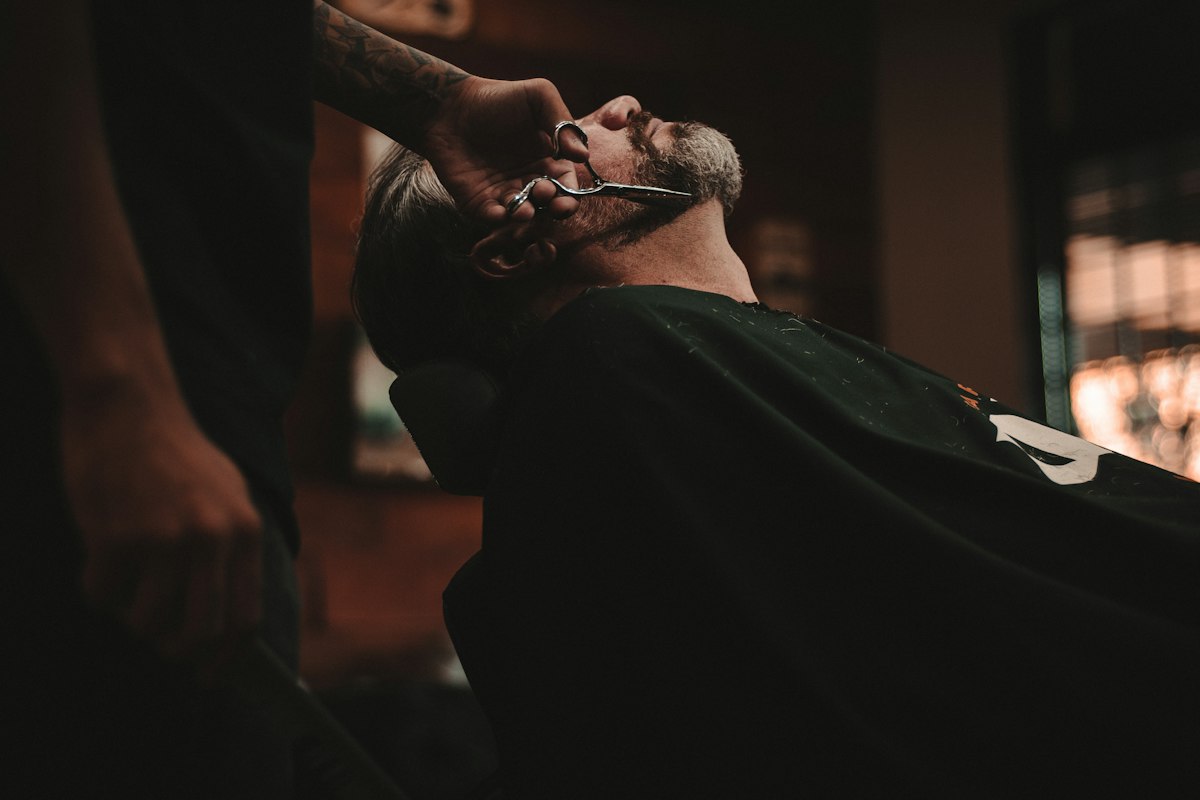
What a professional chair must have: a hydraulic pump that holds position reliably (a chair that creeps down during a service is a liability), a fully reclining backrest for shave services, a footrest, and a headrest that adjusts. The upholstery must be cleanable and durable. Do not buy a residential massage or salon chair to save money, the mechanism weight rating and the client positioning are designed for different services and the chair will fail faster under daily barbershop use.
Mirrors and Workstations
Each barber station requires a front-facing wall mirror large enough for the client and barber to both see the cut from multiple angles. The minimum usable size is 24 by 36 inches; larger is better. A back mirror (or hand mirror) for showing the client the neckline and back is also required. The workstation (the surface below the mirror) needs: a power strip for clipper and trimmer charging, a drawer or shelf for tools, and a disinfectant jar holder or surface for sanitation supplies.
Core Cutting Tools
Per barber: 2 clippers (one for fade work, one for detail/blending), 1 T-outliner or detail trimmer, 1 straight razor holder with disposable blades, 3 to 5 pairs of scissors (varying lengths and styles, texturizing, detail, general cutting), a clipper guard set (0.5 through 8 at minimum), multiple combs (coarse and fine-tooth), and a blade cleaning brush.
The two clipper investment should prioritize the fade clipper, this tool is used more than any other in a modern barbershop and its blade quality directly determines the quality of the fade. Wahl Magic Clip, Wahl Senior, Andis Masters, and Oster Fast Feed are the most common professional choices in North American barbershops.
Sanitation Equipment
Each station requires: disinfectant solution jars (at minimum 2 per station, one for active use, one draining), hospital-grade disinfectant solution (Barbicide), clipper spray disinfectant, a sharps container for used razor blades, and storage for clean supplies. A UV sterilization cabinet (optional but professional) holds sanitized tools between clients.
Shampoo Bowl and Cape
A shampoo bowl and backwash chair is needed if the shop offers wash services. A minimum of one per two barber stations is the practical ratio. Capes (one per station, plus reserves for rotation through laundry) and neck strips (disposable) are per-service consumables.
Business Equipment
A tablet or POS system for booking and payment. A display shelf for retail products. Adequate lighting at every station (overhead lighting plus directional station lighting for detailed work). A waiting area with seating for 3 to 6 clients minimum.
CADMEN Business Coaching
Shop setup, equipment budgeting, and full operations management are covered in CADMEN's owner coaching program. academy.cadmen.ca.
Frequently Asked Questions
How much does barbershop equipment cost?
A single-station professional barbershop setup costs approximately $5,000 to $15,000 CAD for equipment alone, not including leasehold improvements, signage, or inventory. The largest cost items: barber chair ($800 to $3,500+), mirror and workstation ($300 to $1,500), quality clippers and trimmers ($500 to $1,200 for a full tool set per barber), shampoo bowl and backwash chair if applicable ($1,000 to $3,000). A 3-station shop with quality equipment in each station typically costs $15,000 to $40,000 in equipment. Leasehold improvements (plumbing for shampoo bowls, electrical upgrades, flooring, walls) add significantly to the total startup cost. Buying quality on the high-impact items (chair, clippers) and more economical on the others (mirrors, cabinetry) is the general prioritization principle when budget is limited.
What is the best barber chair brand?
The most respected professional barber chair manufacturers for new chairs: Belmont (Japanese manufacturer, widely considered the quality benchmark in North America, $1,500 to $5,000+), Pibbs Industries (Italian-designed, strong quality at mid-range price, $800 to $2,500), Collins Manufacturing (US-based, good mid-range quality, $700 to $2,000), and Koken (Japanese, premium traditional styling, similar range to Belmont). For vintage chairs, original American-made Koken and Emil J. Paidar chairs from the 1940s to 1960s are the most sought-after, but they require maintenance and replacement parts that can be costly and difficult to source. For a new shop owner choosing a first chair, the mid-range Pibbs or Collins models offer professional quality without the premium price of Belmont.
What tools does a barber need?
A professional barber's essential tool set: two clippers (a primary fade clipper and a blending/backup clipper), one T-outliner or detail trimmer (for edge work and lineup), clipper guards in full increments from 0.5 to 8, three to five pairs of shears (at minimum a general cutting shear, a texturizing/thinning shear, and a detail shear), a straight razor or shavette with disposable blades, a wide-tooth comb and a fine-tooth barber comb, a blending comb, a neck duster brush, and disinfectant supplies. Total investment for a quality entry-level set: $800 to $1,500. An experienced barber's full kit with multiple shear types and clipper models: $2,000 to $5,000+. The most common false economy in tool purchasing: buying cheap clippers to save money and then spending more on replacement and repair than the initial savings justified.
How many barber chairs do you need to open a barbershop?
A one-chair shop is a viable starting model, it is a solo operator shop where one barber works one station. This is the lowest-capital entry point. A two or three chair shop is the most common small barbershop model, allowing a solo owner to hire one or two additional barbers and increase revenue without the overhead of a larger space. Five or more chairs requires a larger location, more sanitation equipment, and a significantly larger operating budget but produces proportionally more revenue potential. The number of chairs should match the space available, the capital available for equipping each station, and the staffing plan. Opening with more chairs than you can staff is a waste of capital; opening with fewer chairs than the space and market support is a missed revenue opportunity.
What lighting is best for a barbershop?
A combination of overhead ambient lighting and direct station lighting produces the best working environment. The overhead ambient provides general illumination for the space. The station lighting, directed at the work area from above and slightly in front of the barber position, provides the shadow-free, bright, color-accurate lighting needed to assess cut quality, check blending, and perform detail work accurately. LED lighting at 4,000K to 5,000K (neutral to cool white) renders hair color and fade gradients most accurately, warm-toned lighting (below 3,500K) washes out subtle variations in the fade and makes it harder to spot uneven blending. Avoid lighting that creates strong shadows at the workstation, any shadow in the fade zone is a quality check problem for the barber.
Related Reading From CADMEN Barber Academy
- Barber Chair Buying Guide: What to Look for Before You Spend $1,000 to $5,000
- The Barbershop Consultation: How to Get the Cut Right Every Time
- Barber Chair Cost in Canada: What to Budget and What to Avoid
- Barber Chair Etiquette: What Clients Should Know and What the Best Barbers Expect
- Barber Chair Maintenance: How to Keep Equipment Running and Protect Your Investment
- How Much Does a Barber Chair Cost and What Else Do You Need to Budget to Open a Barbershop
