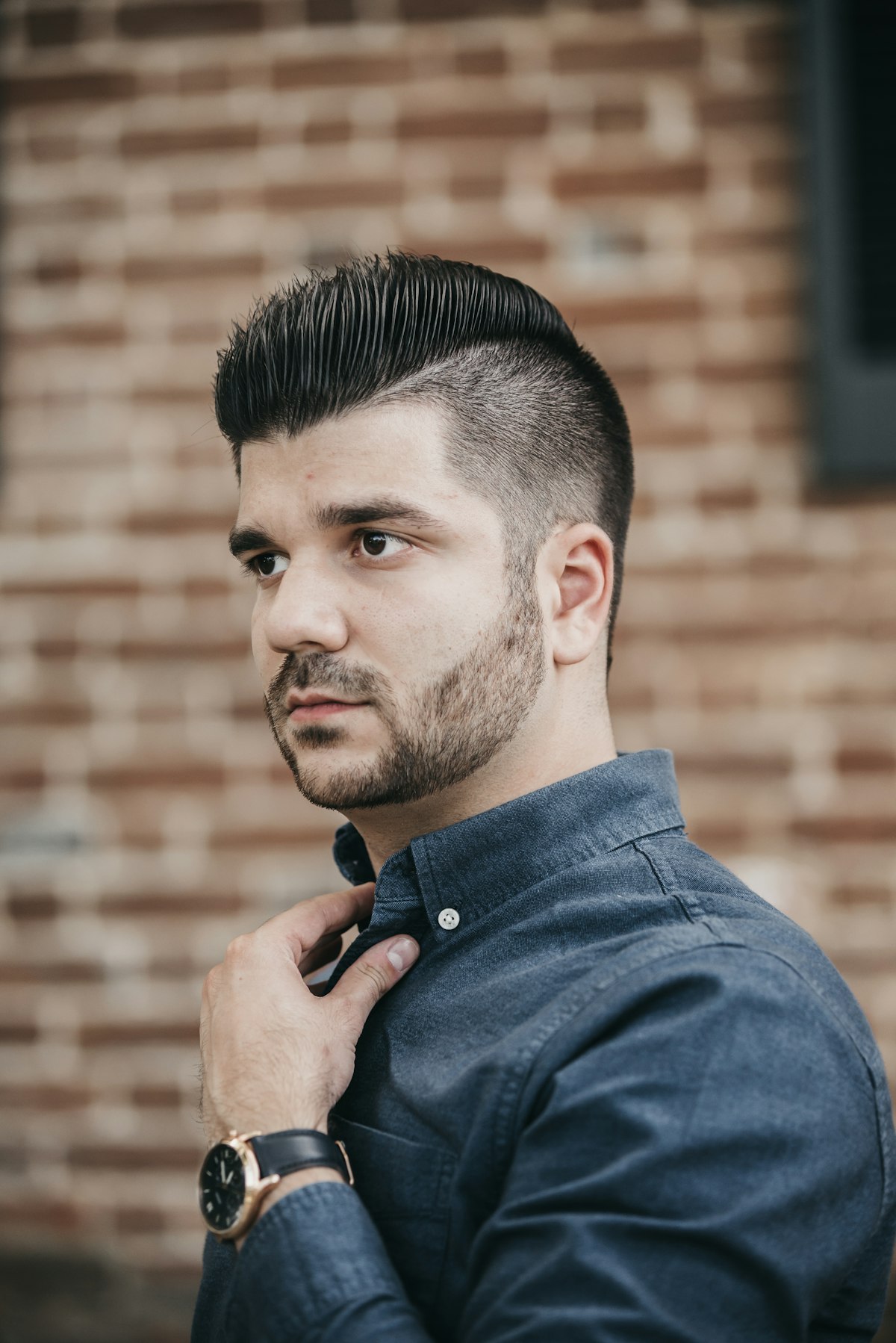
Beard Line Shaping at the Barbershop: What to Ask For
Beard Line Shaping at the Barbershop: What to Ask For
Beard line shaping at the barbershop is distinct from beard trimming (reducing length). Line shaping defines the outer boundaries of the beard at the cheek line, the neckline, and the mustache edge. These are three independent decisions, each of which can be customized.
The Three Lines
The cheek line is the upper boundary of the beard where the hair transitions from the cheek (typically sparse growth) to the fuller beard section. Some men have a natural cheek line that is already clean; others have patchy or inconsistent cheek hair that benefits from defining a clean boundary. The cheek line can be left at its natural position (the barber cleans stray hairs above it) or lowered to create a more defined, geometric boundary. The neckline is the lower boundary of the beard at the neck and jaw. It can be natural (following the jaw contour), curved, straight, or shaped to a hard line. The mustache edge where the hair meets the upper lip and the sides of the mouth can be trimmed to a clean line or left natural.
Natural vs. Defined Lines
A natural cheek line and neckline look like the beard grows without barbershop intervention; the hair simply stops where it naturally stops, with stray hairs cleaned up but no geometric shaping. A defined line creates a visible, intentional boundary with a trimmer edge. Defined lines read as more styled and require more frequent maintenance (the lines become indistinct as the hair grows). Natural lines require less maintenance between visits. Many men use defined necklines but natural cheek lines because the neckline has more visual impact; others define both.
The Neckline Position
The neckline position is the most consequential beard shaping decision. A neckline set too high (cutting into the visible jaw/neck area above the natural jaw angle) makes the beard appear shorter and less full than it is. A neckline at the natural position (approximately one to two finger-widths above the Adam's apple, following the natural jaw contour) produces the most flattering shape for most beard styles. If you are uncertain, ask the barber to recommend the neckline position based on your face and beard shape before they cut.
Frequently Asked Questions
How often does beard line shaping need to be touched up?
Every 2 to 4 weeks for defined lines, depending on how fast your beard grows and how tight you keep the boundaries. Men who use a trimmer at home to maintain the neckline between barbershop visits can extend the full-service interval. The cheek line is typically less critical to touch up frequently than the neckline because the cheek area grows more slowly and the boundary is less visually prominent.
Should the barber use a straight razor on the beard lines?
A straight razor produces the sharpest, most defined line. Many barbers use a trimmer for the primary shaping and a straight razor for the final cleanup and hard edge, or use the razor exclusively for the line work after clipping the beard length. Either approach can produce a clean result in skilled hands. Men with sensitive skin or prone to razor bumps may prefer a trimmer-only approach at the lines to avoid irritation, especially at the neckline where the skin is often more reactive than the cheek area.
