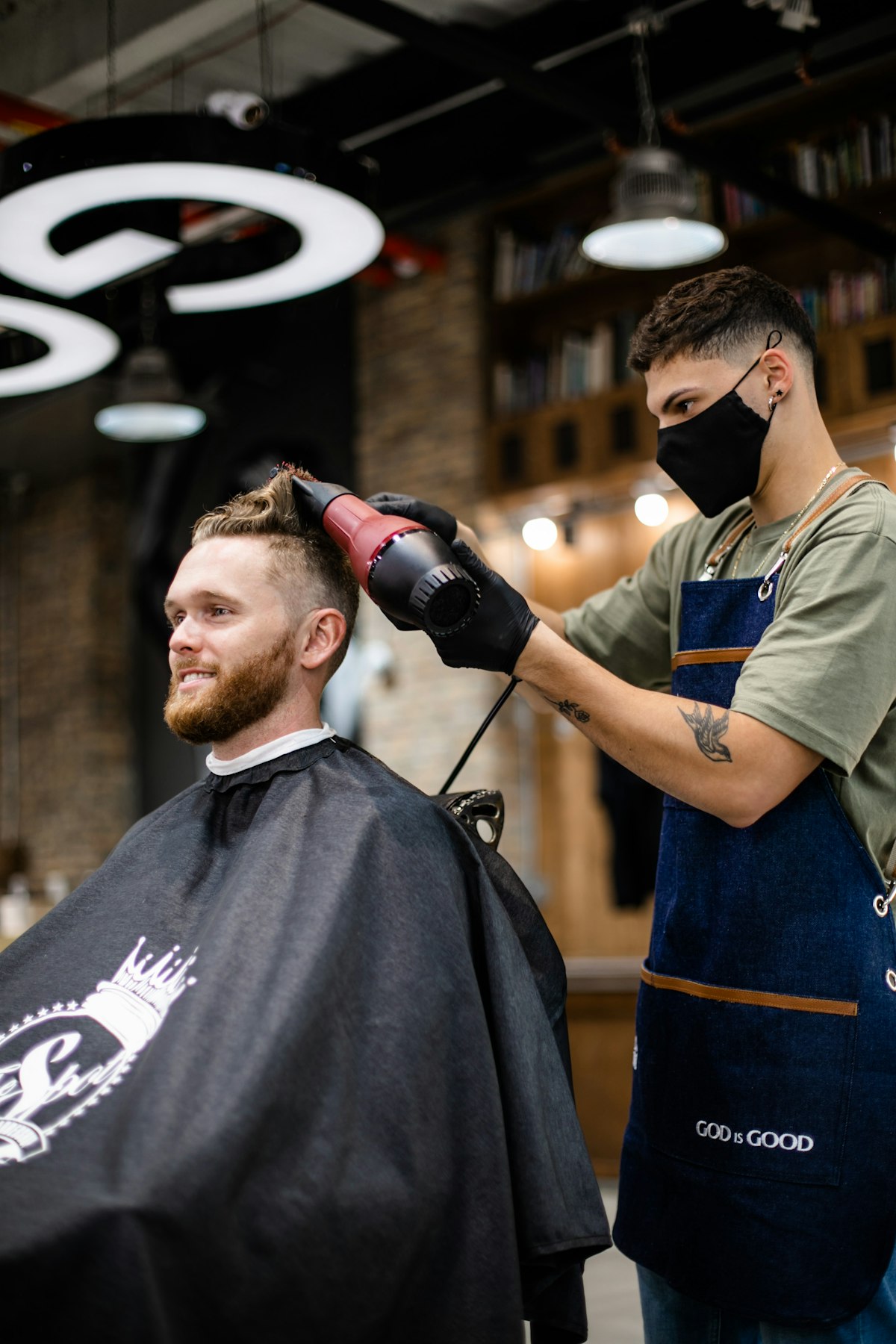
Beard Fade: What It Is and How to Ask for One
Beard Fade: What It Is and How to Ask for One
A beard fade is a technique that blends the haircut's fade on the sides of the head into the beard, creating a continuous gradient from the close-cut sides into the beard rather than a hard line where the haircut ends and the beard begins. When done well, it makes the overall head and face look cohesive rather than like two separate haircut areas.
What It Looks Like
In a standard fade without a beard fade, the sides of the head fade down toward the ear and the beard begins separately at the sideburn. There is a visible transition point where the haircut ends and the beard growth begins. In a beard fade, the barber continues the fade gradient into the sideburn and cheek area, blending the close-cut side of the haircut smoothly into the beard. The result is a continuous gradient from the top of the fade through the sideburn into the full beard. This is particularly effective with skin fades because the contrast between skin and beard hair in the transition zone is where the technique is most visible.
When It Works Best
A beard fade looks best when the beard has enough density to fade into. Very sparse or patchy beards do not provide a dense enough transition zone for the blend to read clearly. Medium to full beards work well. The beard fade also works best when the haircut's fade is at or below a mid-fade height; high fades that end far above the ear leave a significant gap between the lowest point of the haircut and the beard line, making the blend harder to execute cleanly.
How to Ask for It
Tell the barber: "I want the fade to blend into my beard" or "I want a beard fade that connects the sides into the beard." Show a reference photo if possible; beard fades vary in how far they extend and how dramatically they graduate. Specify whether you want the sideburn section to be close to skin (matching the lowest point of the fade) or if you want a softer transition that maintains more beard density higher on the cheek. A barber experienced with beard fades will clarify these preferences before starting.
Frequently Asked Questions
Does a beard fade require trimming the beard itself?
Usually yes. For the beard fade to look intentional, the beard itself typically needs to be shaped and trimmed during the same appointment. A well-executed beard fade alongside an unshaped, irregular beard looks inconsistent. Most barbers who offer beard fades will include beard shaping as part of the service; ask whether that is included or a separate add-on when booking.
How do you maintain a beard fade between appointments?
The fade portion degrades at the same rate as the haircut's fade (blurring over 2 to 3 weeks). The beard itself grows and changes shape between appointments. At home, you can maintain the beard shape with a detail trimmer, but re-blending the fade-to-beard gradient requires the clipper skills of a barber. The maintenance frequency for a beard fade is typically the same as for the overall haircut: every 2 to 3 weeks for sharp results. If you are maintaining a beard between cuts, keep the cheek line shaped and trim length to prevent the beard from outgrowing the transition zone.
Want to learn to cut a beard fade yourself? CADMEN Barber Academy teaches cutting hands-on, with an educator beside you. See the barber academy in Mississauga or view in-person classes and send an enquiry.
Learn this fade step by step in our free Fade Tutorials playlist on YouTube.
