Cutting Thick Hair: The Adjustments Barbers Make on High-Density Hair to Get a Clean Result
Cutting Thick Hair: The Adjustments Barbers Make on High-Density Hair to Get a Clean Result
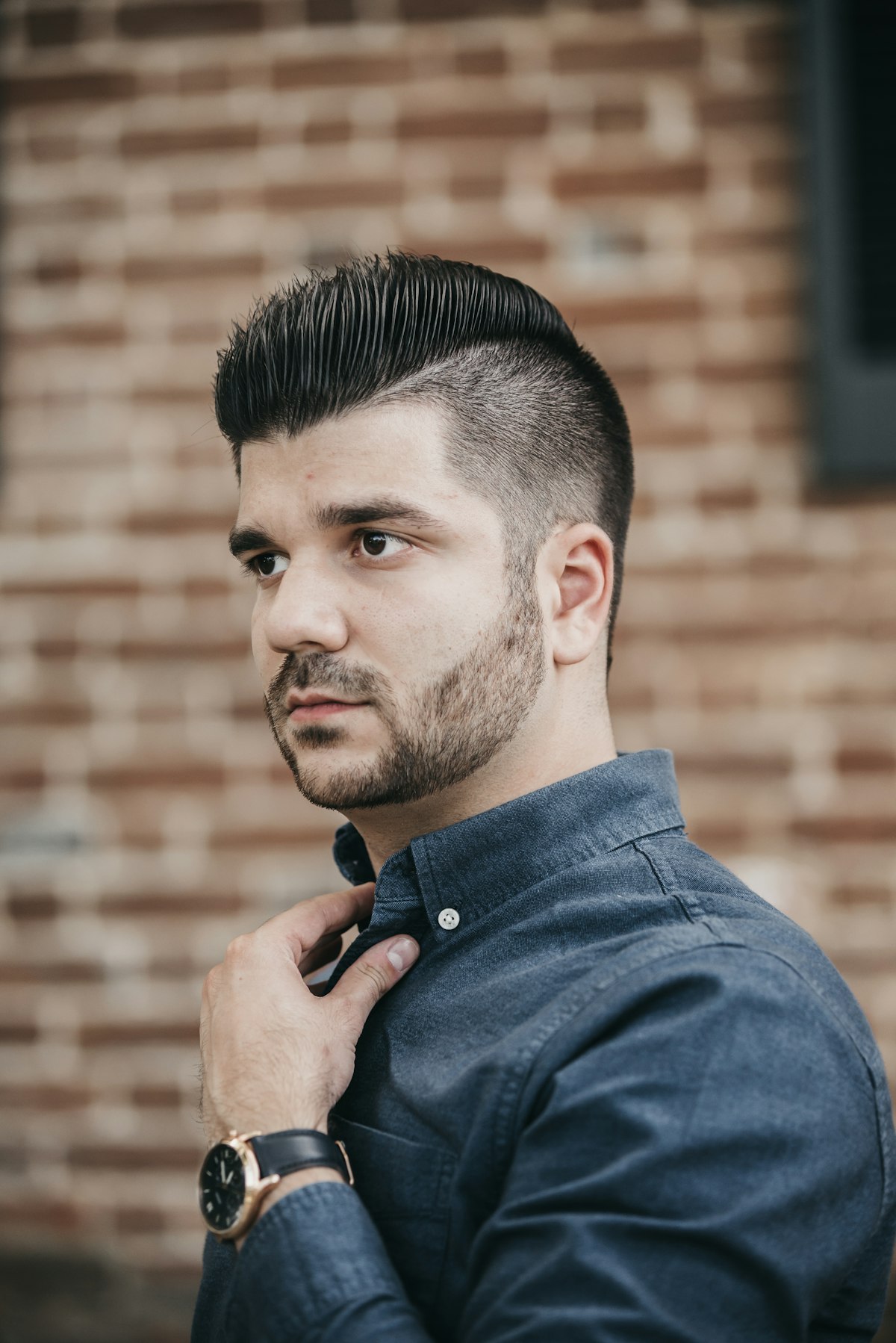
Thick hair is the hair type that most often produces disappointing results when cut using the same technique applied to average-density hair. The visual outcome of a standard fade on thick dense hair is a heavier, puffier silhouette than the same technique on medium-density hair. The client sees a broader, wider shape where they expected a clean tighter result. The issue is not the technique itself but the failure to account for how density affects the final shape.
How Density Changes the Outcome
Dense hair has more follicles per square centimeter. More follicles means more bulk at any given length. A guard-2 pass on dense hair leaves significantly more visual mass than a guard-2 pass on medium-density hair, even though the length cut is identical. This means the guard progression in a fade needs to be tighter (smaller steps between guards) to achieve the same gradient effect. A fade that blends acceptably in three or four guard steps on medium-density hair may need five or six steps on high-density hair to produce a smooth result.
Adjustments for Fades on Thick Hair
Use half-guard steps between your standard guards (0.5 between 0 and 1, 1.5 between 1 and 2, etc.). Many professional clippers come with half-guard sets, or half-guards can be purchased separately for the common guard sizes. The smaller step between each guard produces a more gradual gradient through the higher-density hair.
Blend more aggressively at each transition zone. Dense hair requires more scooping passes at each guard transition to remove the visual shelf that appears between sections. Expect to spend more time in the transition zones on thick hair; rushing this step is where the "shelf" or "line" problems arise most frequently.
Bulk Reduction in the Top Section
Thick hair on top requires bulk reduction to achieve shape and movement. Standard straight-across cuts on dense hair produce a helmet effect: a heavy, rounded mass with no internal texture. Techniques to reduce bulk without removing length:
- Point cutting: Cutting with the scissor tips into the ends of the hair at an angle rather than straight across. Creates internal texture and removes weight from the ends without significantly changing the length.
- Slide cutting: Opening the scissors while sliding them along the hair shaft, removing weight evenly throughout the length.
- Thinning shears (used conservatively): Effective for bulk reduction but easy to overuse. Use only in the mid-lengths and avoid the root area; over-thinning at the roots creates frizz and flyaways on thick hair.
Frequently Asked Questions
What haircut is best for thick dense hair?
Cuts with significant length variation between sections (fades, tapers with clear contrast) work better on thick hair than cuts with uniform length throughout, because the length contrast creates visual structure rather than relying on internal texture alone to break up the bulk. Longer tops with tight fades create clean contrast that reads well on dense hair. Very short, uniform cuts (a short buzz or crew cut on thick hair) often look heavier than expected because density makes even short lengths appear substantial.
