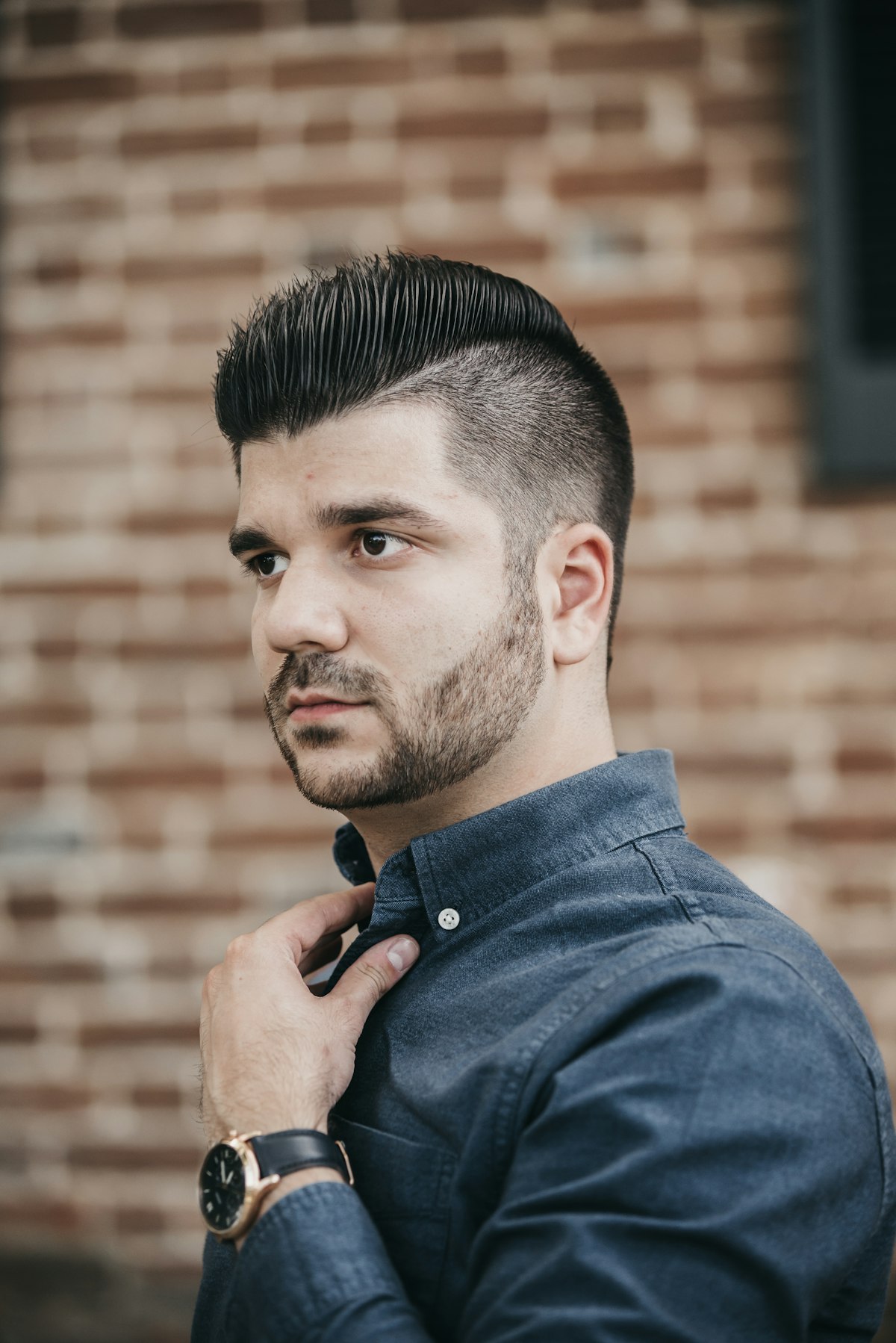
Tapered Sides vs. Faded Sides: Choosing the Right Finish
Tapered Sides vs. Faded Sides: Choosing the Right Finish
The sides of a haircut are where the most variation exists in men's cuts. The choice between tapered sides and faded sides affects how sharp the cut looks, how often you need maintenance, and how the cut performs in different settings. Here is how to choose between them.
Tapered Sides
Tapered sides graduate the hair from the longer top section down to a shorter length at the neckline and ears, stopping before the hair reaches skin. The sides still have visible hair at the shortest point. The graduation is smooth and clean, but the lowest point shows a layer of very short hair rather than bare skin.
The result is a polished, conservative finish. The graduation creates structure without the high-contrast look of a skin finish. From a distance, tapered sides look clean and maintained. Up close, the graduation is visible but the overall impression is one of controlled length rather than dramatic contrast.
Faded Sides
Faded sides take the graduation to skin at some point, either at the base (low fade), at mid-level (mid-fade), or high on the sides (high fade). The skin is visible at the lowest point of the fade, creating maximum contrast with the longer top section or with the graduating hair above the skin zone.
Faded sides are sharper and more contemporary. The skin line creates a hard visual edge. Close up, the progression from skin to full hair length is precise and deliberate. The fade level (low, mid, high) determines how much of the side of the head shows the skin zone and therefore how dramatic the contrast is.
How They Differ in Practice
Maintenance frequency: faded sides require more frequent barbershop visits. The skin zone grows back to visible stubble within 7 to 10 days, and the clean graduation loses sharpness within 2 to 3 weeks. Tapered sides grow back more gradually and can look clean for 4 to 6 weeks before the graduation becomes significantly undefined.
Formality: tapered sides are more broadly appropriate for conservative professional environments. The natural finish of a taper reads as groomed without being fashion-forward. Faded sides, especially high or skin fades, have more visual presence and read as a more deliberate style choice. This is not a disadvantage in most settings but is a relevant consideration for the most conservative environments.
Versatility: faded sides work with almost all top section styles. They are particularly associated with short textured tops, skin fade haircuts, and any cut where high contrast is a feature of the design. Tapered sides work with all styles and are particularly suited to classic cuts like side parts, crew cuts, and longer combed styles where the conservative finish aligns with the overall direction of the cut.
Which to Choose
Choose tapered sides if: you want less maintenance frequency, work in a conservative environment, prefer a classic look, or are growing your hair longer and want clean sides without the skin exposure of a fade.
Choose faded sides if: you want maximum sharpness and contrast, prefer a contemporary or fashion-conscious look, are comfortable with more frequent maintenance, or the specific style you are going for is designed around a high-contrast fade.
Frequently Asked Questions
Can I switch between tapered and faded sides over time?
Yes, with one consideration. Going from faded to tapered is possible at any time. The barber stops the graduation before reaching skin. Going from a very short skin fade back to tapered sides requires waiting for the sides to grow back to a length that can support a taper rather than just showing very short stubble. Most men can make this transition in 3 to 4 weeks.
Is there a cost difference between tapered and faded sides?
The price is usually the same or very similar. The fade requires slightly more precision and time in the most detailed versions (skin fades with multiple graduation levels), which some shops price slightly higher. Standard cuts with either technique are typically the same price at most barbershops.
What fade level looks most natural?
A low fade has the skin zone closest to the neckline, which is the most subtle fade available. From a standard viewing distance, a low fade can appear similar to a tight taper. The skin zone is primarily visible only from close up or when looking at the neckline directly. This is the best choice for men who want the fade's sharpness without an aggressive side contrast.
Do tapered sides require any specific products?
No specific product is tied to tapered sides. The product choice is driven by the top section style, not the side finish. Tapered sides work with or without product depending on what the top section requires.
Which is better for men with patchy sides?
Faded sides often handle patchy growth better than tapered sides because the fade graduation can be designed to work around sparse areas. A tapered side on a patchy area may leave the uneven growth visible. A fade in the same area can use the graduation to mask patchiness by bringing the transition through the sparse zone rather than leaving it at a fixed length. A barber familiar with patchy growth can advise on the best approach for a specific pattern.
Related Reading From CADMEN Barber Academy
- The Taper Fade Combination: What It Is and How to Request It
- Fade vs. Taper: What Is the Difference?
- The Skin Taper Fade: What Makes It Different and How It Is Cut
- Taper vs. Fade: What Is the Difference?
- Taper Fade vs. Drop Fade: What the Difference Actually Is
- Taper Fade vs. Skin Fade: What the Actual Difference Is
Want to learn to cut a taper or a fade yourself? CADMEN Barber Academy teaches cutting hands-on, with an educator beside you. See the barber academy in Mississauga or view in-person classes and send an enquiry.
Learn this fade step by step in our free Fade Tutorials playlist on YouTube.
