Scissor Over Comb: The Technique Barbers Need to Handle What Clippers Cannot
Scissor Over Comb: The Technique Barbers Need to Handle What Clippers Cannot
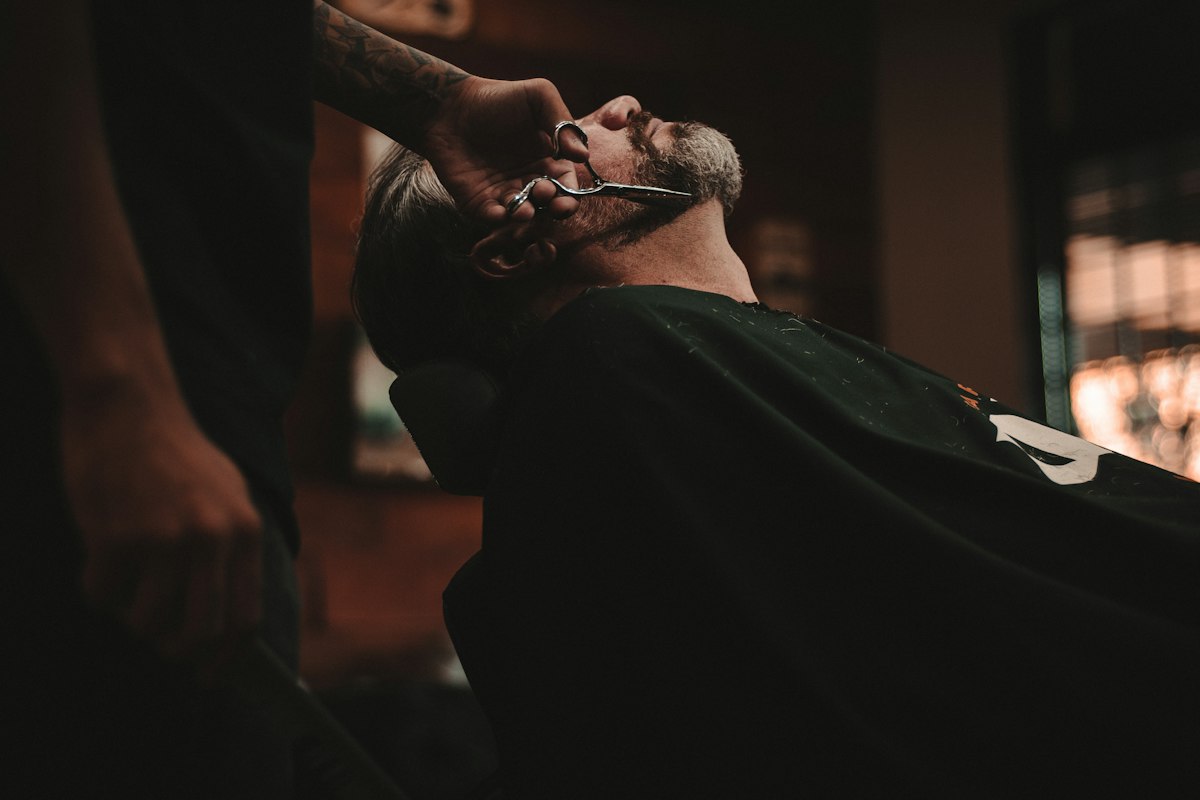
Scissor over comb is the technique of using a comb to hold hair at a controlled elevation while cutting across it with scissors. It produces a graduation similar to what clippers create with guards, but with more control over the result in areas where clipper access is limited, where the client's hair texture responds poorly to clipper blades, or where a softer finish is desired. Every barber needs this technique, even in shops where the majority of work is clipper-based, because there will always be situations where scissors are the better tool for a section of the cut.
When Scissor Over Comb Is Used
Nape and hairline areas. The nape is curved, dense, and difficult to fade cleanly with clipper guards alone. Scissor over comb allows precise graduation through the curve without the flat plane that clipper guards naturally want to cut. In haircuts where a softer nape finish (rather than a faded one) is appropriate, scissor over comb produces it cleanly.
Thick or coarse hair where clipper lines are too aggressive. On some hair types, clipper guards produce graduation lines that are hard to blend smoothly. Scissor over comb creates graduation through the same zone with a softer edge because the cut length is set by the comb's elevation rather than a fixed blade gap.
Scissor-only cuts (dry or styled on longer hair). Clients requesting no clipper work, scissor-only cuts, or longer styles that taper at the sides without a hard fade require scissor over comb as the primary blending tool. This is where the technique becomes more than an occasional supplement; it becomes the core technique for the side and back sections.
Final blending pass. Many barbers use scissors over comb as a finishing step after clipper blending to soften any remaining hard lines and create the handcrafted quality that separates a premium cut from a standard one.
The Mechanics
Comb elevation determines cut length. Hold the comb at the desired angle to the head. Flat against the head cuts very short; lifted away from the head at an angle cuts longer. The higher the elevation, the more length remains after the cut. Consistency of elevation across the section is what creates an even graduation; varying the comb angle accidentally produces unevenness.
Scissor position. The scissors run parallel to or slightly angled relative to the comb, cutting the hair that extends above the comb's teeth. The key is that the scissor blade runs cleanly through the hair at the comb level, not snapping above the comb or cutting below it into the comb teeth. Developing a feel for the appropriate scissors-to-comb angle takes reps; it is one of those mechanics that must be practiced to become intuitive.
Travel direction. Moving the comb upward through sections from shorter to longer while cutting creates a continuous graduation. The comb travels, the elevation changes slightly as it moves through the natural curves of the head, and the scissors cut at each comb position. Maintaining even comb travel speed and consistent elevation throughout the pass produces the graduation; rushing through sections creates unevenness.
Frequently Asked Questions
Is scissor over comb better than clippers?
It is not better or worse in absolute terms; it is appropriate for different situations. Clippers are faster and more efficient for graduating large sections uniformly. Scissor over comb provides more control and produces a softer finish in areas where clipper precision is limited by geometry (curved areas, tight nape corners), hair type, or the desired style result. Most professional barbers use both; the ability to choose the right tool for each section of the cut is the mark of a technically complete barber.
How do I get better at scissor over comb?
Reps on real clients, with attention to comb elevation consistency and scissor angle. Mannequins build some motion memory but do not replicate the curve, movement, and hair behavior of a real person. Asking an experienced barber to watch and correct your technique across several cuts accelerates improvement significantly more than self-directed practice alone. CADMEN's scissors class focuses on scissor over comb technique, scissor-over-fingers for longer hair sections, and point cutting, on live clients with direct correction from Francis Paua. Book at academy.cadmen.ca/in-person-training. CADMEN Barber Academy is a private training institution in Mississauga, Ontario. It does not provide Skilled Trades Ontario apprenticeship hours or Certificate of Qualification pathways.
