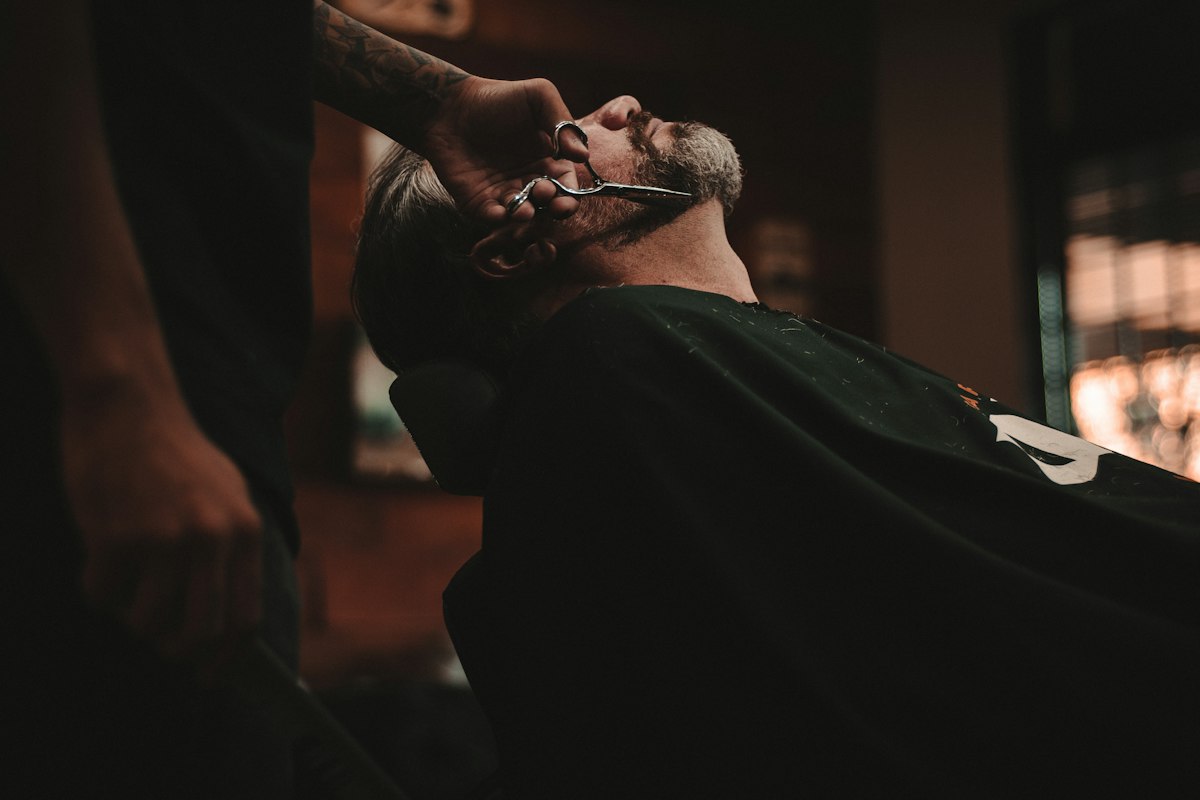
Multiple Revenue Streams for Barbers and Barbershop Owners
Multiple Revenue Streams for Barbers and Barbershop Owners
A barber earning exclusively from haircuts is limited by the number of clients they can see per day, the price they can charge per service, and the number of days they work. A chair produces revenue only when someone is sitting in it. When the chair is empty, for any reason, the income stops.
Barbers and barbershop owners who build additional revenue streams beyond the chair break through those limitations. The additional streams do not require a new chair or more hours in the shop. They leverage the skills, audience, and credibility already built.
Retail Products
Product retail is the most immediate additional revenue stream for most barbershops. Clients who just had their hair cut are in the optimal moment to buy products: they can see the result, the barber explained what they used, and the motivation to maintain the look at home is high.
The revenue math is straightforward. A shop doing 150 clients per month that sells product to 20% of them (30 clients) at an average of $25 profit per transaction generates $750 per month in additional revenue from the same chair time and the same clients. That number scales directly with volume and conversion rate.
Product selection: carry 8 to 12 SKUs maximum. A focused selection (one pomade, one wax, one clay, one beard oil, one shampoo, one conditioner) sells better than a wall of options because it makes the barber's recommendation specific and actionable. "You want this one" converts better than "here are your twelve options."
Service Upsells
Most clients who come in for a haircut can be offered at least one additional service: a beard lineup, a hot towel shave, a scalp treatment, an eyebrow cleanup. These additions take 5 to 15 additional minutes and add $15 to $40 per visit.
The upsell conversion rate in most shops is low not because clients are uninterested but because the barber does not consistently offer. A systematic, natural offer at the end of the haircut ("Want me to clean up the beard while you're here?") converts 15% to 30% of clients into an upsell purchase on any given visit.
Retail Partnerships and Commission
A barbershop with a loyal client base is a physical distribution point for complementary products and services. Barbershop owners in larger markets have generated commission revenue from referral partnerships with local clothing brands, grooming subscription boxes, photography studios, and event services, any business whose target audience overlaps with the barbershop's client base. This is modest additional income in most cases, but it is passive relative to service revenue.
Education and Coaching
A barber with demonstrated skill and a reputation for quality work is positioned to teach. Revenue from education can range from occasional workshops to structured programs that run independently of the barber's chair time.
Workshop formats: a Saturday one-day workshop for aspiring barbers or experienced barbers building specific skills ($300 to $600 per attendee, 5 to 10 attendees) generates $1,500 to $6,000 per workshop with minimal overhead beyond the educator's time and the space.
Business coaching for shop owners: barbers who have built successful businesses are positioned to coach others. This is the highest-dollar-per-hour service in the education category ($2,000 to $5,000 per client for a structured program) and requires no chair time, no hair models, and no physical presence at a specific location.
Online Courses and Digital Products
A barbershop owner who has documented their system, how they run their shop, how they train barbers, how they market locally, has the foundation for a digital product. Online courses on fade technique, shop operations, or client building are sold repeatedly without the creator's time being tied to each sale. A course sold at $500 to $2,000 per student with 20 students per month generates $10,000 to $40,000 monthly with the same upfront content creation effort.
The market for barbershop business education is large: 155,000+ barbershop and salon owners operate in the United States alone. Access to the Internet, YouTube, and e-learning platforms has made this audience reachable without a physical location.
CADMEN Business Coaching
The full framework for building revenue beyond the chair is covered in CADMEN's owner coaching program. $4,000 USD. academy.cadmen.ca.
Frequently Asked Questions
How do barbers make money beyond haircuts?
The primary paths: retail product sales, service upsells (beard, shave, scalp treatments), education (workshops, apprenticeships, online courses), business coaching for other shop owners, and brand collaborations or local partnerships. Each of these leverages the existing client base, skill set, or reputation that was built through the chair work. A barber who adds one additional revenue stream per year and works each one to a functional scale before adding the next builds a meaningfully different income profile within 3 to 5 years than one who remains chair-only throughout.
How much can a barbershop make from retail products?
At a conservative 15% retail conversion rate on clients (meaning 15% of clients buy a product each visit), a shop with 200 clients per month sells product to 30 clients. At a $20 average profit per sale, that is $600 per month, $7,200 annually from the same client base. At 25% conversion and $25 average margin: $1,250 per month, $15,000 annually. These numbers scale with volume. A busy shop doing 400 to 600 clients per month generates proportionally more retail revenue from the same effort. Product retail is not life-changing at low volume but adds meaningfully and compounds as client base grows.
How do you start teaching barber classes?
Start with an informal workshop: announce a one-day Saturday skills session, charge $200 to $350 per seat, cap at 6 to 8 attendees, and deliver a focused skill session (fades, clipper work, or beard technique). Do not over-engineer the first one. The first workshop teaches you what clients want and what format works for your market. Refine from there. Formal programs (multi-day, structured curriculum) require more infrastructure but command higher prices. The first step is simply offering a paid session and seeing who signs up.
What products should a barbershop sell?
Start with what the barber already uses and believes in. A recommendation for a product the barber uses daily on clients is authentic and credible; a retail shelf of unfamiliar products the barber cannot describe in specific terms does not convert. Most successful barbershop retail setups carry a focused lineup of 8 to 12 products: a wax or clay, a pomade (matte and gloss), a beard oil or balm, a quality shampoo, a conditioner, and a post-shave product. Products the barber uses in the service are the most natural upsell, the client has just experienced the result directly.
Can a barber make money from social media?
Directly from social media (monetized views, brand deals) requires a substantial following, typically 50,000 to 100,000+ engaged followers before brand partnerships generate meaningful income for barbershop content. However, social media generates indirect revenue at much smaller scales by driving bookings, product sales, and course enrollment. A barbershop Instagram account with 5,000 local followers is a direct pipeline to new clients and product sales even if it never generates platform revenue. The business model for most barbers is social media as a marketing channel, not as the business itself.
Related Reading From CADMEN Barber Academy
- How Barbershops Make Money Beyond Haircuts
- How Much Revenue Should Each Chair in Your Barbershop Generate
- How to Grow Barbershop Revenue: The Specific Levers That Move the Number
- Barbershop Pricing: What You're Actually Paying For
- Barbershop Owner Business Coaching: What Top Shop Owners Learn
- Barbershop Pricing: Why Haircuts Cost What They Do
- Barbering Topics Index: Every Guide by Subject
