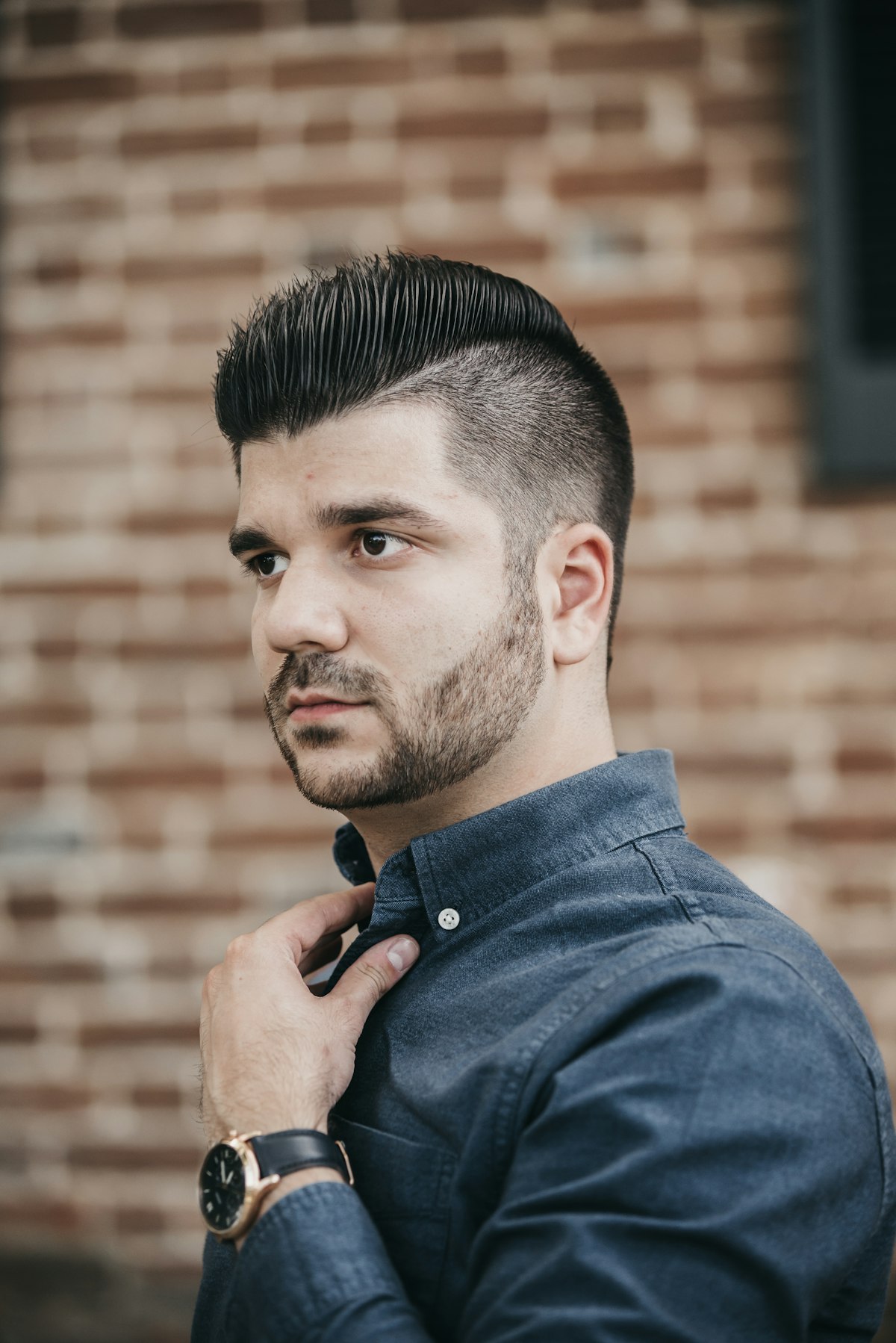
The Edgar Cut: What It Is and Who Should Get One
The Edgar Cut: What It Is and Who Should Get One
The Edgar cut is one of the most identifiable haircuts of the past decade. Its defining feature is a straight, horizontal line across the front fringe combined with a high taper or fade on the sides. It is a bold, graphic style that suits specific face shapes and is most popular among men with straight or wavy hair.
What Defines the Edgar
Three elements make an Edgar an Edgar:
First: the straight horizontal fringe. The front of the top section is cut in a blunt, flat line across the forehead, typically sitting at mid-forehead to just above the eyebrows. This is not a swept or textured fringe. It is a defined horizontal edge.
Second: the flat top profile. The top of the hair is cut relatively flat or with minimal height. This creates a squared, structured profile from the side.
Third: the high taper or high fade on the sides. The sides are faded high, often at or above the temple. The contrast between the faded sides and the full-length top with its defined front edge creates the graphic look that characterizes the Edgar.
Where It Comes From
The Edgar cut developed primarily within Latino barbershop culture in the United States. It gained widespread visibility through social media in the late 2010s and moved into mainstream popularity from there. The name is generally attributed to the style's popularity among men named Edgar, though its exact origin is debated.
Face Shapes That Suit It
The Edgar suits oval and square faces particularly well. The horizontal fringe and flat top create a wide, structured visual at the top of the head. Square faces already have strong horizontal lines at the jaw, and the Edgar reinforces that geometry for a cohesive look.
Oval faces suit nearly any style, and the Edgar is no exception. The proportions are balanced enough to carry the boldness.
Round faces require more thought. The horizontal fringe and flat top add width at the forehead, which can make a round face appear wider. Men with round faces who want an Edgar can mitigate this by requesting slightly more height in the top section to add vertical balance, though this departs from the purest Edgar shape.
Diamond and heart faces with narrow chins may find the Edgar adds visual width at the top while the lower face remains narrow, creating an unbalanced proportion. These face shapes typically suit styles with more taper and less dramatic horizontal lines.
Hair Type Requirements
The Edgar works best on straight or slightly wavy hair. The straight horizontal fringe requires hair that will sit flat and hold the blunt edge. Very curly or coiled hair does not hold the flat horizontal line the style requires. Loose waves can work with product to smooth the front edge.
What to Tell the Barber
Say "Edgar cut" and most barbers with experience in this style know immediately what it means. Specify the height of the fade (high fade is standard), the height of the fringe above the eyebrows, and whether you want any texture or styling in the top section or a flat approach. Bring a reference photo to confirm the specific variation you want.
Frequently Asked Questions
What is the difference between an Edgar and a French crop?
Both feature a horizontal fringe and short sides. The French crop typically has shorter overall top length and the fringe sits lower on the forehead. The Edgar typically has more length on top and a higher, more dramatic fade on the sides. The Edgar also tends to have a more graphic, angular overall silhouette than the softer profile of a French crop. They are related styles with enough overlap that some barbers use the terms near-interchangeably.
Can the Edgar work with a mid fade instead of a high fade?
Yes. A mid fade with an Edgar is slightly less dramatic but still reads as an Edgar due to the distinctive fringe and flat top. The high fade version is the most commonly seen because it maximizes the contrast between the top and sides, which makes the defining features of the Edgar most visible. A mid fade version is more accessible for men in professional environments where a high fade is too bold.
How often does the Edgar need maintenance?
The high fade requires attention every 2 to 3 weeks. The straight fringe line, if exactly at the eyebrow level, can look grown-out quickly as even a small amount of growth pushes it below the brow. Men who like a very precise Edgar visit every 2 weeks. A slightly longer initial fringe allows a 3 to 4 week window before the line drifts below its intended position.
Does the Edgar suit men with thick hair?
Thick hair suits the Edgar well when the barber incorporates internal texturizing in the top section. Without texturizing, thick hair may push the fringe up or add too much height to create the flat profile the Edgar requires. With proper thinning and texturizing, thick hair holds the Edgar shape effectively.
What products work best with an Edgar?
A light to medium-hold pomade for straight or smooth styles. Clay for a matte finish if you prefer less shine. Apply to dry or slightly damp hair and smooth forward, paying particular attention to the fringe edge to keep it flat and defined. Avoid heavy waxes or gels that create stiffness or stickiness in the fringe section.
Related Reading From CADMEN Barber Academy
- The Edgar Cut: What It Is and How It's Done
- The Edgar Cut: Structure, Variations, and What to Ask For
- The Edgar Cut: What It Is, Where It Came From, and How to Ask for One
- Edgar Cut vs. Textured Crop: How to Tell the Difference
- Edgar Cut: Technique, Variation, and Why the Hard Line at the Top Changes the Whole Look
- The Bowl Cut Is Back: The Modern Version and How to Get It
Want to learn to cut an Edgar cut yourself? CADMEN Barber Academy teaches cutting hands-on, with an educator beside you. See the barber academy in Mississauga or view in-person classes and send an enquiry.
Watch the free Barbering for Beginners playlist on YouTube.
