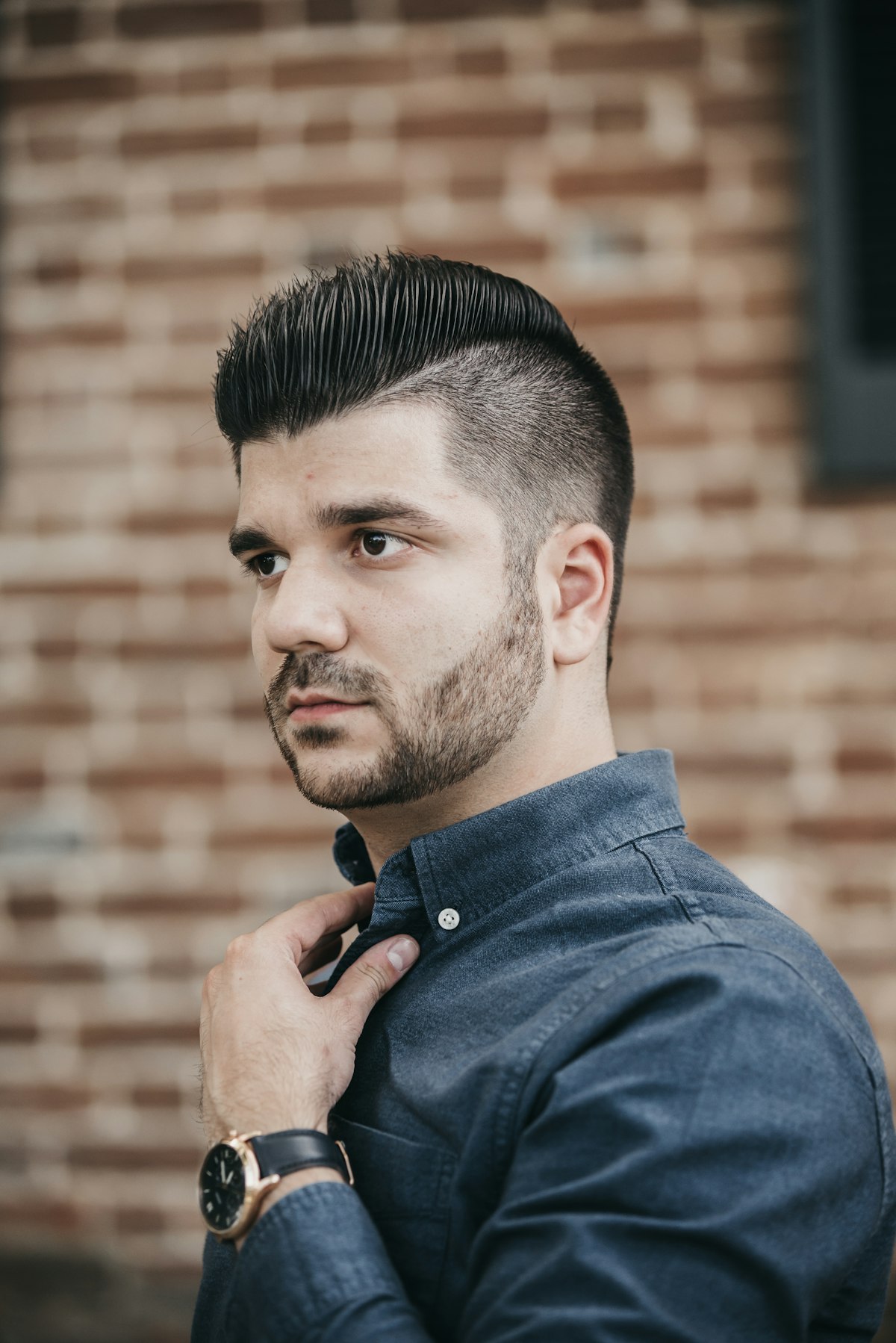
The Disconnected Fade: What It Is and How It Works
The Disconnected Fade: What It Is and How It Works
Most fades blend smoothly from the top to the sides. A disconnected fade does not. It creates a deliberate contrast between the top and sides rather than a gradual transition. Here is what that means in practice and whether it suits your look.
What Disconnection Means
In a standard fade, the barber blends all lengths together. There is no visible line or jump between the longer top and the shorter sides. The graduation is seamless.
In a disconnected version, a visible line or jump separates the top from the sides. There is a deliberate, unblended border between the longer hair on top and the shorter or shaved area on the sides. The two sections do not transition smoothly into each other.
This disconnection can be subtle, with a slight visible line, or dramatic, with the top completely floating above a shaved side with no visible connection at the boundary.
How It Is Cut
The barber cuts the sides as normal but stops blending before reaching the boundary with the top section. Instead of tapering the top to meet the sides, the two sections meet at a defined edge. The barber may leave a slight overhang or shelf where the top hair sits above the shorter sides.
In the most dramatic version, the sides are skin-faded to zero, and the top section is cut to its own length without any gradient between them. This is called a disconnected undercut.
Why Choose a Disconnected Style
The disconnection creates visual graphic interest. It makes the top section stand out as its own shape rather than flowing continuously into the sides. This is a bolder, more design-forward look than a standard fade.
The contrast also makes the top section appear more prominent and the sides appear more minimal. This suits hairstyles where the top is the focus: a quiff, a faux hawk, a textured brush-up, or long textured top styles.
Who It Suits
Oval and oblong faces suit the disconnected fade well because the graphic sides create strong visual structure that balanced proportions can carry. Square faces with strong jaws also suit it because the jaw provides a natural visual anchor for the dramatic side contrast.
Round faces require more consideration. The dramatic side contrast and defined top can visually elongate a round face effectively, but the look needs to be considered as a whole rather than just the sides in isolation.
The disconnected fade suits men who want a statement look. It is not a conservative or subtle choice. If the goal is something professional and understated, a standard fade is more appropriate.
Maintenance
The disconnected fade requires the same maintenance schedule as a skin fade. The visible line and the shaved sides grow out quickly. Every 2 to 3 weeks keeps the disconnection sharp. Growing it out for 4 to 5 weeks softens the contrast significantly.
Frequently Asked Questions
Is the disconnected fade the same as an undercut?
They share the same concept of no blending between top and sides. The undercut specifically keeps the sides and back short and uniform with no fade. The disconnected fade uses clipper fade work on the sides while maintaining the unblended top boundary. Both create visible disconnection but through slightly different cutting methods.
What top styles work with a disconnected fade?
Quiff, faux hawk, textured brush-up, long textured styles, and slick-backs. These styles have enough top volume or direction to benefit from the bold contrast the disconnected sides provide. Flat, low-profile top styles are sometimes visually absorbed by the dramatic sides and may look unbalanced.
Can the disconnection be subtle?
Yes. A mild disconnection uses a slight unblended line rather than a dramatic shelf or floating top. This version is more wearable in professional settings while still adding visible structure. Tell your barber specifically how dramatic you want the disconnection to be.
How long does hair need to be on top for a disconnected fade?
At least 2 inches to create a visible contrast with the short sides. The style reads as intended when the top section is clearly longer than the sides. Under 2 inches the disconnection becomes less visually defined.
Does the disconnected fade work with curly hair on top?
Yes, and often particularly well. Curly hair on top creates natural volume and shape that pairs effectively with the sharp sides. The curl adds visual weight to the top section that reinforces the contrast with the short sides. Many popular disconnected styles were designed specifically for curly or textured top hair.
Related Reading From CADMEN Barber Academy
- The Disconnected Fade: What It Is and How It's Done
- Bald Fade vs Skin Fade: Are They the Same Thing?
- How to Fade Natural Afro Hair: Technique Adjustments for High-Density Texture
- The Afro Fade: How It's Done and What Makes It Work
- How to Cut a Bald Fade Step by Step
- The Bald Fade: What It Is, Who It Suits, and How to Maintain It
Want to learn to cut a clean fade yourself? CADMEN Barber Academy teaches cutting hands-on, with an educator beside you. See the barber academy in Mississauga or view in-person classes and send an enquiry.
Learn this fade step by step in our free Fade Tutorials playlist on YouTube.
