Barber Content Creator: How Working Barbers Build Audiences That Pay
Barber Content Creator: How Working Barbers Build Audiences That Pay
The barbers with the largest social media followings have turned craft visibility into income streams that exist separate from the chair. Sponsorships, courses, product lines, and coaching add income that does not require booking another client. This is not new, but the pathway to it has become more accessible and more structured in the last 5 years.
Here is how it works, what the realistic path looks like, and what the most common mistake is for barbers trying to build this kind of presence.
What Working Barber Content Creators Actually Do
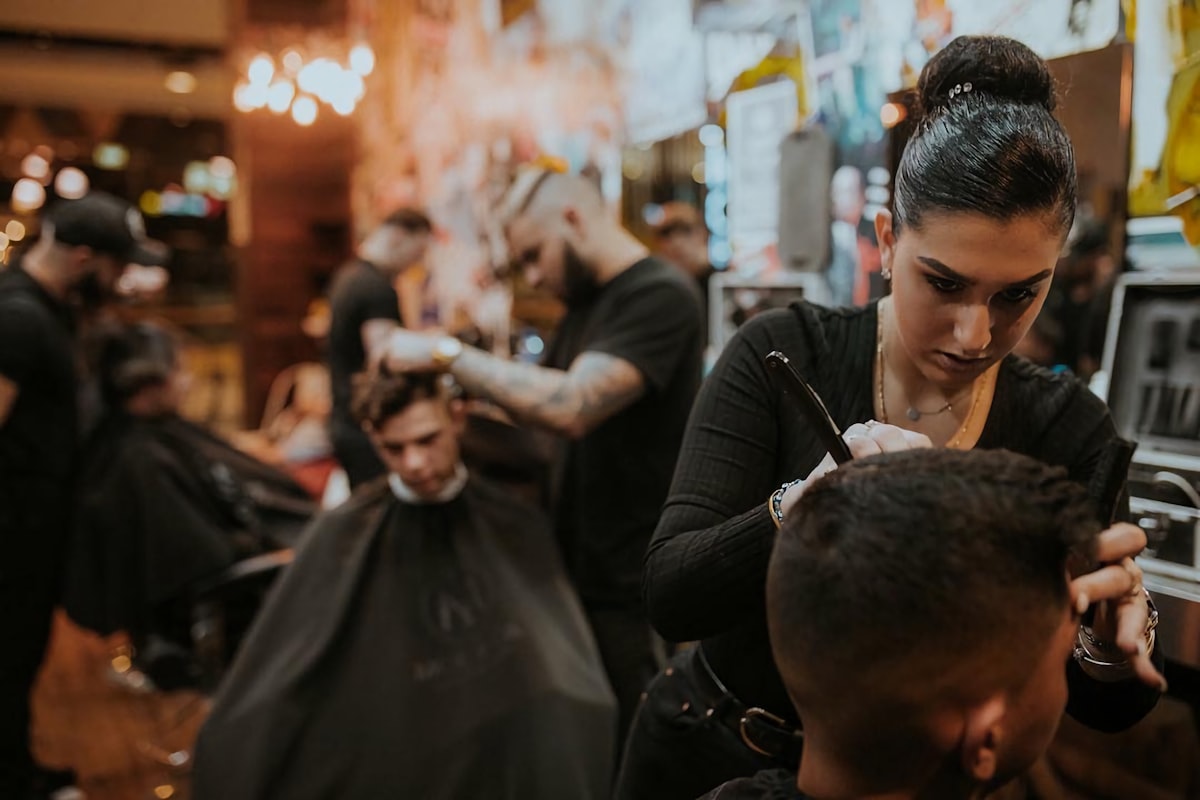
A working barber who builds a significant content presence typically does it while continuing to cut. The content is built from the daily work: filming cuts, posting transformations, documenting technique, building a library of what they do and how they do it. The following grows from the content. The income from the following comes later.
Income paths for a barber content creator:
- Brand sponsorships: tool and product brands (clipper manufacturers, pomade companies, grooming brands) pay for mentions, reviews, and featured use in content. Rates vary enormously by following size and engagement rate. A barber with 100,000 highly-engaged local followers in a strong market can command $500 to $2,000 per sponsored post.
- Online courses: technique courses are the highest-margin content creator product for barbers. A fade course that took 40 hours to produce can sell to 500 students at $97 with no additional production cost per sale. CADMEN's online academy is built on this model alongside the in-person intensive programs.
- Coaching: experienced barbers who have built successful shops or developed strong technique coach newer barbers. CADMEN's $4,000 coaching program is one model. Group coaching, peer groups, and community memberships are related formats.
- Events and masterclasses: a barber with a significant audience can fill a 1-day live masterclass and charge $200 to $500 per attendee. A 30-person event generates $6,000 to $15,000 in a single day.
What the Path Actually Looks Like
Almost no barber goes viral and turns it directly into a business. The path that actually works: consistent content over 12 to 24 months, building an audience that trusts the craft and the personality behind it, then converting that audience with products or services that are directly aligned with what the audience was following in the first place.
An audience built on fade transformations is primed to buy a fade technique course. An audience built on business and ownership content is primed to buy barbershop owner coaching. Mismatches between audience expectation and product kill conversion rates.
The Mistake That Stalls Most Barber Content Creators
Focusing on follower count rather than audience specificity. A barber with 50,000 followers of which 30,000 are in the same city and interested in booking is more valuable than a barber with 200,000 followers spread globally across demographics with no booking intent. The metrics that matter for a barber content creator who is trying to build a business (not just an audience) are engagement rate, local follower concentration, and DM or click conversion rate from content to booking or product purchase.
Francis Paua as a Case Study
Francis Paua built his professional reputation through 25 years of craft, athlete and celebrity clientele, and training barbers who now teach for international brands. His content presence is a documentation of that track record, not a manufactured persona. The credibility came first; the content expands the audience that existing credibility reaches. This is the foundation CADMEN's entire brand platform is built on: real results, real experience, documented consistently.
CADMEN's YouTube channel, built for barbershop owners and working barbers, follows this same model: content grounded in operational experience, not theory.
Frequently Asked Questions
Can a barber make money from YouTube?
Yes, through multiple channels. YouTube Partner Program ad revenue begins once a channel hits 1,000 subscribers and 4,000 watch hours. For a focused barber channel with an engaged audience, ad revenue is relatively modest compared to sponsorships and product sales the channel enables. The more significant income comes from what the YouTube audience converts to: course purchases, event attendance, product affiliate commissions, and booking if the audience is local.
How many followers does a barber need to get sponsored?
Sponsorships begin at smaller account sizes than most people expect. Micro-influencer sponsorships (10,000 to 50,000 followers) with high engagement rates are actively sought by tool and product brands because micro-influencers often have more trusted relationships with their audience than large accounts. A barber with 15,000 highly-engaged followers in a specific market can realistically approach product brands for partnership deals.
What should a barber content creator post?
The foundation is transformation content (before and after cuts). On top of that: technique breakdowns, tool reviews, business and owner content (for barbers building toward the coaching/course income stream), and personality content that builds the relationship behind the following. The mix that drives business results is 60% transformation and technique, 20% personality and culture, 20% business content if that is the target market.
How long does it take to build a barber audience?
An account posting daily transformation and technique content with consistent hashtag strategy typically sees meaningful growth (10,000 to 30,000 local followers) within 12 to 18 months. Accounts that grow faster typically have one or more high-performance posts that drive algorithm-pushed exposure. Accounts that post 3 to 4 times per week grow, but more slowly. The timeline is compressible with higher posting frequency and content quality, but not by much.
Should a barber build a personal brand or a shop brand on social media?
Both serve different goals. A personal brand (the barber as the face) builds a following that follows the individual through multiple career stages and locations. A shop brand builds loyalty to the location and service experience. Most barbers who are serious about the content income path build the personal brand first, because that is what travels with them and what converts to courses and sponsorships later. The shop brand is best maintained as a secondary account or integrated into the personal brand.
Related Reading From CADMEN Barber Academy
- What to Post on Instagram as a Barbershop: Content That Builds a Booked Schedule
- Barbershop Social Media Content: What to Post, How Often, and What Actually Builds a Following
- TikTok for Barbershops: What Content Actually Grows an Audience and Converts to Bookings
- TikTok Content Ideas for Barbershops That Actually Get Views
