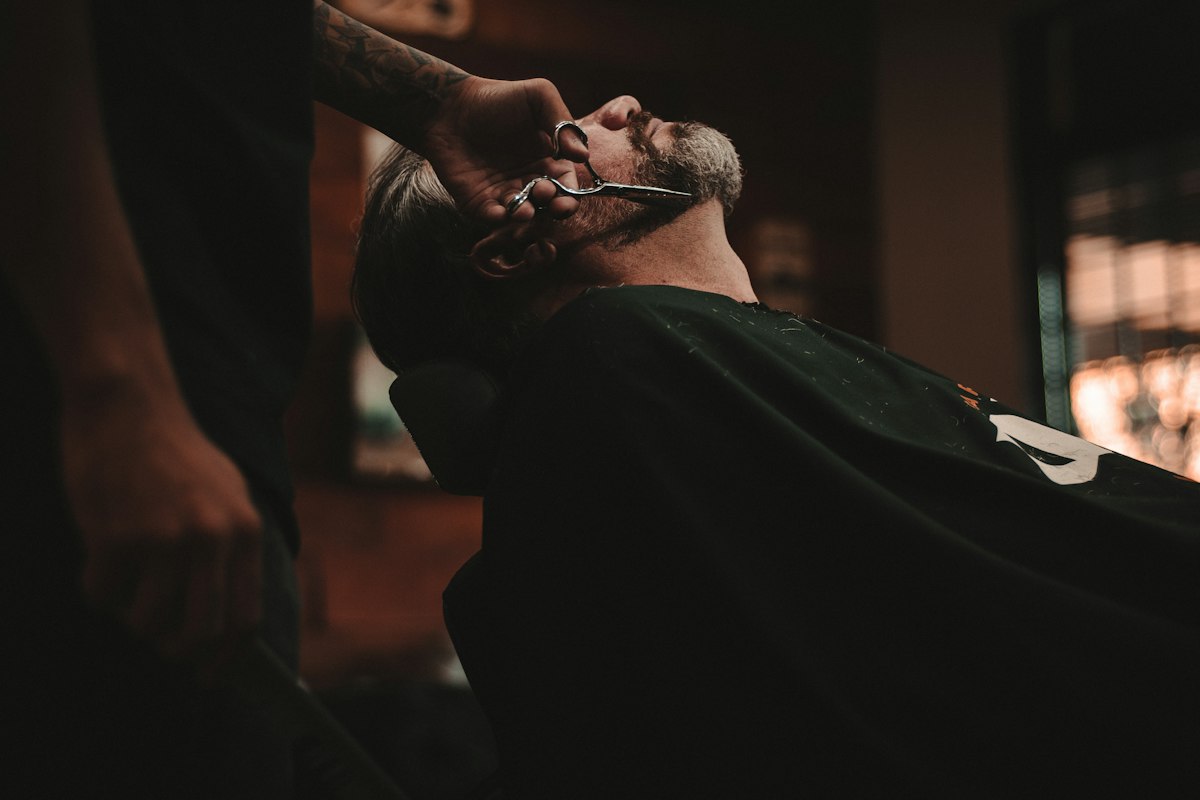
The Comb Over Haircut: How Barbers Cut and Style the Most Versatile Men's Haircut
The Comb Over Haircut: How Barbers Cut and Style the Most Versatile Men's Haircut
The comb over is the haircut that appears in more variations than almost any other men's style. The term covers everything from a conservative side-parted business cut to an aggressively styled disconnected comb over with a high skin fade. What the variations have in common: more length on top, a defined direction in which the top hair is combed or swept, and shorter or faded sides that direct the eye toward the longer top section. Understanding what the client means when they ask for a comb over, and how to cut the length and texture that supports the style they want, produces results that look intentional across all those variations.
The Consultation
A client requesting a comb over can mean any of the following: a conservative side-parted professional cut, a modern comb over with a mid or high fade, a textured comb over with visible movement on top, or a slicked-back version combed straight back rather than to the side. Reference photos resolve this immediately. Without a photo, ask: what is the length on top (in inches or the client's language), how short the sides (fade height and guard), and whether the parting is hard-parted or natural. Those answers define the cut.
Cutting the Top Section for a Comb Over
The top section needs length that supports the desired direction and volume. Most modern comb overs are cut to 2 to 4 inches on top, with point-cut or razor-cut texture to allow movement and reduce bulk. A blunt-cut top section can work on finer hair where bulk is a concern, but on medium to thick hair, blunt cuts often produce a heavy, helmet-like top that resists the comb-over direction. The texture cut allows the hair to fall into the direction naturally rather than requiring product to force it.
Cut the top section with the comb-over direction in mind. Taking slightly more length from the side the hair falls away from (the underside of the sweep) creates a natural fall in the intended direction. This is subtle but makes a difference in how the style behaves throughout the day without product reinforcement.
The Disconnected vs. Blended Comb Over
A disconnected comb over has a visible gap between the longer top section and the faded sides, with no blending at the transition point. The contrast is the point: long on top, skin fade on the sides, sharp line at the transition. A blended comb over (sometimes called a classic comb over or a side part) has a tapered or low-faded side that blends into the top, with no hard contrast line. Blended reads as more conservative; disconnected reads as more fashion-forward. Confirm which the client wants before cutting.
Frequently Asked Questions
Is a comb over good for thinning hair?
Yes, in the right variation. A comb over on thinning hair works best when the top section is cut to a length that covers the areas of reduced density without relying on extreme volume. Very long top sections on thin hair often reveal the thinning by separating when the hair moves. A textured comb over cut to 2 to 2.5 inches on top, styled with a light matte product that adds texture without slicking the hair flat, covers thinning effectively and looks intentional rather than compensatory.
Want to learn to cut a comb over yourself? CADMEN Barber Academy teaches cutting hands-on, with an educator beside you. See the barber academy in Mississauga or view in-person classes and send an enquiry.
Watch the free Barbering for Beginners playlist on YouTube.
