Beard Lineup Technique: How to Edge a Beard Cleanly on Every Face Shape
Beard Lineup Technique: How to Edge a Beard Cleanly on Every Face Shape
A beard lineup is the definition of the three perimeter lines of a beard: the cheek line, the neckline, and the mustache edge. A clean lineup makes a beard look intentional and well-maintained; a poorly defined or uneven lineup can undercut an otherwise well-shaped beard. The technique is not complicated, but the placement decisions (where to draw each line) have more impact on the result than the trimmer mechanics themselves.
The Three Lines of a Beard Lineup
The cheek line. This line runs from the sideburn across the cheek to the mustache. Natural cheek lines vary: some clients have a naturally defined cheek line that needs only cleanup; others have a diffuse cheek line with stray hairs scattered up toward the cheekbone. The general rule is to follow the natural cheek line at approximately its lowest natural edge, removing strays above it rather than dropping the line artificially low. Dropping the cheek line too low reduces the visual fullness of the beard; removing it too high creates an unnaturally straight line that looks drawn on.
The neckline. The neckline is the lower boundary of the beard where it transitions to the neck. Correct placement sits roughly two finger-widths above the Adam's apple (in the center) and sweeps in a natural curve up to the ear area on each side, following the natural curve of the jaw rather than a straight horizontal line. Common error: placing the neckline too high, which makes the beard look shorter than it is and can create a shelf-like appearance from the front. A second common error: a straight horizontal neckline instead of a curved one, which looks unnatural on most face shapes.
The mustache edge. The upper edge of the mustache, where it meets the lip. Keep the trimmer parallel to the upper lip, removing the hair that grows onto or past the lip edge. This should be a precise pass rather than a heavy cut; mustache shaping above the lip line (reducing the fullness of the mustache) is a separate decision that should be confirmed before executing.
Trimmer Angle and Pass Direction
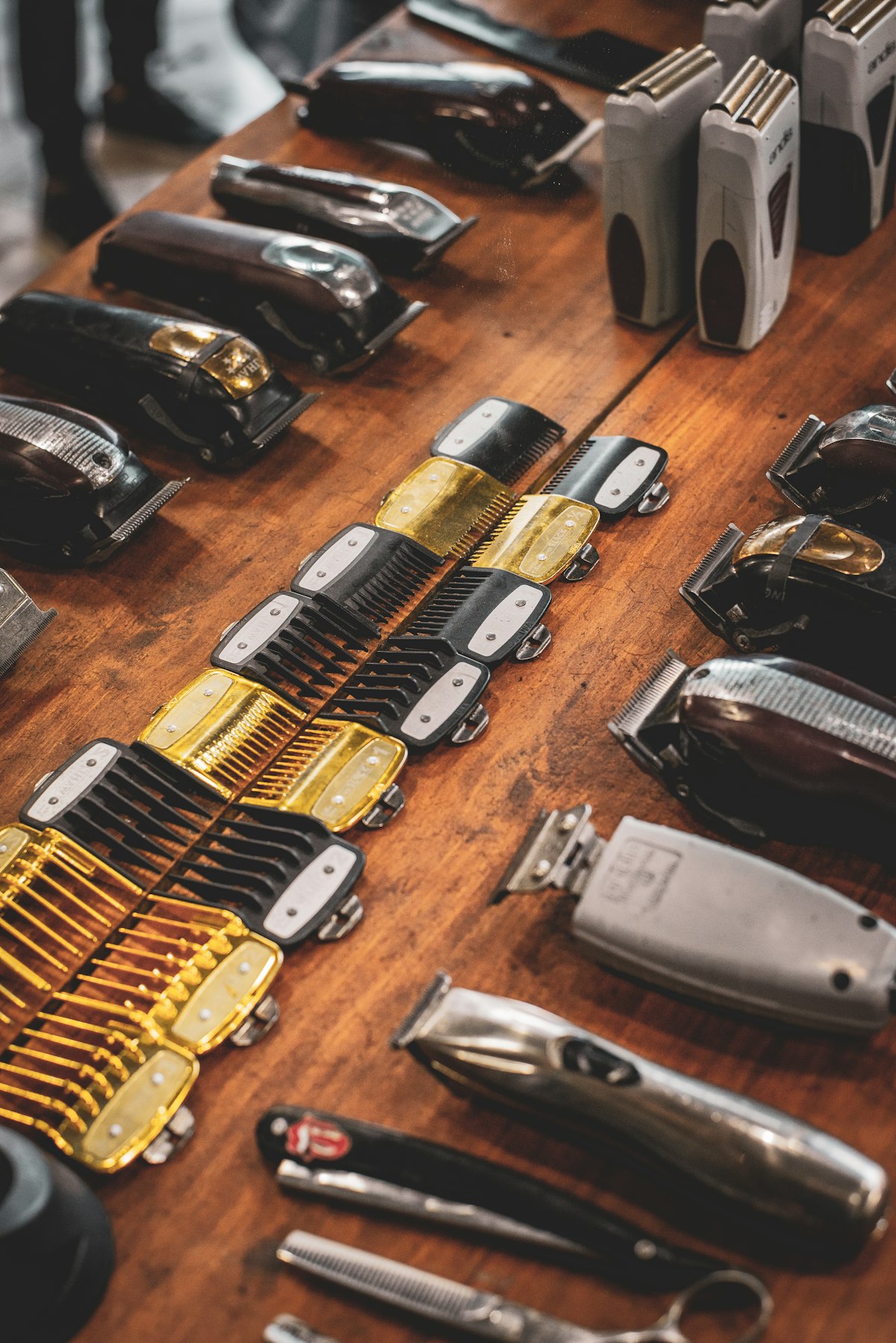
For lineup work, T-outline trimmers or standard trimmers with the guard removed are used flat against the skin, held at 90 degrees to the surface being cut. The flat-to-skin contact is what creates the sharp line. Holding the trimmer at an angle to the skin creates a soft, blurred edge rather than a defined line. Move the trimmer in short, controlled passes along the line rather than one long continuous stroke; short passes allow correction if the line drifts.
Frequently Asked Questions
How do you line up a beard at the neckline?
Locate the correct neckline position: two finger-widths above the Adam's apple in the center, curving naturally up toward the back of the jaw on each side. Establish the center point first, then work outward symmetrically. Use the trimmer flat against the skin for maximum edge definition. Trim below the established line to clean the neck, and check the line from the front before finalizing. Symmetry from the front view matters more than symmetry in the mirror from the barber's angle; step back and evaluate straight-on before the client leaves the chair.
What is the difference between a beard trim and a beard lineup?
A beard trim reduces the length and shapes the bulk of the beard, typically with scissors or a guard on clippers. A lineup defines the perimeter edges (cheek line, neckline, mustache edge) and can be done with or without a full trim. Clients who maintain beard length between visits often come in specifically for a lineup to keep the edges sharp without significantly changing the overall shape or length of the beard.
