Bald Fade vs Skin Fade: Are They the Same Thing?
Bald Fade vs Skin Fade: Are They the Same Thing?
Most barbers use "bald fade" and "skin fade" to mean the same thing. Both describe a fade that graduates all the way to the skin, with no visible hair at the lowest point. Here is the full picture of how these terms are used and what to actually ask for.
What Both Terms Mean
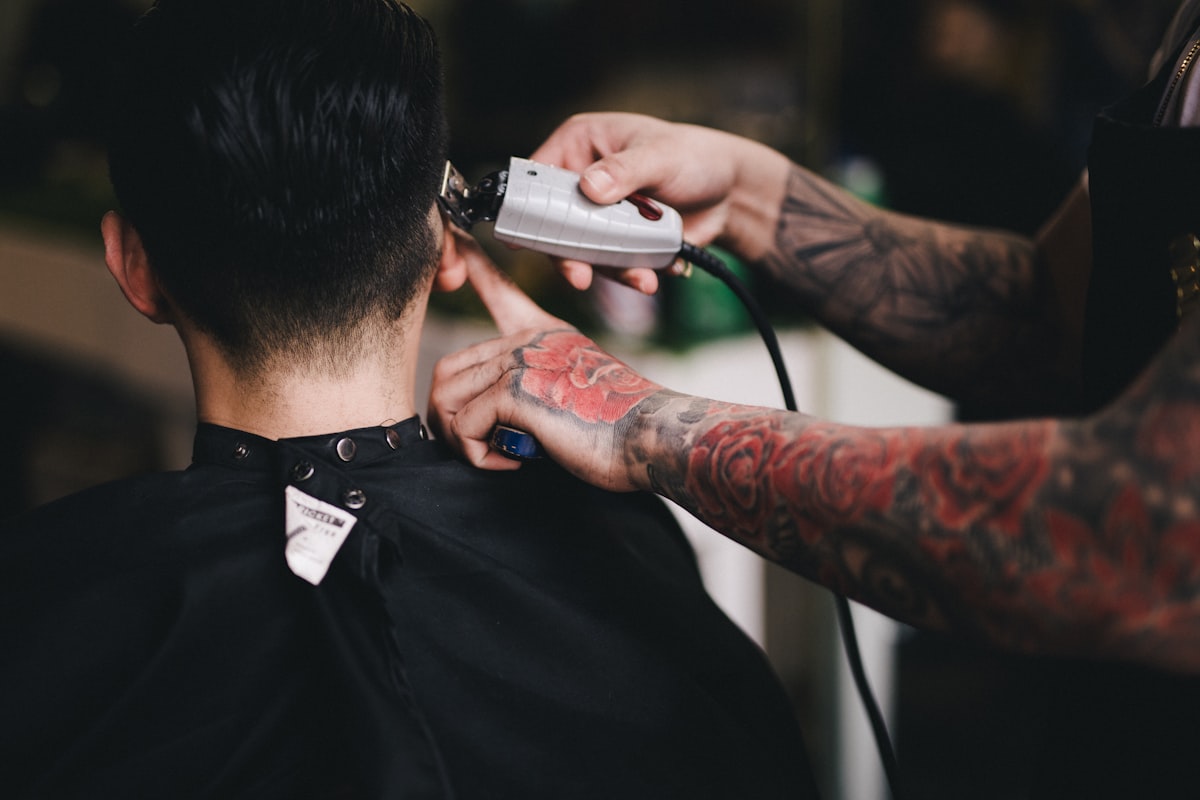
A skin fade (also called a bald fade) fades the hair down to bare skin at the base, typically just above the natural hairline. The hair goes from its shortest visible length (using a zero-guard or bare clippers) to nothing over a gradual graduation. The result is a fade that blends into the skin completely at the bottom, with no visible stubble line marking where the haircut ends. The terms are used interchangeably by most barbers and most clients.
Where the Language Diverges
Some barbers draw a slight technical distinction. In this usage, a skin fade refers to fading to bare skin at the lowest point but keeping the overall fade starting height at a low to mid position on the sides. A bald fade, in this same distinction, refers to a fade that fades to skin AND rises higher up the side of the head, closer to a high fade in overall height, with the skin-to-hair transition occupying more of the visible side. This is not a universal distinction. Most barbers, most clients, and most online references treat the two terms as synonymous.
If precision matters, the most reliable communication is to describe the height of the fade (low, mid, or high) separately from the finish (down to skin). "High skin fade" or "low bald fade" carries the most specific information regardless of which term you use for the finish.
What to Tell Your Barber
Specify the height and the finish separately. Height: low (above the ear, close to the natural taper zone), mid (at or slightly above the temple), or high (near the top of the sides, close to the part or crown). Finish: to skin (zero, bald, skin fade) or to a specific guard length (1, 2, etc.). Combining these gives the barber the two pieces of information they need. "High skin fade" and "low fade to zero" both communicate complete information without ambiguity. Adding a reference photo removes any remaining uncertainty.
Frequently Asked Questions
Does a skin fade expose the scalp visibly?
At the very base of the fade, yes. Just above the natural hairline, the skin is fully exposed and visible. This area is small, typically a quarter to half inch of visible scalp at the lowest point. Moving up from the base, the hair becomes progressively visible as the fade graduates from skin to stubble to short hair. Most people viewing the haircut see the overall fade rather than focusing on the small exposed area at the base. Whether the skin exposure at the base of the fade is a concern depends on the individual's scalp color and hair color contrast, tattoos or marks in the fade zone, and personal preference.
Is a skin fade harder to maintain than a shadow fade?
Yes. A shadow fade (which fades to a very short stubble rather than bare skin) has more margin for grow-out before the lowest point becomes visibly untidy. A skin fade shows grow-out within days; new stubble at the base of the fade breaks the clean skin-to-hair transition that defines the style. Men who want the cleanest version of a skin fade maintain it every 1 to 2 weeks. A shadow fade at the same height can look well-maintained at 3 to 4 weeks because the fade to stubble reads as intentional even with some grow-out.
Does a skin fade suit all hair colors and skin tones?
The contrast between the fade's bare skin zone and the hairline is most visible when hair color is dark against light skin. High contrast between hair and scalp makes the fade structure more visually prominent. Lower contrast (lighter hair on lighter skin, or dark hair on dark skin) produces a softer reading of the same fade. Neither is better; they are different aesthetic results from the same technical cut. Barbers who understand contrast can adjust the fade's start height and graduation to produce the intended visual result across different hair and skin combinations.
What happens when a skin fade grows out?
The bare skin area fills in with stubble, then short hair, progressively over 1 to 2 weeks. The clean graduation that defines the fade softens as the base grows in. At 3 weeks, most skin fades look noticeably grown-out. The transition from skin to hair becomes less defined as the previously bare zone fills with stubble that is a similar length to the lowest visible guard length. The fade does not disappear at 3 weeks; it becomes a less precise, softer version of itself. Touch-up visits restore the precision of the graduation and the clean skin finish at the base.
Related Reading From CADMEN Barber Academy
- Skin Fade vs Bald Fade: What Is the Difference?
- Bald Fade vs Skin Fade: Is There a Difference and Which Should You Get?
- How to Cut a Bald Fade Step by Step
- The Bald Fade: What It Is, Who It Suits, and How to Maintain It
- The Bald Fade: Technique and Common Mistakes
- The Skin Fade: A Complete Guide to What It Is and How It Is Done
Want to learn to cut a skin fade yourself? CADMEN Barber Academy teaches cutting hands-on, with an educator beside you. See the barber academy in Mississauga or view in-person classes and send an enquiry.
Learn this fade step by step in our free Fade Tutorials playlist on YouTube.
